
ALMATY – The lower chamber of the Parliament of Kazakhstan has ratified an agreement on strategic partnership in the production and transmission of green energy between Kazakhstan, Azerbaijan and Uzbekistan on March 11, reported the Ministry of Energy.
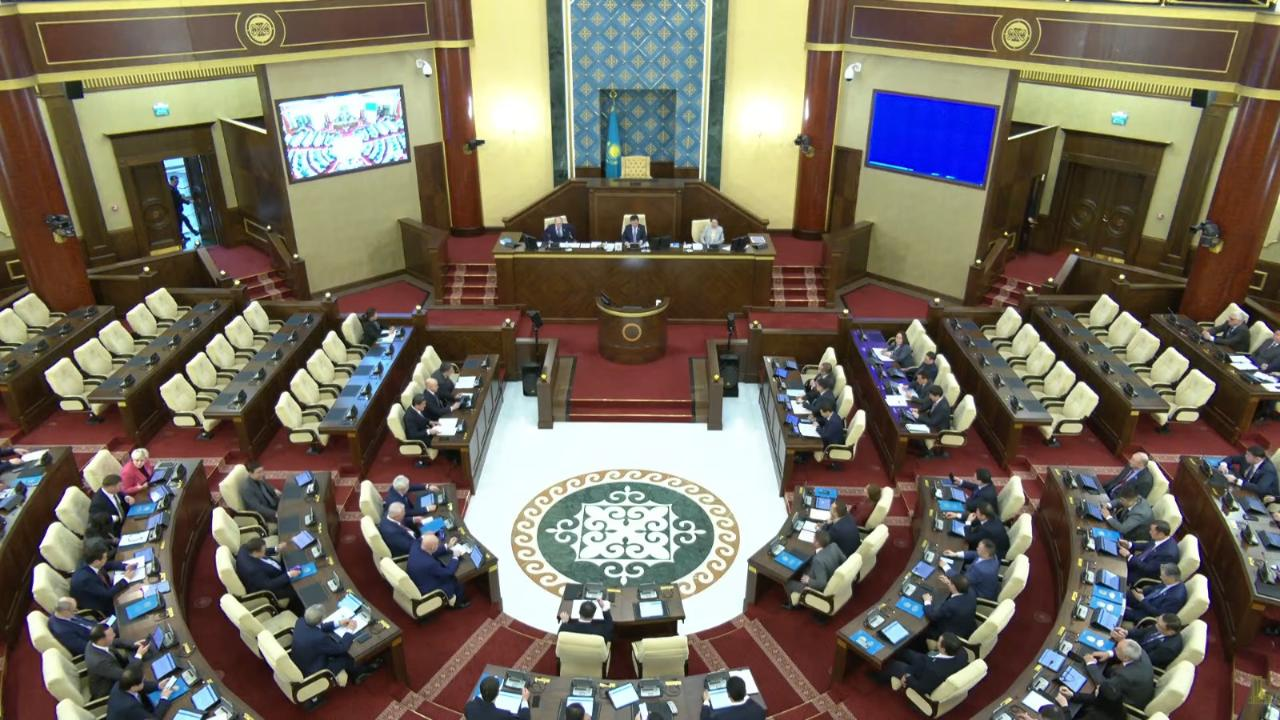
The lower chamber of Parliament of Kazakhstan has ratified an agreement on strategic partnership in the production and transmission of green energy between Kazakhstan, Azerbaijan and Uzbekistan. Photo credit: Ministry of Energy.
The agreement, signed on Nov. 13, 2024, in Baku, was presented to lawmakers by Energy Minister Yerlan Akkenzhenov.
According to the minister, the agreement aims to facilitate the efficient use of renewable energy potential in the three countries and expand trade in environmentally friendly electricity, including green hydrogen and ammonia.
“Within the framework of the project, green energy will be transmitted from Kazakhstan and Uzbekistan to Azerbaijan through a subsea cable along the bottom of the Caspian Sea. In the future, this will allow electricity exports to European countries through a similar project in the Black Sea,” Akkenzhenov said.
Project development and financing
Akkenzhenov said the initiative is in an active implementation phase. Energy authorities of the three countries have signed a memorandum with the Asian Development Bank and the Asian Infrastructure Investment Bank to finance the preparation of a feasibility study for the project.
The feasibility study will determine the financial model and key technical parameters of the green energy corridor. Italian consulting firm CESI has been selected as the consultant responsible for preparing the study.
The cost of developing the feasibility study is estimated at around 1 million euros (US$1.15 million), which will be funded through grants from the two development banks. Both banks have already confirmed their readiness to allocate $2 million in grant funding, exceeding the amount required for the initial phase.
Regional energy cooperation
Mazhilis member Yerbolat Satybaldy noted that the trilateral partnership also includes modernization and integration of energy infrastructure, as well as the development of new interconnection systems between the participating countries.
“The interaction will be based on the principles of equality, mutual benefit, respect for sovereignty and national interests, and will be carried out in accordance with the national legislation of the participating states,” Satybaldy said.
A key component of the initiative is the construction of a high-voltage direct deep-sea cable, which the energy minister described as a technically complex but strategically important solution that would allow Kazakhstan to access the European Union electricity market directly.
