
ALMATY – The revisions of Kazakhstan’s Сonstitution reflect over 84% changes compared to the existing text, said Constitutional Court Chairperson Elvira Azimova as she briefed the diplomatic corps on the proposed amendments on Feb. 16.
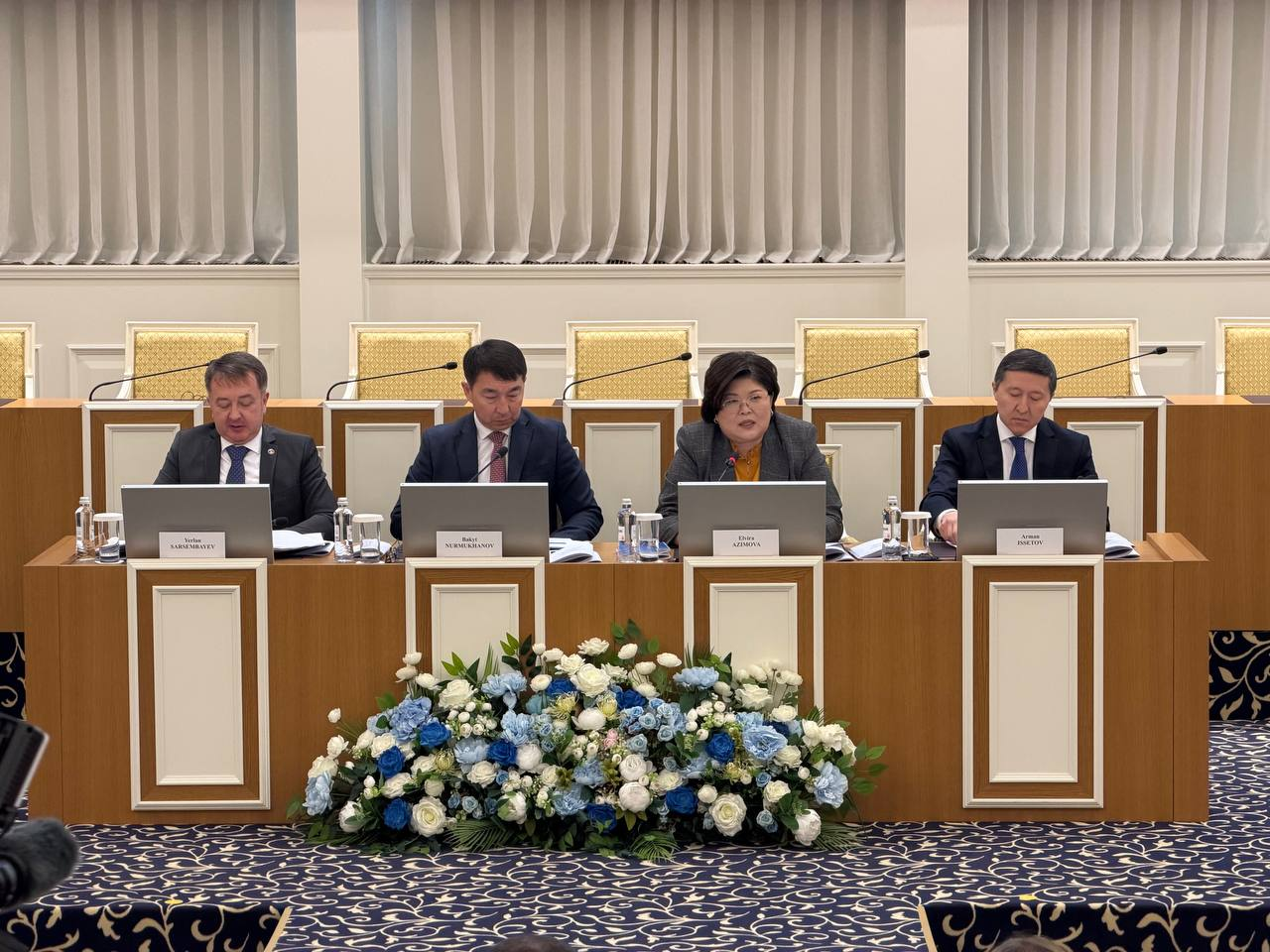
From L to R: Yerlan Sarsembayev, Bakyt Nurmukhanov, Elvira Azimova, Arman Issetov. Photo credit: The Astana Times/ Nargiz Raimbekova.
Open and inclusive process
Azimova highlighted the transparency and inclusiveness of the process, contrasting it with earlier reform periods.
“We deliberately focused on ensuring transparency in both the development and the discussion process,” she said.
She noted that the drafting process included close collaboration between lawyers, scholars, and state legal experts.
Azimova provided the example of provisions initially addressing moral and spiritual values, which had raised public concern as a potential basis for restricting rights. These provisions have been carefully revised to align with international human rights standards while maintaining legal clarity.
“Initially, in the first draft of the Constitution, spiritual and moral values were used as grounds for possible restrictions. If you recall, the International Covenant on Civil and Political Rights allows restrictions based on public health, public morals, and morality,” Azimova said.
According to her, many people questioned how these terms would be interpreted and enforced by state authorities. The Constitution is the fundamental law, she said, and after their work, the government shall bring legislative acts in line with it.
Rights, duties, and legal safeguards
Azimova emphasized that the draft includes four new constitutional laws to update and harmonize existing legislation with the new Constitution. Among the most significant reforms, the Constitution reorganizes its sections, starting with the Foundations of the Constitutional System and followed by Rights, Freedoms, and Duties.
This new arrangement balances citizens’ rights with their responsibilities and introduces provisions on legal defenders and lawyers, clarifying their role in representing individuals and organizations in courts.
“We are measuring and targeting the formation of legal consciousness among citizens and legal consciousness among state bodies. Therefore, this section includes the traditional key provisions related to the state structure,” Azimova said.
Territorial integrity, property, and independence
Azimova emphasized that key principles regarding territorial integrity, national independence, and property rights remain unchanged. She also added the draft strengthens these guarantees.
She explained that constitutional amendments in the future will only be made through a public referendum, ensuring broad discussion and public oversight.
“The draft Constitution includes a categorical norm that all amendments will only be made through a referendum. This is very important for us because it ensures public, wide-ranging discussion of any changes and helps preserve the protections proposed today,” she said.
This approach guarantees transparency and stability for citizens and investors alike, while reinforcing the principle that the Constitution remains the supreme law.
International law and Parliamentary oversight
Deputy Minister of Foreign Affairs Arman Issetov emphasized that international treaties ratified by Kazakhstan will be implemented through national legislation in accordance with constitutional norms.
“Such an approach strengthens and increases the efficiency of international treaty implementation, eliminating legal conflicts between treaty provisions and national legislation. Enhanced parliamentary oversight of treaty obligations will further guarantee the protection of citizens’ rights and freedoms,” Issetov said.
According to him, the draft Constitution also reinforces Kazakhstan’s commitment to peaceful foreign policy and international cooperation. Article 10 establishes principles of non-interference, peaceful dispute resolution, and adherence to international obligations, embedding respect for international law into the country’s fundamental legal framework.
“The current organizational transformation is a timely and consistent step towards improving the international legal activities of Kazakhstan as part of fundamental state reform,” Issetov said.
Governance and balances
The draft also establishes the Khalyk Kenesi (People’s Council), a new representative body with legislative initiative powers, expanding citizen participation beyond the current parliamentary system. Azimova emphasized that the commission carefully maintained a balance of powers, immunity, and checks and balances throughout the drafting process.
“I would like to point out that in this regard, the council is an expanded format and an alternative to the single-mandate regime. It is expected that the number of members will exceed 100,” she said, highlighting that the most important aspect remains transparency and substantive discussion.
Kazakhstan’s proposed new Constitution would make a transition starting July 1, including the end of the current Parliament’s mandate, if voters endorse the reforms in a national referendum on March 15.
