
ASTANA – Last year, Kazakhstan’s transport sector continued its systematic development, strengthening the country’s transit and logistics potential, modernizing infrastructure, and improving transportation efficiency.
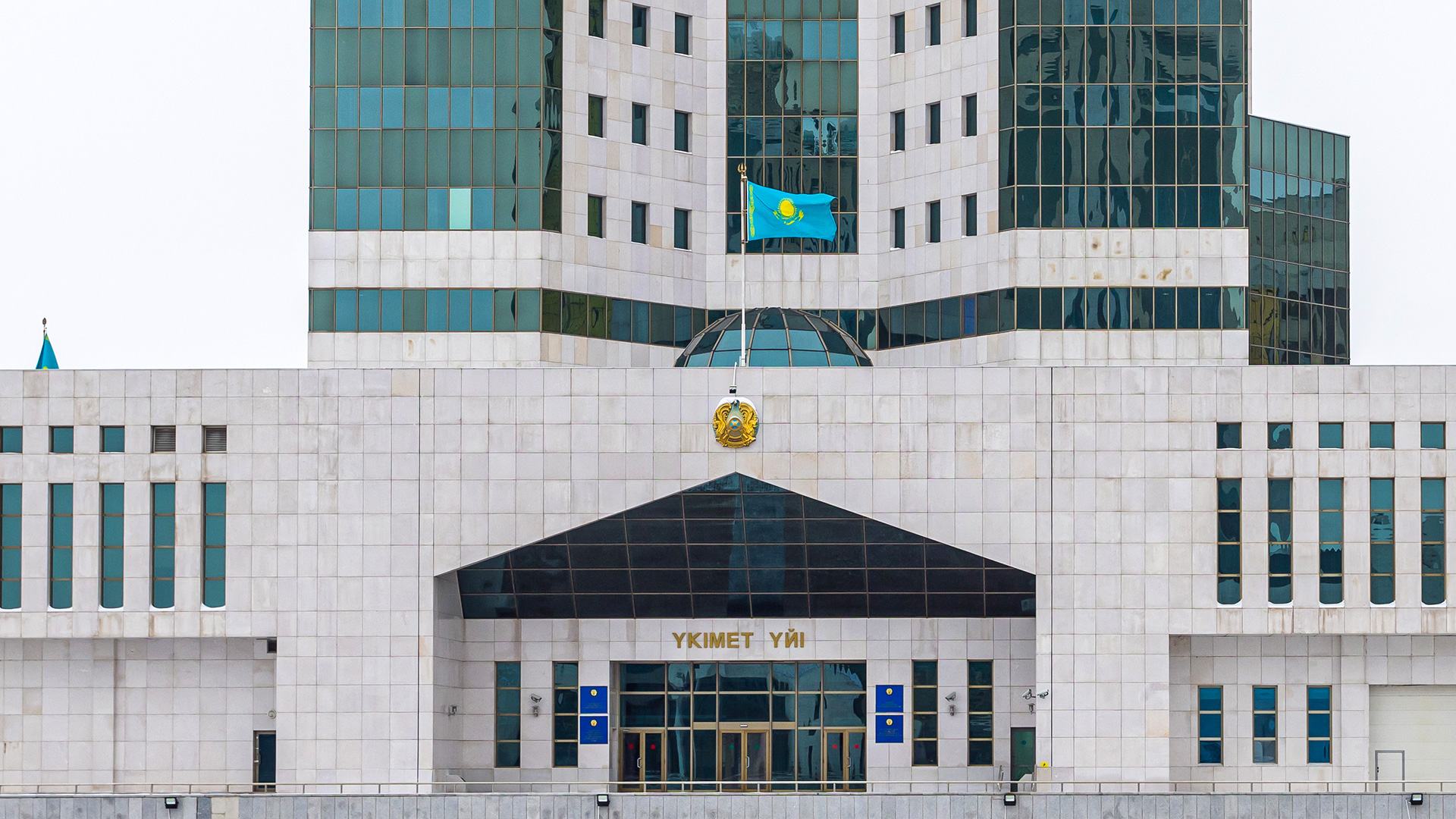
Photo credit: gov.kz
Positioned at the crossroads of Europe and Asia, Kazakhstan continues to reinforce its role as a strategic land bridge across Eurasia. The country is developing the East-West and North-South international corridors, as well as the Trans-Caspian International Transport Route (TITR), also known as the Middle Corridor. Infrastructure projects, fleet modernization, digital transport management solutions, and the expansion of international routes have significantly strengthened Kazakhstan’s status as a regional transit hub.
By the end of 2025, transit traffic reached 36.9 million tons, a 6.6% increase compared to 2024 (34.6 million tons). This growth reflects the integrated development of road, rail, air, and water transport, alongside expanded international logistics cooperation, reported the Prime Minister’s press service on Feb. 9.
Highways and road infrastructure
A major achievement in 2025 was the large-scale development of the road network. Construction and repair works covered 13,000 kilometers of roads, bringing 94% of the national road network into good technical condition. Modernization of internal border checkpoints is underway, with 37 checkpoints scheduled for upgrade by 2027.
Digitalization remains a priority. Under the e-Joldar program, digital road passports are being introduced to centralize data on road conditions, traffic volumes, and performance indicators. Annual road diagnostics using AI technologies have been launched, and road safety is being enhanced through the installation of up to 220 automated measuring stations, 71 of which are already operational.
Aviation: route expansion and investment
Civil aviation development in 2025 focused on fleet renewal, route expansion, and airport infrastructure investment. The national fleet increased to 109 aircraft, including eight Airbus A320s and four Boeing 737 MAX 8s.
Kazakhstan operates flights to 30 countries across 135 international routes, with 626 weekly flights as of December 2025. The network spans the CIS, Europe, the Middle East, Asia, and Southeast Asia. The sector employs 25,000 people, ensuring stable operations and service quality.
Key projects include the restoration of Arkalyk Airport, presentation of the Almaty Airport development master plan, and TAV Airport Holding’s $362 million investment program. An investment agreement worth 250 billion tenge (US$506.8 million) was signed to construct a cargo and passenger airport in the Khorgos-Eastern Gate SEZ.
The concept for the development of civil unmanned aviation (2025-2031) was adopted, while several low-cost carriers entered the market. More than 35 new international routes were opened, including flights to Budapest, Shanghai, Seoul, Guangzhou, and Munich. According to an ICAO audit, Kazakhstan achieved 95.7% compliance with international aviation security and facilitation standards.
Rail and water transport
Rail freight traffic reached 320 million tons, up 5.5% year-on-year. Around 11,000 kilometers of railways are to be repaired by 2029; 4,400 kilometers have already been completed, including 1,575 kilometers in 2025.
Notable milestones include the launch of the second 836-kilometer Dostyk-Moiynty railway line and the start of construction on the 323-kilometer Kyzylzhar-Moiynty line. Contracts were signed for 775 locomotives and 2,700 flatcars, and modernization began at 124 railway stations nationwide.
Water transport also showed steady growth. Sea freight totaled 8 million tons, up 7%, while container handling increased by 29% to 90,637 twenty-foot equivalent unit (TEU). Along the Trans-Caspian route, container traffic grew by 36%. A container hub was completed at the Aktau port, one dry cargo vessel was added to the Kuryk-Baku route, and two ferries were acquired. River transport carried 1.5 million tons across the Irtysh, Ural-Caspian, and Ile-Balkhash basins.
Road transport and digital control
Kazakhstan continued expanding international road transport cooperation, concluding agreements with 42 countries to exchange annual permit quotas. A permit-free system was introduced in Turkmenistan, as well as for bilateral and transit shipments with Iran, and agreements were reached with Türkiye. Kazakhstan became the first country authorized to conduct deep transit road transport into China.
Electronic exchange of foreign permits has been implemented with China and Uzbekistan, digitizing 65% of international road permits; similar work is ongoing with Azerbaijan, the Kyrgyz Republic, and Türkiye. Transparency was enhanced through new permit distribution rules and the rollout of digital truck weighing systems. A total of 73 automated measuring stations are now integrated with the electronic fine issuance system.
Additional reforms include a permit-based system for technical inspection operators and stricter penalties for regulatory violations, further strengthening transport oversight and safety nationwide.
