
ALMATY – The Abilkhan Kasteev National Museum of Arts was never just a museum for Almaty’s public. It was a second home and for many children, the place where a lifelong love for art first began.
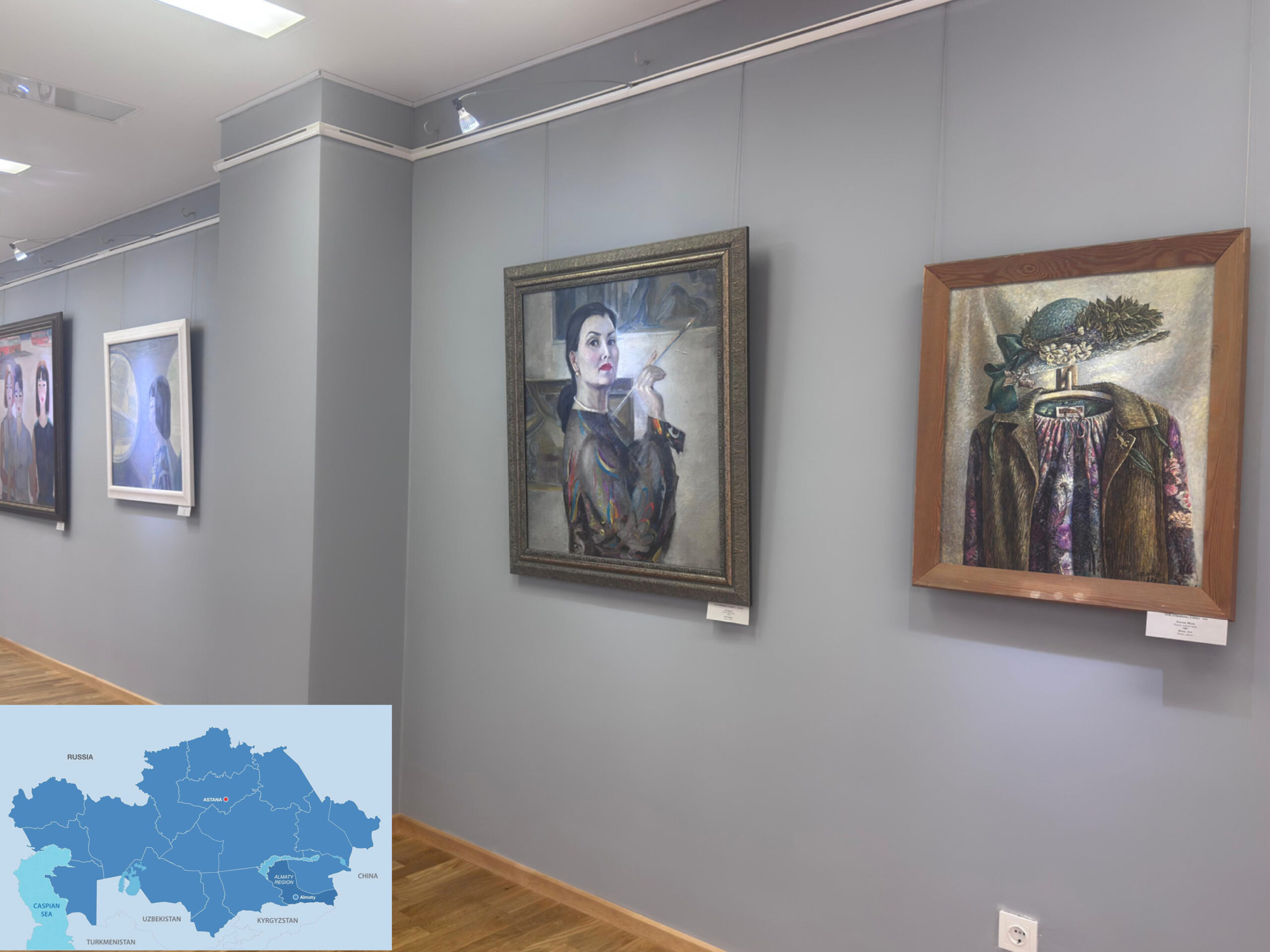
The new flooring, made from more durable materials, sits on a leveled foundation that will better serve the building for years to come. Photo credit: the Astana Times. Click to see the map in full size. The map is designed by The Astana Times.
Now reopened after a major renovation, the museum returns with restored walls and modernized systems, but also with something far less tangible, carefully preserved – its spirit.
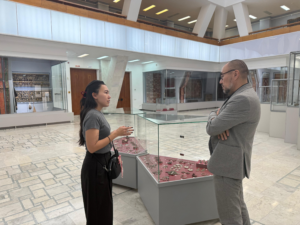
The Astana Times reporter Ayana Birbayeva and Deputy Director of the Kasteev Museum Nurzhan Satybaldy during a conversation. Photo credit: the Astana Times.
For nearly 90 years, the museum has served as one of Kazakhstan’s most important cultural centers, shaping artistic taste, nurturing young talent and bringing generations into contact with national and world art.
In an interview with the Astana Times, the museum’s deputy director Nurzhan Satybaldy said that the restoration’s main focus was to protect the building for the future without changing its identity.
“This was not an initiative that appeared overnight. We had been requesting funding for many years. Any building ages, and museum infrastructure has very specific requirements, especially climate control systems that protect the artworks,” he said.
The project received strong government backing and was implemented with support from non-budgetary funds and sponsors. The work was carried out in accordance with strict heritage regulations, as the museum building is recognized as a monument of national cultural significance.
Invisible but essential work
Returning to the museum after the restoration, the public can notice fresher interiors, renewed parquet floors and updated colors in some exhibition halls, though much of the most critical work remains hidden from view.
One of the key priorities was the roof, a vast and technically complex structure covering nearly 5,000 square meters. Over time, seasonal leaks had become a serious concern. The museum’s distinctive glass pyramids, installed when the building was constructed in the 1970s, were also reaching the end of their lifespan.
“They were made of wood, metal frames and ordinary glass. Technology has moved forward. We replaced all 72 pyramids with modern aluminum structures and tempered glass, while fully preserving their original shape,” Satybaldy said.
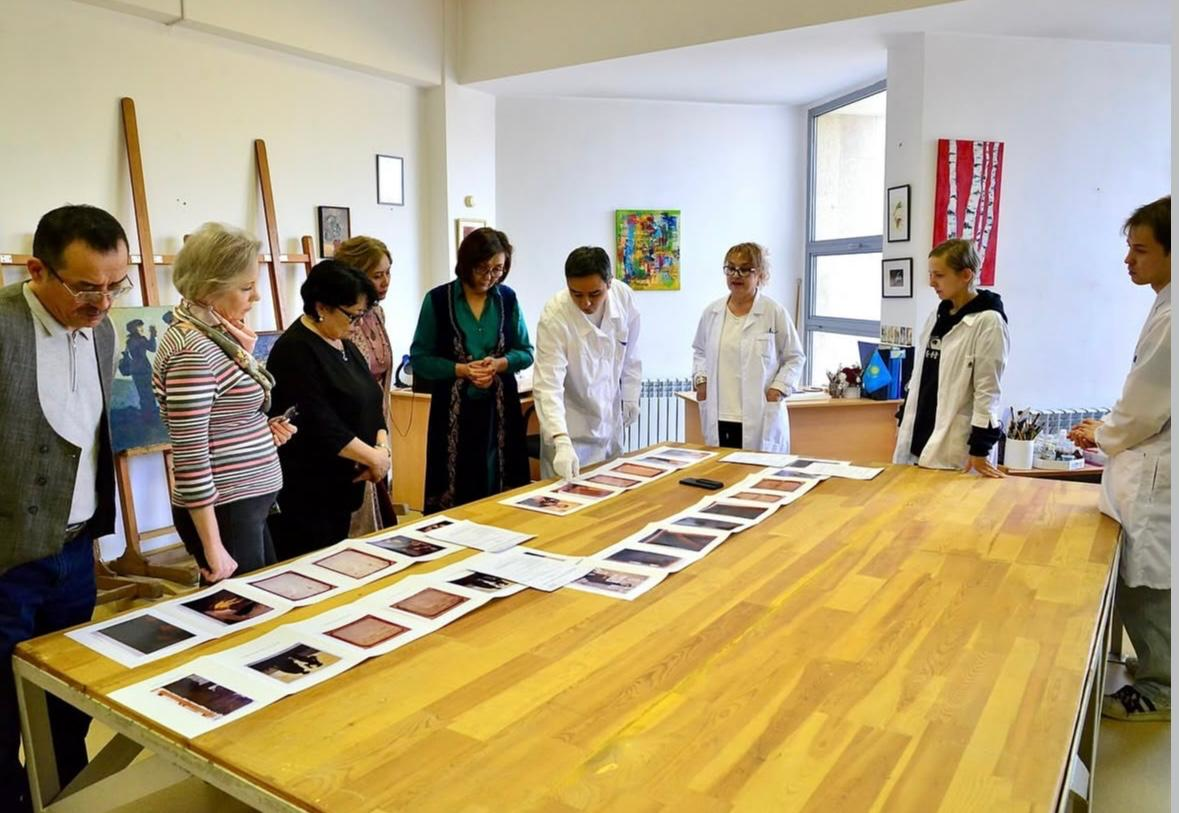
The goal is to ensure stable conditions not only in exhibition halls, but also in storage areas where much of the museum’s collection is kept. Photo credit: Kasteev museum’s press service.
The renovation also introduced improved insulation and modern waterproofing materials, along with a heating system for roof drainage to prevent ice buildup in winter. None of these changes altered the museum’s appearance, but all are crucial for preserving both the building and the art inside.
According to Satybaldy, the modernization of the climate control system was equally important. Museums require strict temperature and humidity levels to protect paintings, graphics and decorative arts.
“In the past, even the fountains outside the museum were part of an old cooling system. Later, more modern equipment was installed, but it has long since become outdated. It was no longer powerful enough, and it created noise issues as the city built up around us,” he said.
A new, quieter, and more efficient system has now been installed and will undergo full testing this year. The goal is to ensure stable conditions not only in exhibition halls, but also in storage areas where much of the museum’s collection is kept.
Preserving memory in wood and paint
Inside, the renovation also addressed aging interiors. The parquet floors, familiar to generations of visitors, had been sanded and refinished many times over the decades and had finally reached their limit.
“It was an emotional decision. The old parquet had a very recognizable Soviet-era pattern. But underneath, the base was uneven, and the wood could no longer withstand further restoration,” Satybaldy said.
The new floor, made from more durable materials, sits on a leveled foundation that will better serve the building for years to come. Walls were also carefully restored, in some areas stripped back and refinished from scratch.
To a casual visitor, these changes may seem subtle. But together, they represent months of work aimed at extending the life of a cultural landmark without altering its historical character.
A place where artists begin
Yet beyond engineering and construction, the museum’s deeper significance lies in its role in people’s lives. For many Almaty residents, the Kasteev museum was where they first learned to draw. Children came to art classes here, attended exhibitions, and grew up feeling that this was their space to explore art.
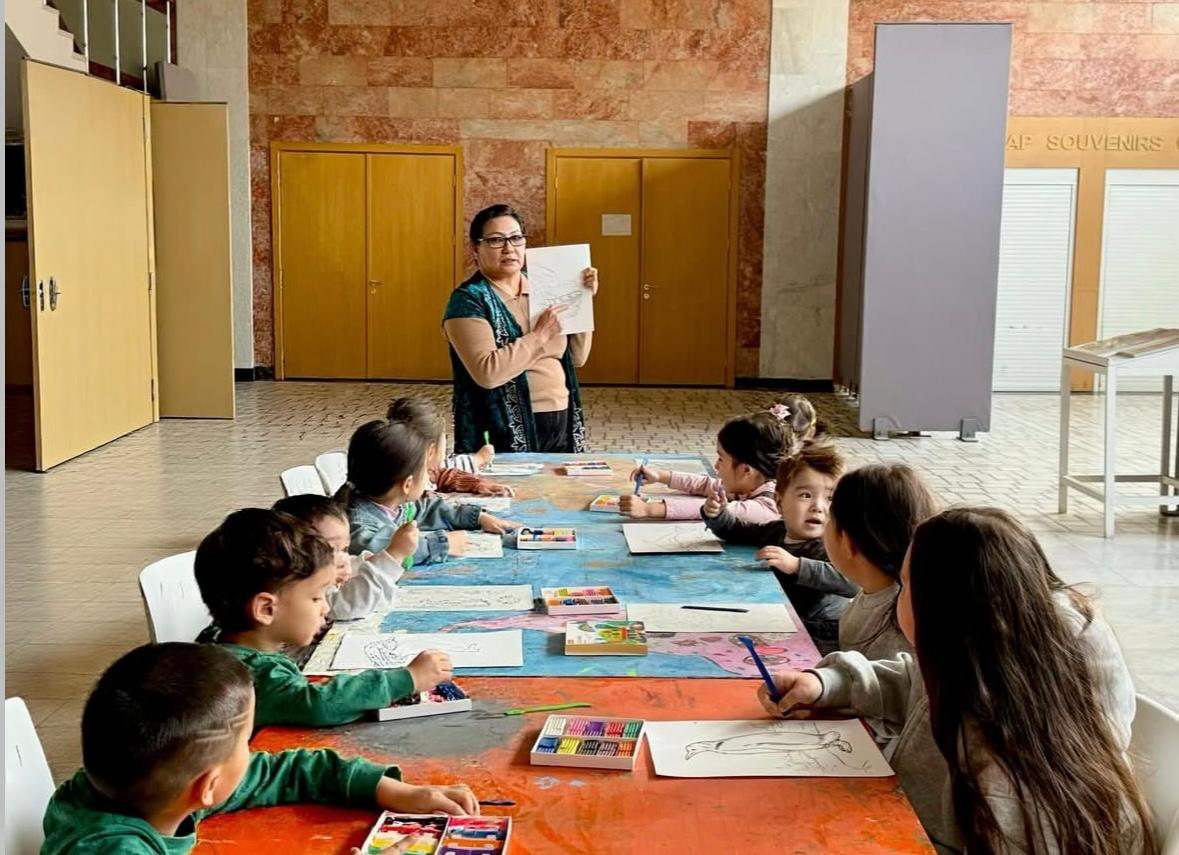
The museum’s art studio continues to operate, though staffing limitations have reduced the number of classes in recent years. Photo credit: Kasteev museum’s press service.
Those children are now adults, and many still return, sometimes with their own children. The museum’s art studio continues to operate, though staffing limitations have reduced the number of classes in recent years. Plans are now underway to revitalize the program, reimagined as an art laboratory with improved facilities and new equipment.
“We want to breathe new life into it. This studio has always been a bridge, as many of our students go on to enter art schools and universities. It’s something we are very proud of,” Satybaldy said.
More than a museum
Today, the museum is a place that holds both a historical memory and also a modernity that brings a new vision for the visitors. The renovation may have strengthened the roof and replaced aging systems, but the essence of the place remains unchanged.
It is still, as many residents remember it, a welcoming house of art that continues to educate the eye, shape taste, and open hearts to beauty. And for a city that has grown rapidly and changed dramatically, that continuity may be the museum’s greatest work of all.
