
ASTANA — The fifth meeting of the working group on parliamentary reform, chaired by State Counselor Erlan Karin, was held on Jan. 15 to review proposals aimed at strengthening the role of the new Parliament in supporting the functioning of key state institutions.
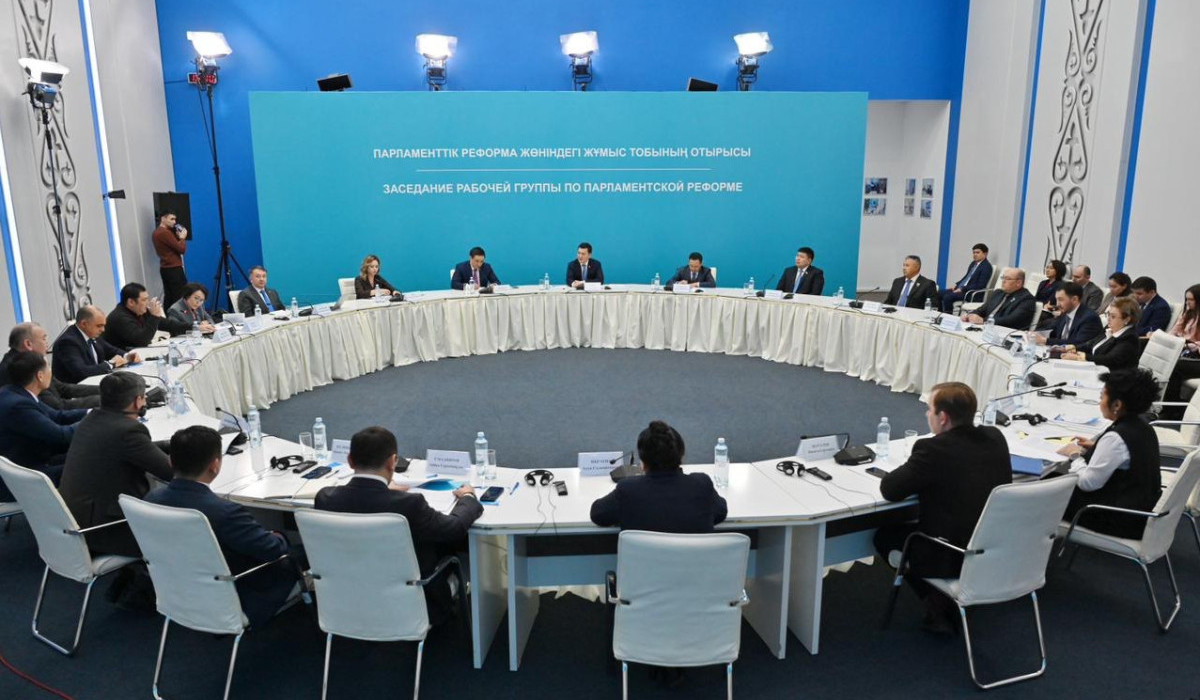
Photo credit: parlam.kz
Since October last year, around 600 reform proposals have been submitted by citizens, experts, and civil society organizations through the Parliamentary Reform section of the e-Otinish and eGov platforms, reported Khabar.
The meeting focused on expanding Parliament’s powers and refining constitutional procedures governing its participation in the formation and oversight of key state bodies. Legal scholars and members of the expert community continue to play an active role in shaping the reform agenda by providing professional assessments and recommendations.
According to Natalia Pan, director of the Institute of Parliamentarism, proposals have been received from a wide range of political parties and public organizations. These include the Baitak political party, the National Anti-Corruption Movement Zhanaru, the National Bar Association, the TOQTAMYS legal community, the International Chamber of Arbitration and Mediation, the Parliamentarism Development Fund, the Kazakhstan Congress of Tatars and Bashkirs, the Institute of Economic Policy, the Civil Initiative initiative group, and other civil society actors.
Yerzhan Zhienbayev, deputy head of the working group and assistant to the Kazakh President on legal matters, outlined general approaches to constitutional procedures that would define Parliament’s role in forming the Government, the Constitutional Court, the Supreme Audit Chamber, the Central Electoral Commission, and other state institutions. These approaches were developed based on proposals submitted by working group members and political parties.
“We managed to thoroughly examine and discuss matters related to legislative activity, including approaches to the procedural aspects of initiating and adopting laws, such as the number of readings and the required voting thresholds for decision-making,” Zhiyenbayev said.
