
ASTANA – President of Estonia Alar Karis highlighted key areas of cooperation with Kazakhstan, including digital governance, AI regulation, academic exchanges, and logistics development, in an interview with The Astana Times as part of his state visit to Kazakhstan.
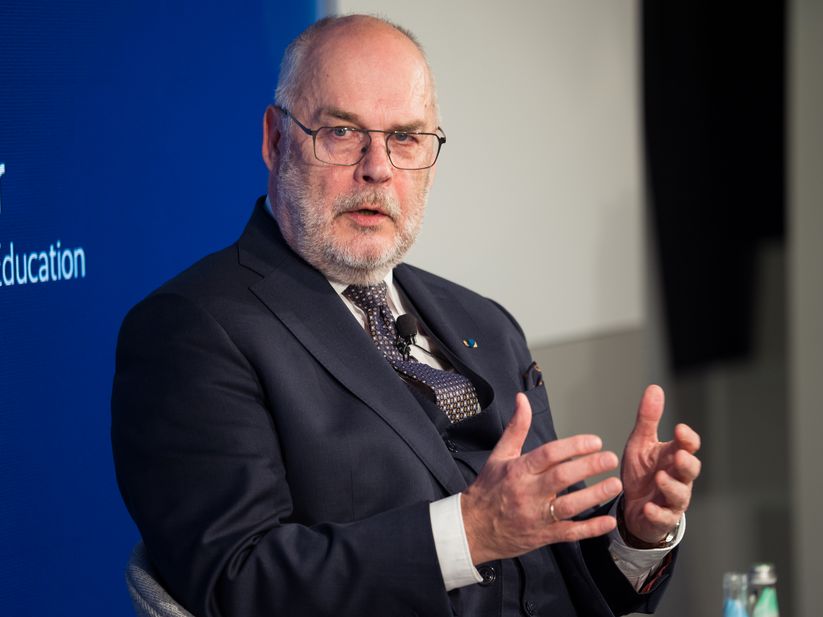
President of Estonia Alar Karis. Photo credit: MSC/Krey
Economy and logistics: new opportunities for cooperation
The Estonian delegation to Kazakhstan included representatives of the business, logistics and port industries. At a business forum on Nov. 18, Kazakhstan and Estonia secured deals worth more than $517 million.
President Karis underscored the strategic role of both countries as regional gateways.
“Kazakhstan is a gateway to Asia, and Estonia is a gateway to Europe. We need these connections,” he added.
He highlighted the transport of Kazakh grain through Estonian ports as one of the most significant areas of cooperation. “Our ports are highly developed, and we have already signed a major agreement on grain transportation,” he said.
Development of digital governance
Estonia is widely regarded as a global leader in digital governance, with nearly all public services available online. Assessing Kazakhstan’s digital transformation, President Karis emphasized the country’s progress.
“In Estonia, we have 100% of services online, and I was told that Kazakhstan has achieved 90%, which is a very high percentage,” he said.
He noted that the foundation of successful digital transformation is trust.
“First, in technology, and even more importantly, in the government. We started nearly 30 years ago from scratch, focusing on transparency and fighting corruption, because you cannot bribe a computer. We also made digital ID compulsory, and people understood its value. That trust allowed us to move forward quickly and make services very convenient for everyone,” he explained.
Karis stressed that Kazakhstan should not try to replicate any foreign system. “My advice is always the same: don’t copy anything. Learn from others’ experiences, but do what is necessary for your own country,” he said.
Artificial intelligence
Estonia is integrating AI solutions across government services, schools, and businesses. President Karis described AI as a key area for collaboration with Kazakhstan, particularly as Kazakhstan recently became the first country in Central Asia to adopt an AI law.
“Legal and ethical issues are very important. But laws should not become a barrier. Regulation must ensure that AI serves the benefit of humankind,” he said.
The Estonian president described their approach as a collaborative effort between the state, educational institutions and the private sector. “We launched the AI Leap platform in Estonia, a tool for teachers, students and businesses. Technology is already around us, and we must learn to use it wisely,” he said.
Academic partnerships
President Karis reiterated that academic cooperation between the two countries began years ago during his first visit to Kazakhstan in 2011, when he served as a university rector.
“We are already collaborating, and we can do even more. At my lecture at Nazarbayev University, several students said they would spend a semester studying in Estonia. This is an excellent exchange of cultures and knowledge,” he said.
He stressed that solid academic partnerships are built not on documents, but on real human connections. “Memorandums are important, but the main thing is direct contact. You cannot force researchers to collaborate, but you can create the conditions and the interest,” he added.
President Karis emphasized the importance of deepening long-term, sustainable ties between Estonia and Kazakhstan.
“We must continue our cooperation. Each country has its strengths, and together we can achieve more,” he said.
