
ASTANA – President Kassym-Jomart Tokayev announced that Kazakhstan will significantly expand the use of artificial intelligence in satellite monitoring of agricultural land, stressing that digital technologies must play a central role in managing the country’s most strategic resource.
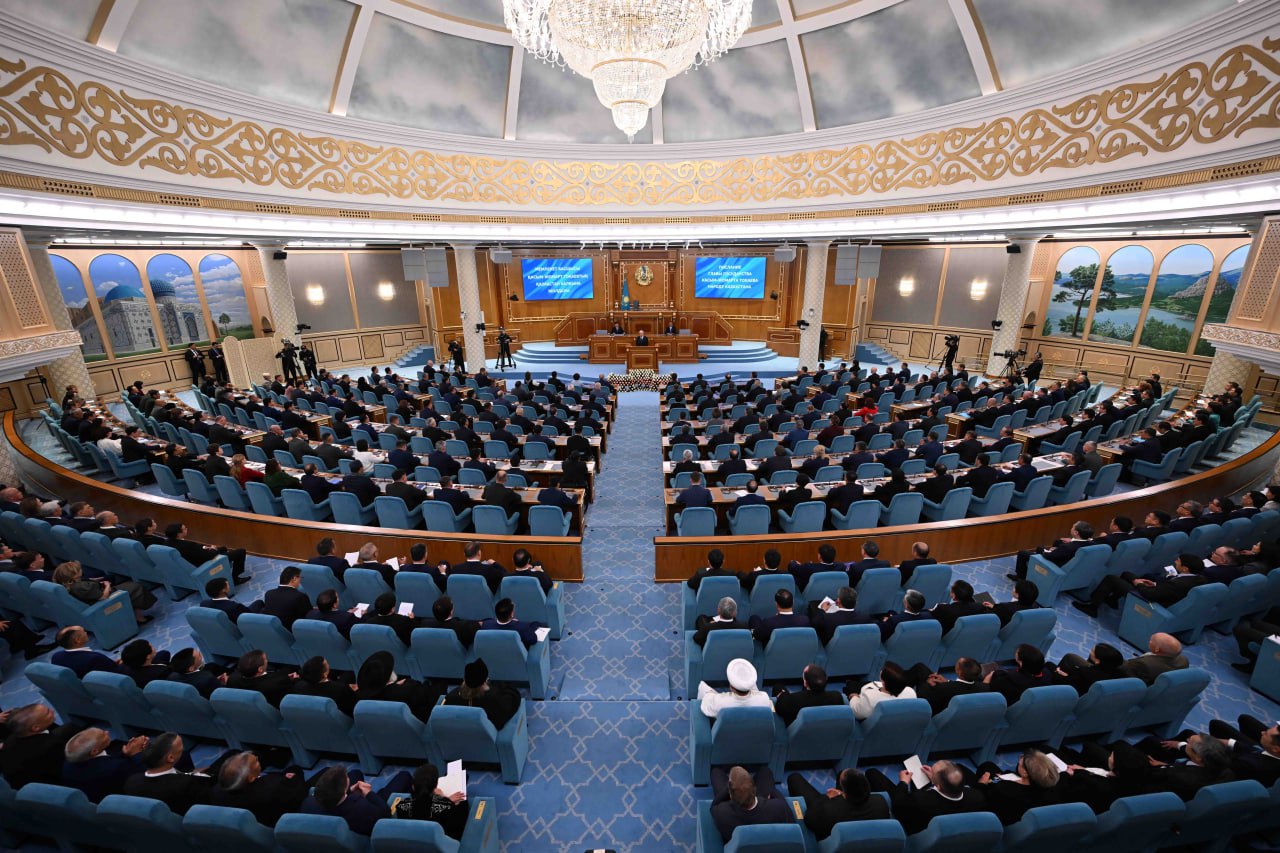
Photo credit: Akorda
Speaking in his state-of-the-nation address on Sept. 8, Tokayev said that space monitoring and geoanalytics are already helping to identify unused lands and return them to circulation, but further progress is needed.
“We must increase the efficiency of satellite monitoring of agricultural lands using artificial intelligence. On this basis, in-depth analysis of land quality, crop yield, and the condition and distribution of agricultural crops should be carried out,” he stated, noting that this approach should also apply to forestry, where 9,000 hectares of unclaimed forest were recently discovered in North Kazakhstan.
President Tokayev reported that more than 13.5 million hectares of agricultural land have been returned to state ownership since 2022, though only 6 million have been redistributed to new users. He tasked local authorities with ensuring that all returned lands are brought into permanent circulation by mid-2026 to boost production and address pasture shortages. A single digital map of land resources integrating cadastral data, subsoil use, and infrastructure will also be developed.
Agro-industrial competitiveness and exports
Tokayev also highlighted broader challenges in the agro-industrial sector. He called for the development of agrohubs and logistics centers, closer cooperation with foreign investors, and stronger state support for domestic producers, notably in the dairy industry, which he said is disadvantaged compared to competitors in other Eurasian Economic Union (EAEU) countries.
Agricultural exports, including traditional national products, should be actively promoted abroad, with attention to logistics, veterinary and phytosanitary standards, and marketing strategies, Tokayev added. He emphasized that this effort requires coordination among multiple government agencies and support from Parliament.
Looking ahead, Tokayev stressed the urgent need to strengthen agricultural science, which he said remains poorly commercialized despite substantial budget funding. Only 17% of research developments are commercialized, and just 40% of graduates pursue careers in this field.
Tokayev reiterated his earlier instruction to transform the National Agricultural Scientific and Educational Center into an agro-technological hub and called for a clear plan to advance agricultural science with a focus on digital technologies, veterinary research, and phytopathology.
“The long-term dynamic growth of the agro-industrial complex is no longer possible without the accelerated development of applied agricultural science. We need a clear plan aimed at raising productivity and competitiveness in the sector,” Tokayev said.
