
ASTANA – Animal welfare requires effective enforcement of existing laws, experts said at a July 15 roundtable that examined gaps in the country’s animal protection policies.
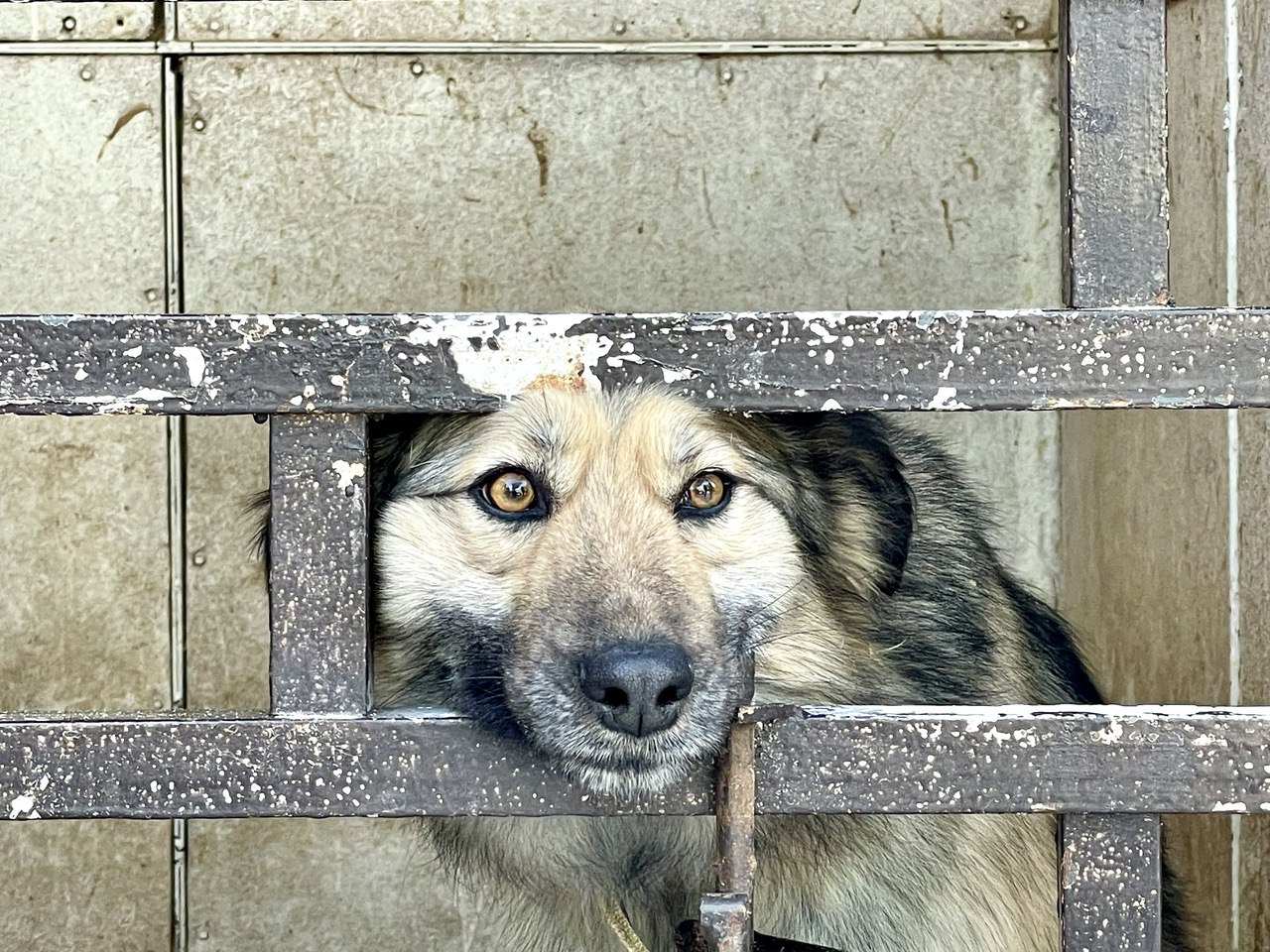
Animal welfare legislation suffers from a major drawback, which is an ineffective implementation at local government level, according to Zhansaya Akhmetova. Photo credit: Assel Satubaldina
The roundtable was hosted by the Almaty Initiative, a permanent dialogue platform for addressing animal welfare concerns and proposing policies.
The law on the responsible treatment of animals came into force in December 2021. This is the first law that provided tougher penalties for animal cruelty. The law establishes general and special requirements for the treatment of animals, protects animals from cruelty, prevents the cruel killing of animals and provides access to information about stray animals.
The frequent cases of stray animals attacking people have prompted Mazhilis, a lower house of the Kazakh Parliament, to propose amendments to the existing law.
“According to official information, over the past two years, specifically in 2023 and 2024, two adults have died from dog attacks in Kazakhstan. The Parliament has reported that approximately 40,000 dog attacks are recorded annually in the country. Most of these animals are considered stray or homeless. The scale of these incidents indicates the existence of systemic problems that go beyond isolated incidents,” said Galina Moisseyenko, chairwoman of Kazakhstan’s Center for Public Monitoring of International Treaties.
Yet, Moisseyenko noted that the data on animal attacks is often unreliable, as incidents involving pet dogs and stray dogs are not clearly distinguished. With tens of thousands of dog attacks (including pet dogs) reported in Kazakhstan, the question is, how often have local government officials held someone accountable for these incidents.
“There are practically no such cases in Kazakhstan,” Moisseyenko said.
“Weak prevention and administrative practices, failure to enforce legislation by the authorities themselves, and lack of regular monitoring of pet owners are evidence of ineffective mechanisms for ensuring responsible treatment of animals. All this leads to a situation where people’s safety depends not on the law, but on chance,” she said.
The key proposed amendment is the rejection of the trap-neuter-vaccinate-return (the process by which stray animals are captured, sterilized, vaccinated and returned to their original home/habitat) program and the transition to the so-called “non-returnable” capture system. It involves the euthanasia of unowned stray animals after 15 days if, during this time, they have not been claimed by new owners, were sick, or showed aggression.
Alternative mechanisms to counter animal attacks
Animal welfare legislation suffers from a major drawback, which is an ineffective implementation at local government level, according to Zhansaya Akhmetova, a consultant in the Social and Economic Policy Department of the Administration of the President of Kazakhstan.
“In fact, the situation we are currently facing with stray animals is primarily a consequence of the fact that the law itself was not properly enforced or implemented at the local level. This led to an uncontrolled number of stray animals, some of which turned out to be aggressive,” Akhmetova said.
“Because measures were not taken when they should have been, we do not support these amendments. In general, we are in favor of humane treatment and responsible care of animals. We want owners to be responsible for their animals, take the necessary measures, and have them microchipped,” she said.
According to Akhmetova, the presidential administration has assigned the Ministry of Ecology and Natural Resources, along with several other government agencies, to ensure that the implementation of the law is carried out effectively and to a high standard.
Kanat Orynkhanov, chairman of the National Veterinary Chamber of Kazakhstan, said that simply culling stray animals is both ineffective and potentially dangerous. Eliminating all stray dogs could open up the food territory to other pests, such as rats and mice, which are known carriers of numerous diseases capable of triggering epidemics.
“According to various sources, for every animal that is killed, two or three more will take its place. A sterilized dog or cat has the ability to guard its territory. That is, they will guard the food supply and not let other animals in,” Orynkhanov said.
Orynkhanov emphasized that the trap-neuter-vaccinate-return program is a more humane and effective alternative to simply culling. “Here, it is necessary to select those who can be kept and socialized, and those who cannot be adapted to life in the city,” he said.
Yelena Inozemtseva from Dobroe Serdce (Good Heart) public shelter in Oral city highlighted that one of the biggest challenges shelters face is the lack of a designated land plot for their operations.
“We are located on rented land, which means we are crammed into these small plots and have to create conditions for the animals ourselves,” Inozemtseva said.
“For example, our shelter specializes in animals that have been injured at the hands of humans, in traffic accidents, or are sick. We have deaf, blind, limbless, tailless animals – all kinds of different ones. Such animals need special conditions, because we can’t just send them out onto the street or deny them the chance to live,” she said.
Inozemtseva also criticized the often one-sided media coverage of the stray dog issue, highlighting its lack of balance and reliance on exaggerated, unsubstantiated claims.
The Astana Times correspondent Assel Satubaldina visited one of Astana’s shelters, covering the dedication and compassion involved in caring for the hundreds of animals housed there.
