
ASTANA – A government bond and a shipment of grain may seem worlds apart. But both are among the assets Kazakhstan is looking to bring onto digital platforms as it tests whether tokenization can open new financing channels and make investment markets accessible to more people.
Generated by AI, photo credit: The Astana Times
The idea is no longer confined to cryptocurrency circles. Tokenization turns rights linked to real-world assets into digital tokens recorded on a blockchain. Depending on the legal structure, a token may represent a share in an asset, a financial claim or an entitlement to delivery. The distinction matters: a digital record does not, by itself, create ownership or guarantee a return.
Kazakhstan has begun testing the concept in its own securities market. The Kazakhstan Stock Exchange (KASE) registered its first digital financial asset issued by a private company, ALTA Telecom, this October. The asset was divided into 100,000 tokens, with trading beginning on Oct. 28, marking another step in the development of Kazakhstan’s tokenized financial market. On Nov. 9, the National Bank placed a 10 billion tenge (US$22.4 million) tranche of tokenized short-term notes through the KASE as part of a 50 billion tenge (US$112 million) offering, also made available in traditional form. The 91-day notes carried a weighted average annual yield of 15.72%. The parallel placement let the bank test the digital format alongside established market infrastructure under the same pricing conditions.
The next step is already on the calendar. National Bank Governor Timur Suleimenov said Kazakhstan plans to issue tokenized government bonds jointly with the Ministry of Finance in the first quarter of 2027. Authorities are also looking at real estate, precious metals and mineral resources as potential assets for tokenization.
The asset is only the beginning
For Rachel Lee, director of blockchain and digital assets at Hong Kong Cyberport, the central question is not how many assets can be tokenized, but whether investors have a reason to use them. Tokenization still accounts for a small part of the financial system, she said, and turning it into everyday infrastructure will take more than issuing digital versions of existing assets.
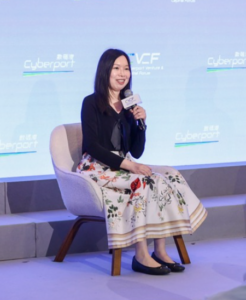
Rachel Lee, director of blockchain and digital assets at Hong Kong Cyberport on Nov. 6 Photo credit: CVCF
“If it’s just tokenization, and you just buy and hold, and you don’t do anything with it, then there’s not much incentive for people to do so,” Lee said in an interview with The Astana Times.
Its value grows when a tokenized asset can be used in other financial activities, such as collateralized lending or on-chain financing. According to her, that can keep money and assets moving instead of leaving them idle.
That is a more demanding test than simply putting an asset on a blockchain. A token needs a market, buyers and a reason to change hands. It also needs financial institutions and service providers willing to support the new model. Lee noted that faster settlement, for example, could disrupt intermediaries whose business depends on existing transaction cycles. The challenge is not just to build a more efficient system, but to bring established market participants along.
Hong Kong has been building its digital asset ecosystem through cooperation between the government, regulators, financial institutions and technology companies. Lee said cross-border adoption will take time because blockchain may allow transactions to move across borders, but regulation still determines who can issue, hold and trade an asset in each jurisdiction.
Regulation is in place; the market must follow
Kazakhstan is among the more advanced jurisdictions in Central Asia in regulating digital assets, Astana Financial Services Authority (AFSA) said in a written response to The Astana Times. The Astana International Financial Centre (AIFC) began developing its framework in 2018 through the FinTech Lab regulatory sandbox. Since 2024, it has had a dedicated regime for platforms that issue and trade tokenized assets backed by real-world holdings.
But a rulebook alone will not create a market.
“The primary bottlenecks today are not technological but infrastructural and commercial,” the regulator said.
Kazakhstan needs more high-quality assets that businesses are prepared to bring to market, clearer recognition of tokenized rights across the AIFC and national legal systems, and deeper liquidity so investors can trade assets at transparent prices.
The sectors that appear best suited to an early start are commodities and agriculture. According to AFSA’s press service, Kazakhstan already has established production and supply chains in both, as well as businesses that need financing. Real estate could offer opportunities through fractional ownership, while infrastructure projects may require more complex legal and financial arrangements.
Tokenization could allow an asset that once required a large investment to be divided into smaller units. That may bring retail investors into markets previously dominated by institutions and give companies another way to raise capital. But accessibility has to come with safeguards. The regulator pointed to independent valuation and verification, secure custody, clear legal rights, adequate disclosure and controls against money laundering and terrorist financing.
“Ultimately, democratization should mean giving investors access to new opportunities, not exposing them to risks they do not understand,” AFSA’s press service said.
What does a grain token actually buy?
The question becomes concrete in agriculture. Anvar Niyetkaliyev, co-founder of Commodity Chain Ltd., is preparing a pilot project built around tokenized grain. The company received an AFSA license in June 2026 to organize trading and clearing of investment tokens within the FinTech Lab. It is now completing technological and operational preparations and has not yet begun transactions.
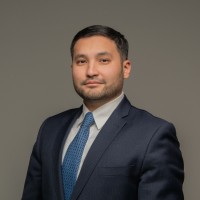
Niyetkaliyev said it is considering other sectors and sees potential to expand into Central Asian markets, where businesses face similar financing constraints.
Photo credit: Niyetkaliyev’s personal archive
Niyetkaliyev said the first pilot will use a limited volume of grain. The company plans to test each step, from verifying the underlying commodity and issuing tokens to carrying out trades and meeting contractual obligations. The first transactions will take place only after the remaining procedures are completed and the company receives authorization to commence operations. The volume will depend on partner readiness and the results of testing.
The model does not mean that every token holder automatically owns a portion of grain stored in a warehouse. The rights attached to a token will depend on the legal structure of each issuance and could include a claim, a delivery entitlement or another contractual right.
“The mere fact of owning a token does not automatically transfer ownership of the physical commodity,” Niyetkaliyev said.
This distinction is central to how the business model works. A blockchain can record who holds a token and how it changes hands. It cannot confirm on its own that the grain exists, meets the required quality or remains safely stored. Commodity Chain plans to rely on documents confirming the grain’s existence and characteristics, as well as contractual arrangements with grain warehouses, independent inspection companies and other market participants.
“Behind the token there should be not just a record on the blockchain, but a legally formalized and enforceable obligation,” Niyetkaliyev said.
In other words, the technology can make records easier to track; the physical asset and the legal promise still need to withstand scrutiny.
The company sees grain as a starting point, not a one-off product. Niyetkaliyev said it is considering other sectors and sees potential to expand into Central Asian markets, where businesses face similar financing constraints. Whether investors will want to buy and trade these instruments at scale, however, remains to be tested.
Beyond the pilot
Kazakhstan now has two parallel tracks: tokenized securities being tested through its established financial market infrastructure, and real-world assets such as grain being prepared for issuance through a regulated platform. They address different needs, but both will face the same test. Investors must understand what they are buying, issuers must deliver what the token promises, and a secondary market must give buyers a credible way out.
Tokenization may lower the cost of issuing and transferring some assets, and fractional ownership may widen the pool of potential investors. It will not make every asset liquid, every investment safe or every investor ready to participate. The technology becomes meaningful only when it solves a practical problem better than the system already in place.
For Kazakhstan, the next milestone is not another announcement about what can be tokenized. It is a transaction that works from end to end: with a real asset, clear rights, willing investors and a market where the token can be used or traded. That is when tokenization will begin to look less like a promise and more like part of the financial system.
