
ASTANA – Transit freight volumes through Kazakhstan increased 5.6-fold over the past decade, rising from 6.5 million tons in 2015 to 36.3 million tons in 2025, according to the Bureau of National Statistics. The growth underscores Kazakhstan’s expanding role in transport links connecting China, Central Asia, Russia and Europe.
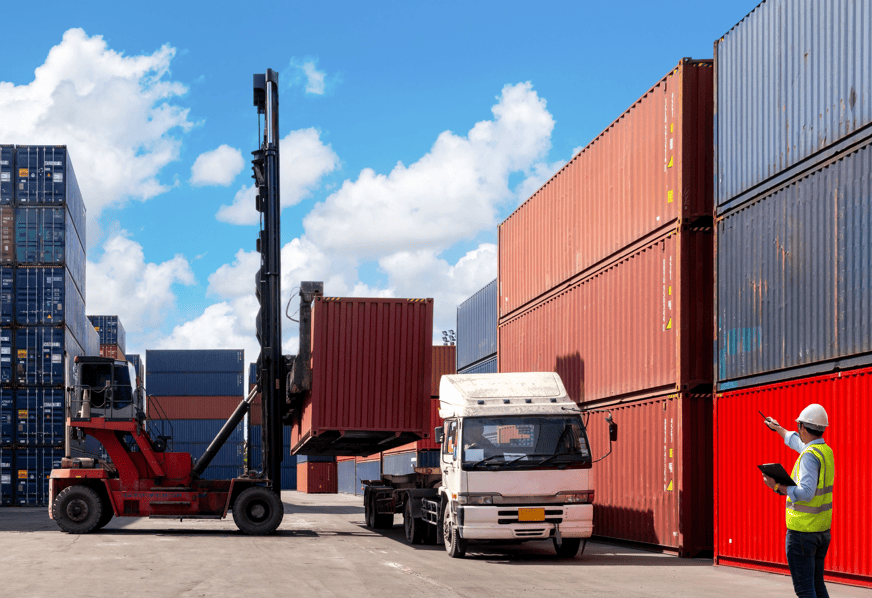
Photo credit: energyprom.kz
The increase accelerated in recent years, with transit freight volumes rising 70.8% in 2025 alone, adding 15.1 million tons. The figure exceeded 10 million tons for the first time in 2020, reaching 11.6 million tons, before climbing to 15.6 million tons in 2022 and 21.3 million tons in 2024. The upward trend continued in 2026. According to the government, 32.6 million tons of cargo passed through Kazakhstan in transit between January and September, up 13.1% compared with the same period last year.
The government aims to increase annual transit freight volumes to 100 million tons by 2035. To support this goal, Kazakhstan is building new railway lines and modernizing existing sections of its transport network.
However, official estimates for 2025 vary across government reports. While the Bureau of National Statistics recorded 36.3 million tons, a government report published on Oct. 15 put the figure at 39.1 million tons, representing an 18% annual increase.
Railways and road transport drive transit growth
Rail transport accounted for 18.7 million tons of transit freight in 2025, up from 13.3 million tons a year earlier. Another major category was vehicle combinations, including tractors with semi-trailers or trailers, which nearly tripled from 5.7 million tons in 2024 to 16.8 million tons in 2025. Together, these two categories accounted for the overwhelming majority of transit freight.
Meanwhile, transit shipments of vehicles moving under their own power as commodities declined from 1.8 million tons to 745,900 tons. Other transport categories accounted for relatively small volumes.
China remains a key source of transit freight
Routes originating in China dominated Kazakhstan’s transit freight flows in 2025. The largest route by volume was China–Uzbekistan, which carried 6.5 million tons. An additional 4 million tons consisted of consolidated cargo from China bound for Kazakhstan and other countries. The China–Russia route ranked third, with 3 million tons.
The top 10 routes also included Uzbekistan–Kazakhstan, China–Tajikistan, China–Belarus and Uzbekistan–China. The distribution highlights Kazakhstan’s role not only in freight transport between China and Europe but also in connections linking Central Asian countries with Russia and Iran.
Industrial goods make up a significant share of cargo
Industrial products accounted for a substantial share of transit freight through Kazakhstan in 2025. Cold-rolled iron and steel products topped the list, at 5.6 million tons. Motorcycles, mopeds and similar vehicles ranked second, with 2.2 million tons, followed by passenger cars at 619,200 tons.
Other leading categories included certain polymers, at 482,400 tons, and automotive parts, at 478,200 tons.
The top 10 product categories also included coated iron and steel products, vinyl chloride polymers, nitrogen and potassium fertilizers, and ceramic tiles. The figures indicate that Kazakhstan’s transit network carries both raw materials and finished goods, including vehicles and construction products.
Total freight transport falls under revised methodology
Beyond international transit, Kazakhstan’s transport sector handles domestic, export and import freight. The Bureau of National Statistics reported that all modes of transport carried 712.1 million tons of cargo between January and September 2026. This compares with 725.6 million tons in the same period of 2023, 782.4 million tons in 2024 and 853.5 million tons in 2025.
The latest figure appears to represent a 16.6% year-on-year decline. However, the comparison is affected by a change in statistical methodology: the bureau excluded empty rail wagons from freight transport calculations for January–September 2026 and the corresponding period of 2025.
When both periods are calculated using the same methodology, total freight transport instead increased by 0.9%.
Road and urban electric transport carried the largest volume during the first nine months of 2026, at 270.4 million tons. Railways transported 248.5 million tons, compared with 339.4 million tons a year earlier. On a comparable methodological basis, rail freight transport fell by 1.4%.
Pipelines transported 189.8 million tons, while maritime and coastal shipping carried 3 million tons. Inland waterways transported 265,000 tons, and air freight amounted to 20,000 tons.
Freight revenue rises despite changes in volumes
Revenue from freight, baggage and cargo-baggage transportation across all modes reached 4.5 trillion tenge (US$9.9 billion) between January and September 2026, increasing 5.3% year on year.
Rail transport generated the largest share, with revenue rising from 1.7 trillion tenge (US$3.73 billion) to 1.8 trillion tenge (US$3.95 billion). Revenue from road and urban electric transport increased from 1.1 trillion tenge (US$2.41 billion) to 1.2 trillion tenge (US$2.63 billion).
Pipeline transport revenue declined from 1.5 trillion (US$3.29 billion) to 1.4 trillion tenge (US$3.07 billion). Maritime and coastal transport generated 22.6 billion tenge (US$49.6 million), air transport 12.6 billion tenge (US$27.6 million), and inland water transport 1 billion tenge (US$2.2 million).
Despite the overall increase in revenue, freight transportation’s share of total transport enterprise revenue gradually decreased, from 79% in January–September 2023 to 77.9% in the same period of 2026.
The share varied considerably by mode. Freight accounted for 99.5% of revenue in maritime and coastal transport, 93.8% in rail transport, 76.1% in road and urban electric transport, and 52.4% in inland water transport. In aviation, where passenger services account for most revenue, freight contributed just 1.6%.
As international freight flows expand, Kazakhstan has an opportunity to derive greater economic benefits from its geographic position. Beyond developing transport corridors, the country will need to expand supporting services, including logistics, warehousing, vehicle maintenance and repair.
Strengthening this infrastructure could help domestic companies participate more actively in international supply chains, create jobs and increase the transport sector’s contribution to the national economy.
