
ASTANA – Central Asia is expected to remain one of the fastest-growing regions in the European Bank for Reconstruction and Development’s (EBRD) economies in 2026 and 2027, although rising energy costs, water scarcity and tighter financing conditions could weigh on the outlook, according to the bank’s latest Regional Economic Prospects report.
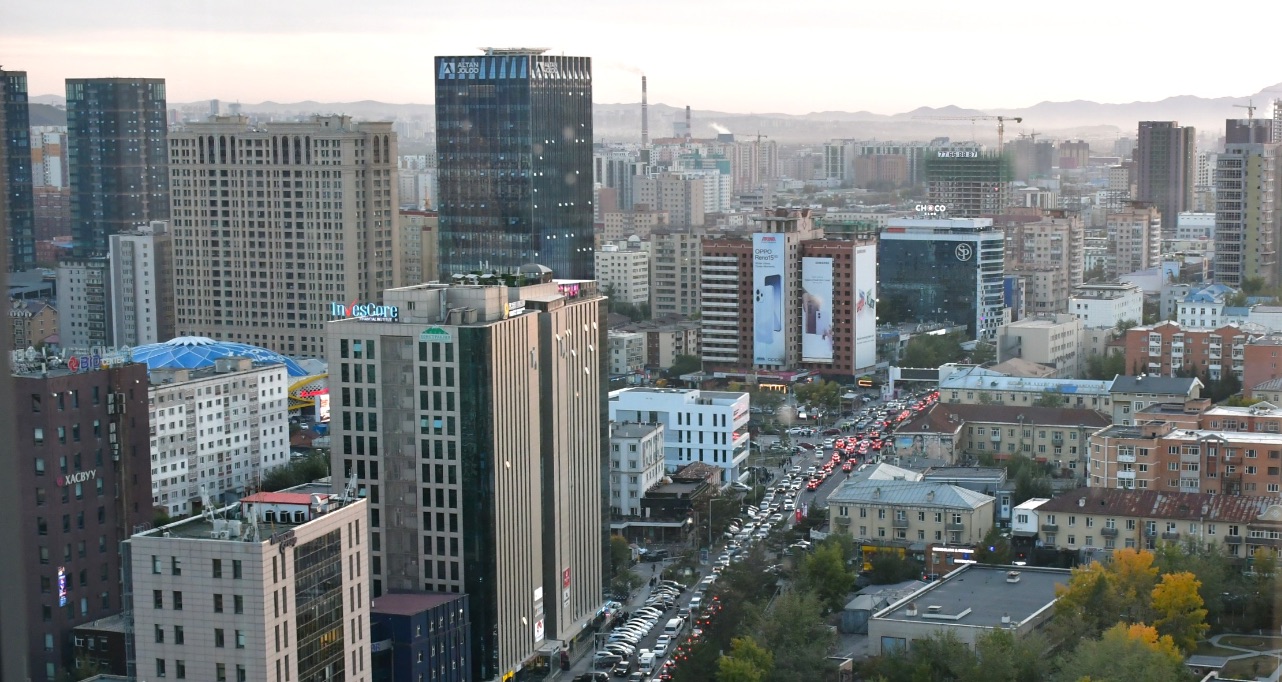
Photo credit: EBRD
The EBRD forecasts economic growth in Central Asia at 5.8% in 2026 and 5.3% in 2027. Forecasts were revised upward for Uzbekistan, supported by strong domestic demand, and Mongolia, driven by record mining output. At the same time, disruptions to fuel supplies from Russia remain a downside risk for the region.
“Inflationary pressures increased across the region amid higher food and energy prices, reflecting elevated global energy costs linked to the conflict in the Middle East and fuel-market disruptions in Russia,” reads the report.
In Kazakhstan, economic growth narrowed to 4.1% year on year in the first half of 2026, according to the EBRD.
“At the same time, non-oil sectors remained robust. Manufacturing output increased by 9% year on year over the same period, supported by strong performance in machine building, particularly the production of motor vehicles, trailers and semitrailers, as well as equipment repair and installation, food processing and chemicals,” it added.
The report, titled “Running Dry,” also identifies growing constraints in three key areas – oil exports, water and global savings. The EBRD said these pressures reveal vulnerabilities in energy systems, food supply chains and financing conditions across its regions.
The broader economies where the EBRD invests are projected to grow by 2.5% in 2026, before accelerating to 4% in 2027. The 2026 forecast was revised down by 0.6 percentage points compared with the bank’s previous forecast in June.
Energy pressures
The EBRD report highlights the impact of higher energy prices on economies across its regions. Oil prices rose from around $65 per barrel before the escalation of the conflict in the Middle East to more than $100 per barrel in April 2026. Prices remain 30% to 60% above their pre-conflict level, while refined products, particularly diesel and jet fuel, have experienced even larger increases.
Gas markets have also tightened. According to the EBRD, gas prices have risen by more than 70% since February, while global seaborne liquefied natural gas exports have fallen by 40% as Middle Eastern cargoes have largely stopped.
The developments are particularly relevant for energy-producing economies such as Kazakhstan. Higher energy prices can support export revenues, but volatility in global energy markets also creates risks for economies dependent on commodity exports.
“Disruptions along the Caspian Pipeline Consortium export route, together with fire- and powerrelated incidents at the Tengiz field in early 2026, resulted in an 8.9% contraction in oil and gas output in January-July 2026,” reads the report.
“Consequently, the authorities revised the country’s annual oil production target from 98 million to 96 million tons, with output likely to fall short of the previous year’s level,” it added.
Kazakhstan is seeking to reduce its reliance on hydrocarbons, with construction, manufacturing, transport, trade and agriculture increasingly contributing to economic growth.
The EBRD also noted that oil and gas account for around two-thirds of primary energy use across its regions. Reducing dependence on fossil fuels will require greater investment in renewable energy, energy storage and nuclear power.
Water scarcity becomes an economic concern
Water availability is another major issue highlighted by the EBRD. The report notes that drought is increasingly affecting agriculture, transportation and energy generation, making water availability an important economic consideration alongside energy security.
In Central Europe and the Baltic states, 38% of land faced medium or high agricultural drought risk in 2026, compared with an average of 12% since 2010. Low water levels on the Danube and Rhine have also disrupted industrial shipments and reduced output from hydropower and nuclear plants by around one-third.
The issue has particular significance for Central Asia, where agriculture and energy production depend heavily on shared water resources.
Kazakhstan faces similar challenges. More than 44% of the river flow feeding the country’s waterways originates outside its borders, making cooperation with neighboring states increasingly important for water security.
The country’s dependence on transboundary water resources is particularly important for agriculture. Inefficient irrigation systems and growing demand for water are adding pressure to already limited supplies.
“Water scarcity, extreme weather and higher financing costs are compounding the effects of high energy costs, putting further pressure on growth,” said EBRD Chief Economist Beata Javorcik. She stressed the need for investment in resilience to help economies withstand future shocks.
Inflation and financing remain challenges
Inflation across the EBRD regions has stabilized at around 6%, after reaching 6.7% in April. The bank said inflation remains around two percentage points above its pre-pandemic average.
“Energy accounted for about a quarter of headline inflation, with limited pass-through to other components,” said the report.
At the same time, financing conditions have tightened. The EBRD linked higher long-term interest rates to falling national saving rates in advanced economies, persistent inflation, government deficits and increased corporate borrowing for investment in artificial intelligence.
Higher borrowing costs could make infrastructure, energy and water projects more expensive, increasing pressure on governments and businesses to prioritize investment and improve efficiency.
For Kazakhstan, these challenges come as the country seeks to maintain economic growth while diversifying its economy. Kazakhstan accounts for more than half of Central Asia’s combined GDP, giving its economic performance significant weight in the region.
Despite the external risks, the EBRD expects Central Asia to maintain strong economic momentum, with projected growth of 5.8% in 2026 and 5.3% in 2027. The outlook will depend partly on energy supply stability, domestic demand and the region’s ability to manage growing pressure on water and other critical resources.
