
ASTANA – The sixth World Nomad Games (WNG) came to a close in the Kyrgyz Republic on Sept. 6, leaving a lasting impression on athletes, visitors, volunteers and everyone who helped bring the event to life.
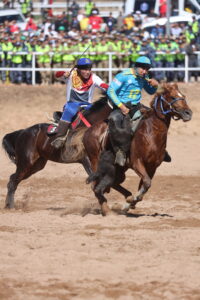
Kazakhstan and the Kyrgyz Republic faced off in kok boru, with the Kyrgyz team taking gold. Photo credit: Kaiyr Amanzhol
For six days, the games were filled with color, energy and the competitive spirit of athletes determined to win, while upholding one of the most important values of sport – respect for their opponents. Beyond the medals and victories, the event offered a powerful reminder that nomadic culture is not simply a chapter of the past. It remains an important part of the region’s identity, roots and living heritage.
From the horse races and wrestling arenas to eagle hunting and kok boru, the games brought centuries-old traditions into the present, giving thousands of participants and visitors a chance to experience the spirit of the steppe firsthand.
Kazakhstan finished the WNG with 74 medals, including 32 gold, 20 silver and 22 bronze, reported the Kazakh Ministry of Culture and Sports.
President Kassym-Jomart Tokayev congratulated Kazakhstan’s national team on its performance, saying the results reflected the athletes’ dedication, hard work and determination.
Tokayev expressed gratitude to the medalists, coaches and specialists who contributed to Kazakhstan’s strong showing and helped strengthen the country’s international standing as a center for the development of traditional sports.
Experiencing the spirit of the games
Beyond the sporting results, the games also offered visitors and participants an opportunity to experience nomadic culture and traditional sports.
For Kazakh volunteer Miras Yauda, the games were an unforgettable experience.
“Every day, we were at the heart of the events, watching teams compete across various sports. We felt the spirit of nomadic culture, saw the genuine interest of foreign visitors and shared in victories that left no one indifferent,” Yauda told The Astana Times.
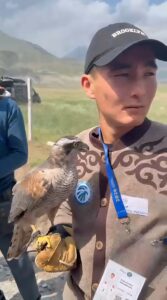
Serikbolsyn Zhalgasuly and his hawk, Zhebe. Photo credit: Yauda’s personal archieve
He also highlighted the high level of preparation and skill demonstrated by the athletes.
Among the events he watched were eagle hunting and archery, where Kazakh athletes competed for the top honors.
“It was spectacular. I got goosebumps when I heard that our athletes had won gold. It is important to showcase our nomadic heritage and draw attention to our traditional sports,” he said.
World-famous Japanese blogger Yuji Beleza also attended the games and paid particular attention to kok boru (a martial equestrian art of the Kyrgyz people) matches.
Speaking to local media, Beleza said the competition in the Kyrgyz Republic appeared more intense than what he had seen previously, while describing it as entertaining and energetic.
Beleza had previously watched kok boru at the fifth WNG in Astana in 2024, but this was his first time attending the event in the Kyrgyz Republic.
He said he enjoyed the local atmosphere and the energy of the fans and strongly recommended experiencing kok boru live at least once.
The U.S. kok boru players attending the games also highlighted the welcoming atmosphere, strong fan support and significance of the event.
“This is my first time here, and I can see how strong these athletes are. For me, lifting a goat is difficult, yet even children here can do it using the proper technique. I am learning from everyone and am grateful for this experience,” said U.S. athlete Jason Speta.
Held in the Kyrgyz Republic from Aug. 31 to Sept. 6, the games brought together about 3,000 athletes from 113 countries, making the 2026 edition the largest in the history of the competition.
