
ASTANA, BISHKEK – Following the fifth World Nomad Games (WNG) in Kazakhstan, the country has handed over the hosting baton to the Kyrgyz Republic, which holds the sixth edition Aug. 31-Sept. 6. The six-day international celebration of traditional nomadic sports to open tonight, will bring together over 100 countries, more than 2,000 representatives of sports, cultural and academic delegations.
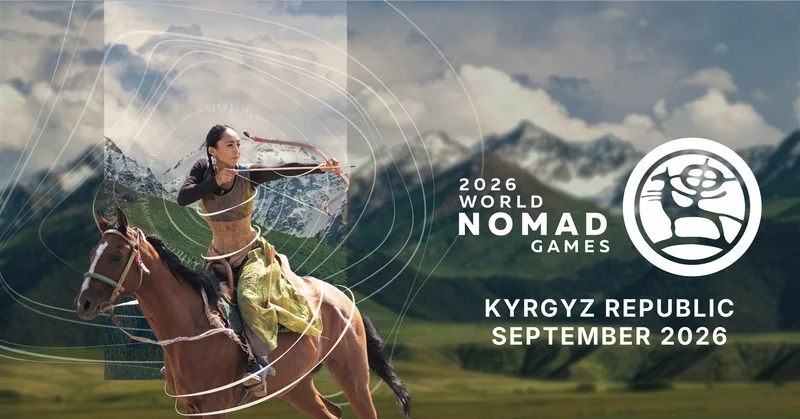
Photo credit: worldnomadgames.org
Launched in 2014, the WNG are the world’s only multisport competition dedicated entirely to traditional sports of nomadic peoples. Held every two years, the games aim to preserve and promote the cultural heritage of the steppe. Many of the disciplines are rooted in skills traditionally essential to life on the steppe, including wrestling, bone throwing, falconry, archery and horse racing.
The idea for the WNG originated in the Kyrgyz Republic, which hosted the first three editions in Cholpon-Ata.
In 2014, the Games brought together 583 athletes from 19 countries competing in 10 sports. In 2016, participation grew to 1,200 athletes from 62 countries across 26 sports. By 2018, around 2,000 athletes from 82 countries competed in 37 sports. The games were held in Iznik, Türkiye, in 2022, attracting more than 3,000 athletes from 102 countries across 13 sports.
In 2024, Kazakhstan hosted the fifth edition, with around 2,500 athletes from 89 countries competing in 21 sports. Kazakhstan sent the largest delegation, with 195 athletes, followed by the Kyrgyz Republic with 172 and Russia with 144. Wrestling was the largest discipline at the games, attracting 266 competitors.
Horses at the heart of the games
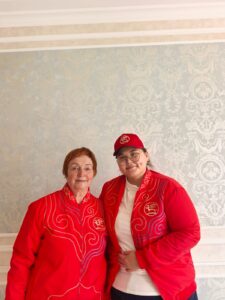
From left: Galiya Nurutdinova and Asiya Sarbayeva. Photo credit: Sarbayeva’s personal archieve
This year’s program is built around three main areas: sports, culture and science. The sporting program features traditional ethnic sports, national games and competitions practiced by peoples worldwide.
Some of the most anticipated events will take place around Lake Issyk-Kul. At the hippodrome in Cholpon-Ata, riders will compete in events that draw on centuries-old traditions of speed, agility and horsemanship. Horse racing will have a particularly prominent place in the program. Events include alaman baige, a long-distance race in which endurance and the ability to manage a horse’s strength are crucial.
The cultural program will feature festivals and an ethnovillage, where regions of the Kyrgyz Republic will showcase living traditions through crafts, music, dance, customs, rituals and national cuisine.
Kazakhstan is also preparing for the games, with a qualifying championship in zhorga zharys, a traditional pacing-horse race, recently held at the Central Hippodrome in Almaty, reported the capital’s akimat (city administration) on Aug.20.
Riders from Astana took first and second place after completing a 9-kilometer course.
One of the notable performances came from a 13-year-old female jockey who recently joined the team. Despite her young age, she delivered a strong performance in one of her first competitions and won a silver medal.
Aliya Toktassynova, a coach and champion rider, said the competition was particularly important because it served as a qualifying event for the upcoming WNG.
Volunteering adds a new dimension to the games
Volunteers play a key role in organizing and hosting the WNG, supporting visitors and participants and helping maintain order at sporting and cultural venues.
Around 3,000 volunteers are taking part in this year’s games, including international volunteers. Kazakhstan is also represented by a delegation selected through a competitive process.
The head of the Kazakh delegation Asiya Sarbayeva from the Mangystau Region, said that she had long wanted to take part in the WNG because of their atmosphere and cultural significance.
According to her, the games bring together professional athletes worldwide to showcase their strength and skills while allowing participants and visitors to experience traditional nomadic culture firsthand.
“Holding such a large-scale event is crucial for our culture, so I wanted to contribute in some way. I especially want to see the golden eagle hunting and tayak tartysh competitions. After all, reading in a book and seeing the ancient art of our nomadic ancestors in person are two different things,” Sarbayeva told The Astana Times.
For 73-year-old volunteer Galiya Nurutdinova from Kazan, Russia, these games are far from her first experience with the event.
She attended the WNG in 2016 and 2018 in Cholpon-Ata and volunteered at the 2024 Games in Astana. This year, she has returned to Cholpon-Ata.
“The WNG are not standard sporting competitions. They are extraordinary, emotional and captivating. In addition to witnessing unique sports that are rarely seen outside their regions of origin, you can take part in master classes, try traditional crafts and taste authentic nomadic cuisine,” Nurutdinova told The Astana Times.
She noted the atmosphere of ethnic sports is different from that of conventional sporting competitions held in stadiums and sports complexes.
“It really draws you in. You have to see it for yourself. It is difficult to describe,” she said.
Nurutdinova has volunteered at various world championships and Olympic events, however, she said the WNG hold a special place for her because of their cultural dimension.
“We are united by our shared nomadic heritage. These Games bring people from around the world together while introducing them to the history and traditions of nomadic peoples. They also help revive, preserve and promote the heritage of nomadic civilizations worldwide,” she said.
She also highlighted the games as an opportunity to meet people from various regions and countries.
“During the WNG in Astana, I met the silver volunteers, volunteers like me who are older and retired. Recently, I also came to Astana as a volunteer for the World Future Games and met friends I had made during the Nomad Games. Events like these bring people together,” Nurutdinova said.
