
ASTANA – A young inventor turning air pollution into printer pigments, a teacher inspiring students to rediscover the joy of reading and an entrepreneur harnessing solar energy to extract drinking water from the air are among 30 people featured in a United Nations exhibition that opened in Astana on Oct. 21.
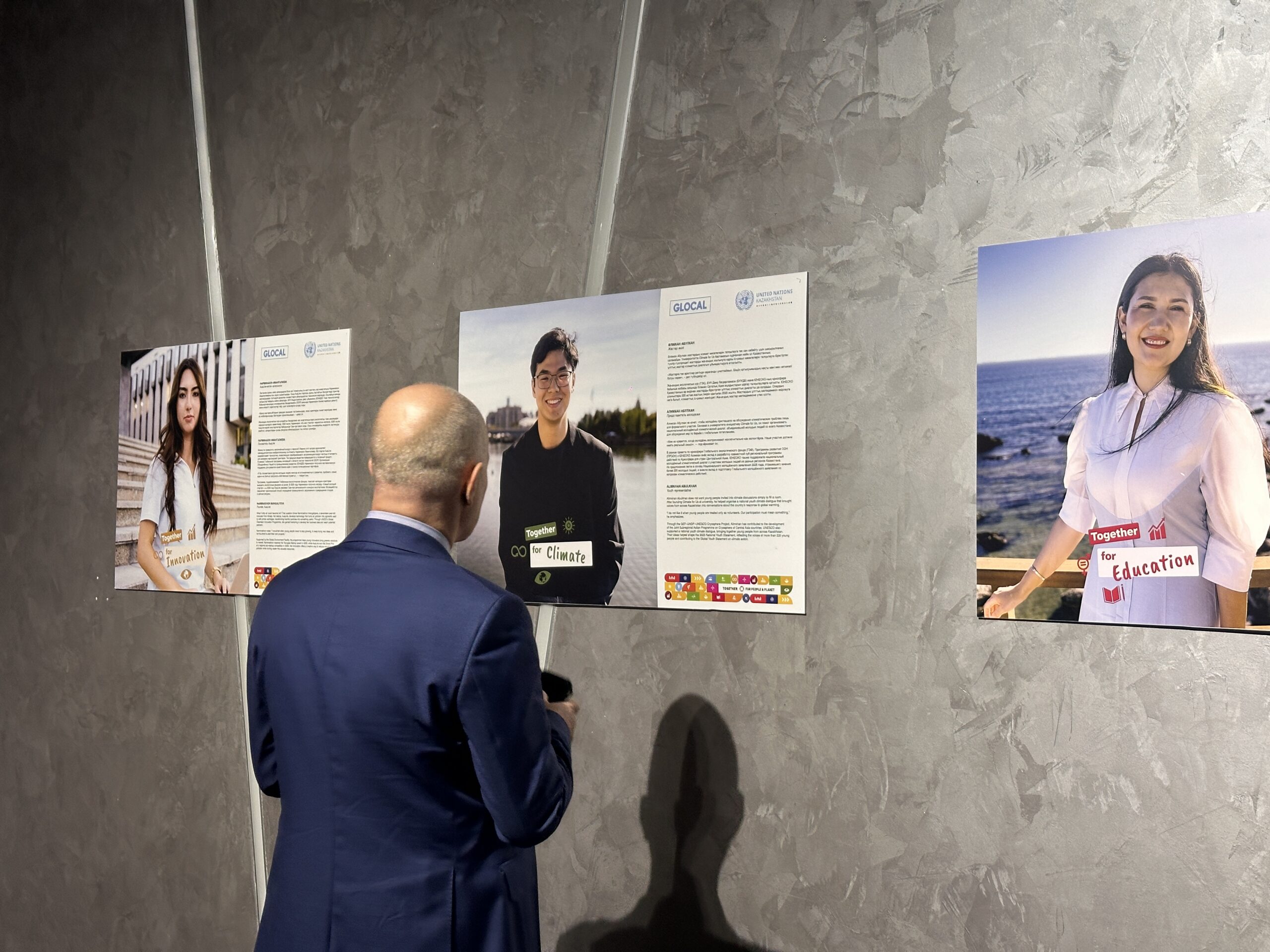
A visitor explores the GLOCAL exhibition in Astana. Photo credit: Dariga Bassybayeva / The Astana Times
The photography and multimedia exhibition, titled “GLOCAL: Global Goals. Local Lives,” highlights people whose work is helping turn the UN Sustainable Development Goals (SDGs) into practical solutions for communities across Kazakhstan.
The exhibition, which takes place in the National Museum of Kazakhstan, features stories from Astana, Almaty, Shymkent and Kyzylorda, as well as the Karagandy, Akmola, Turkistan and Mangystau regions. Those profiled include young innovators, educators, health care professionals, environmental activists, entrepreneurs working to address local challenges and expand opportunities for vulnerable communities.
From global commitments to global actions
Speaking at the opening ceremony, UN Resident Coordinator in Kazakhstan Sarangoo Radnaaragchaa stressed the importance of involving local communities in sustainable development efforts.
“Sustainable development is not something we deliver to people. It is something we build with people,” she said.
The exhibition focuses on five pillars of the UN’s 2030 agenda — people, planet, prosperity, peace and partnership, highlighting local efforts to address challenges ranging from environmental protection and education to health care and economic opportunity.
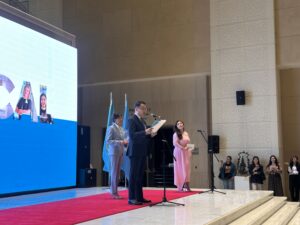
Yerzhan Ashikbayev, First Deputy Minister of Foreign Affairs of Kazakhstan, delivers opening remarks at the GLOCAL exhibition in Astana. Photo credit: Dariga Bassybayeva / The Astana Times
“The theme of today’s exhibition underscores the importance of connecting this global agenda with national priorities and action in our regions, cities and rural communities,” said First Deputy Foreign Minister Yerzhan Ashikbayev.
Chinwe Ogbonna, United Nations Population Fund (UNFPA) country representative in Kazakhstan, said the exhibition underscores the importance of aligning global goals with local priorities.
“This event signifies what can happen when we translate global goals to local priorities,” she said, describing the 30 featured stories as examples of transformative change.
Ogbonna noted that Kazakhstan has made progress toward the SDGs but emphasized that further work still remains. She highlighted persistent inequalities, climate-related challenges, the need for a more inclusive economy and the importance of strengthening partnerships and peace.
“Kazakhstan can do more across each of the five goals that we are demonstrating here today,” she said. Kazakhstan’s work on sustainable development also forms part of its broader agenda at the UN General Assembly, where the country has highlighted priorities ranging from water security to peacekeeping and nuclear disarmament.
Kazakhstan’s partnership with the UN
The exhibition also reflects the broader cooperation between Kazakhstan and the UN under the UN Sustainable Development Cooperation Framework for 2026–2030. The framework identifies four strategic priorities: empowered people and strong institutions, a resilient and inclusive economy, a sustainable environment, and strengthened social cohesion. Kazakhstan also used the UN General Assembly’s high-level week in September to strengthen international partnerships. The country’s foreign minister held bilateral meetings with international counterparts, discussing cooperation on issues of mutual interest.
Ashikbayev also pointed to the establishment of the UN Regional Center for Sustainable Development Goals for Central Asia and Afghanistan in Almaty as an important milestone in cooperation between Kazakhstan and the UN.
Water security, he said, remains a priority for the region. Ashikbayev also highlighted the country’s initiative to establish an international water organization under the UN aimed at strengthening coordination in global water governance.
These national and regional priorities connect with the exhibition’s central message: sustainable development takes shape through concrete action in people’s everyday lives.
The exhibition will run until Nov. 4.
