
ALMATY – Kazakhstan and the Kyrgyz Republic are the only Central Asian countries to meet the United States Department of State’s minimum fiscal transparency requirements, while Uzbekistan, Tajikistan and Turkmenistan did not meet the criteria, according to the 2026 Fiscal Transparency Report released by the U.S. Department of State.
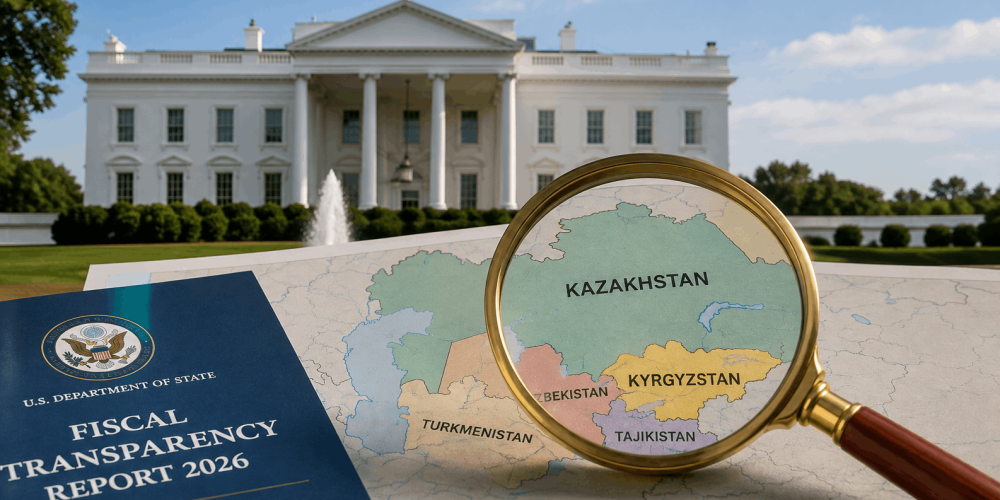
Photo credit: caravan-info.kg
The report assesses whether governments receiving U.S. assistance meet minimum standards for the public disclosure of budget and financial information. The latest review covered the period from Jan. 1 to Dec. 31, 2025 and evaluated 139 governments.
Overall, the department found that 73 governments met the minimum fiscal transparency requirements, while 67 did not. Of the governments that fell short, 14 were assessed as having made significant progress toward meeting the requirements.
Kazakhstan and the Kyrgyz Republic were included among the 73 governments that met the standards. The three other Central Asian states – Uzbekistan, Tajikistan and Turkmenistan – were included among the 67 governments that did not meet the minimum requirements. None of the three was identified as having made significant progress during the review period.
What the U.S. fiscal transparency assessment measures
The assessment focuses on whether governments make key public financial information available and whether citizens and other stakeholders can meaningfully examine how public resources are managed. The criteria include the public availability of national budget documents, including revenues and expenditures by ministry, as well as information on sovereign debt and the terms and conditions of sovereign loans made to foreign borrowers.
The department also examines the independence and effectiveness of supreme audit institutions, public disclosure of government audits, and transparency surrounding natural resource extraction and public procurement.
For the 2026 assessment, the U.S. strengthened the criteria by specifically requiring governments to make the terms and conditions of sovereign loans to foreign borrowers publicly accessible, including information on liabilities and collateralized assets.
The report said fiscal transparency contributes to effective public financial management, market confidence and economic sustainability. It can also reduce risks associated with corruption, financial crimes and unfair practices in international markets. At the same time, the State Department stressed that the assessment does not constitute an assessment of corruption. A country failing to meet the minimum fiscal transparency requirements does not necessarily mean that significant corruption exists, while meeting the requirements does not necessarily indicate a low level of corruption.
A broader concern for Central Asia
The contrasting assessments highlight differences in the region’s approach to fiscal disclosure. For Central Asian economies seeking to attract investment, the issue extends beyond compliance with a particular U.S. assessment. Greater transparency over government budgets, public debt, state-owned enterprises, natural-resource contracts and public procurement can affect how investors assess fiscal risks and the predictability of the business environment.
The State Department noted that fiscal transparency helps build market confidence and supports economic sustainability by giving citizens and markets greater visibility into government finances.
The 2026 report also warns that assessments can change from year to year because the U.S. government is required to update and strengthen its minimum criteria, while governments’ performance and available information can also change.
