
ALMATY – Kazakhstan is strengthening the institutional role of its Security Council, a move experts say could mark a shift toward more systematic strategic analysis and preventive risk management as the country’s understanding of national security expands beyond traditional defense and law enforcement.
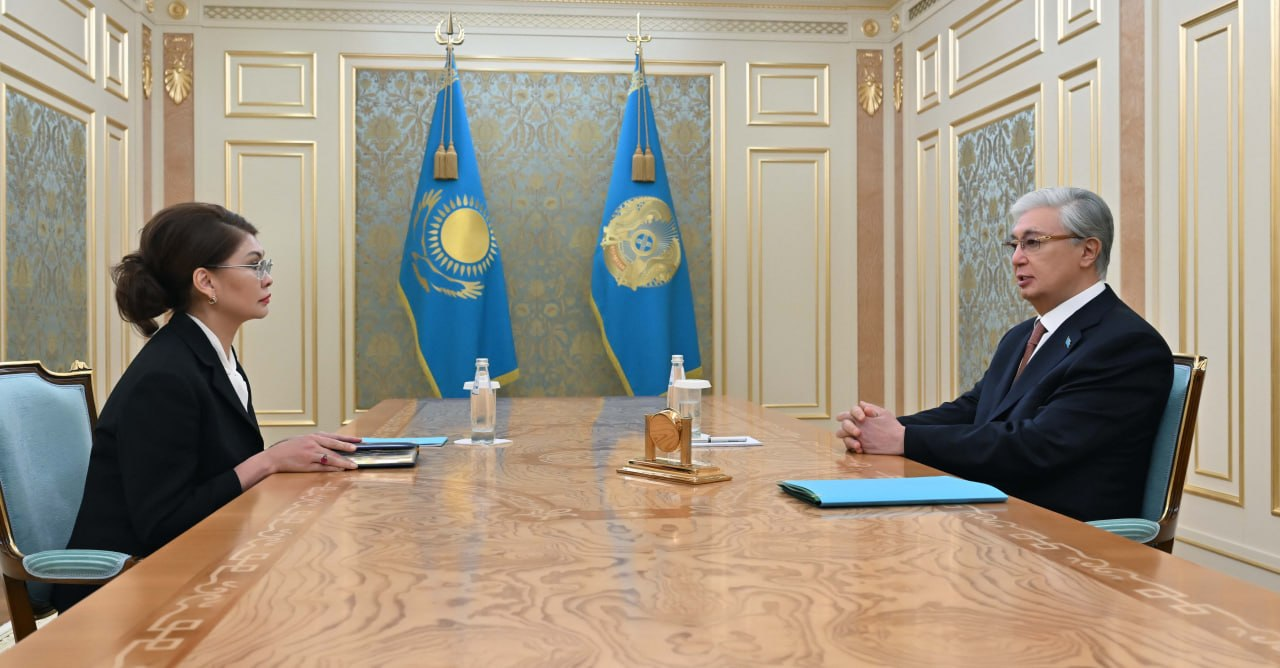
On Aug. 31, Tokayev received Balayeva in her new capacity and outlined a number of priority tasks. Photo credit: Akorda.
President Kassym-Jomart Tokayev signed a decree on Aug. 28 establishing the Security Council Apparatus as a state body directly subordinate to and accountable to the President. The move was accompanied by changes to the council’s leadership: Aida Balayeva was appointed Deputy Chair of the Security Council, while Gizat Nurdauletov was relieved of his position as Secretary.
The changes raise a question about the direction of Kazakhstan’s security architecture: whether the new structure primarily strengthens the administrative capacity of an existing institution or signals a more substantive expansion of the Security Council’s role in strategic governance.
On Aug. 31, Tokayev met with Balayeva in her new capacity and outlined several priority tasks, including those related to establishing the Security Council Apparatus. The new state body will deal with issues related to national security, legality and law and order.
A more defined institutional role
The Security Council is a constitutional collegial body chaired by the President and responsible for coordinating a unified state policy in national security, defense capability and the protection of sovereignty.
Political science expert Gaziz Abishev said the change could increase the council’s analytical and coordinating capacity. According to him, creating a separate apparatus gives the council a more clearly defined institutional structure.
“The Security Council of Kazakhstan is acquiring more specific institutional contours. President Tokayev signed a decree on establishing the Security Council Apparatus as a state body directly subordinate to the head of state. This, it should be understood, anticipates strengthening the Security Council with personnel, technical and other resources,” Abishev wrote on his Telegram channel.
Manarbek Kabaziyev, deputy chairman of the Board of the Foreign Policy Research Institute under Kazakhstan’s Foreign Ministry, sees the change primarily as an effort to improve strategic governance.
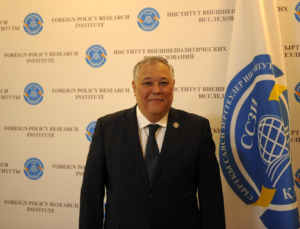
Manarbek Kabaziyev, deputy chairman of the board of the Foreign Policy Research Institute under Kazakhstan’s Foreign Ministry.
“The creation of the Security Council Apparatus should, first of all, be considered in the context of further improving the system of strategic governance of the state. Under modern conditions, the concept of national security has expanded significantly: it is no longer only defense and the law-enforcement sphere, but also information, technological, economic, energy, environmental and other components,” Kabaziyev told the Astana Times.
Why the security agenda is changing
The broader definition of national security reflects the increasingly interconnected nature of modern risks. For Kazakhstan, this is particularly relevant given its geographic and economic position at the intersection of major Eurasian political, trade and transport routes. Kabaziyev said the main objective of strengthening the Security Council should be to improve the state’s ability to identify risks before they develop into crises.
“In my view, the main task is to ensure more systematic and professional analysis of internal and external risks, their early identification and the timely development of government decisions,” he said.
According to Kabaziyev, legislation already provides the Security Council Apparatus with functions related to information and analytical support, organizational support, coordination and monitoring the implementation of Security Council decisions.
The current reform therefore represents, in his assessment, not the creation of an entirely new institution but its organizational and substantive strengthening in response to changing security requirements.
From reaction to prevention
One of the reform’s most important potential consequences is a greater emphasis on preventive rather than reactive approaches to national security.
“The long-term effect, in my view, is a transition from a predominantly reactive approach to security to a more preventive model,” Kabaziyev said.
Such a model requires the state to identify connections between risks that traditionally might have been considered separately. Kabaziyev said the apparatus should have strong analytical capabilities, engage with the expert community and use modern forecasting and scenario-analysis tools.
“Then its role will consist not only in responding to threats that have already emerged, but also in identifying potential risks in advance and proposing options for their neutralization,” he said.
Appointments’ role
The creation of the apparatus coincided with Balayeva’s appointment as Deputy Chair of the Security Council, adding an important personnel dimension to the institutional reform. Political analyst Talgat Kaliyev noted that Balayeva’s new position significantly expands her responsibilities.
“The election of Yerlan Karin as Vice President and the appointment of Balayeva as Deputy Chair of the Security Council are events of the same order. Essentially, President Tokayev now has two deputies, and separating the Security Council Apparatus into a separate body allows us to discuss the delineation of powers,” Kaliyev wrote on his Telegram channel.
He described Balayeva as effectively becoming a “vice president for security,” suggesting that her responsibilities could extend to oversight of law-enforcement bodies and the implementation of the Law and Order policy in everyday governance.
The precise distribution of responsibilities within the new structure will become clearer as the apparatus is organized and its institutional framework develops.
Security and international reputation
The Security Council’s institutional strengthening could also affect how Kazakhstan is perceived internationally. Kabaziyev said the development should not automatically be interpreted as a move toward greater state isolation or excessive centralization.
“On the contrary, if the new format ensures professional decision-making, interagency coordination, strategic forecasting and the rule of law, this could strengthen Kazakhstan’s international reputation as a state capable of effectively managing complex risks,” he said.
The creation of a dedicated Security Council Apparatus provides the institutional foundation for a potentially stronger role, but its ultimate significance will depend on how effectively the new structure operates. Kabaziyev emphasized that the reform’s effectiveness should ultimately be measured by its results rather than by the expansion of the institutional structure itself.
“Ultimately, the effectiveness of the Security Council will be assessed not by the number of structural divisions, but by the state’s ability to foresee challenges, make balanced decisions and ensure their consistent implementation,” he said.
