
ASTANA — For decades, the geopolitics of energy was largely understood through a familiar map of resource abundance: the Persian Gulf held vast oil and gas reserves, Russia was a major supplier to Europe, and countries such as Kazakhstan and Turkmenistan were important producers whose influence depended largely on how much they could extract and sell. But as wars, sanctions and geopolitical competition increasingly disrupt established trade routes, that logic is changing.
Photo credit: ecosphere.com
The strategic value of an energy resource is no longer determined only by what lies beneath the ground, but increasingly by whether it can reach international markets, through which route and with how many alternatives if that route is disrupted.
For oil and gas producers in Central Asia, the answer has become increasingly consequential. Kazakhstan remains heavily dependent on routes that cross Russian territory, Turkmenistan has enormous gas reserves but limited export options, and Uzbekistan is looking increasingly southward toward Afghanistan as it seeks additional connections to international markets. At the same time, China is building multiple routes into Eurasia as it seeks to reduce its exposure to maritime chokepoints and dependence on any single corridor.
When energy routes become strategic assets
Abzal Narymbetov, an oil and gas industry expert, framed the broader issue through the structure of global energy markets. While the United States and China dominate many categories of energy production, countries with large exportable surpluses are more narrowly concentrated, particularly in the Middle East, where reserves are vast relative to population and domestic consumption.

Abzal Narymbetov, an oil and gas industry expert.
“The Middle East is the only region that can actually supply oil and gas to growing China and India’s needs,” Narymbetov said, noting that the central vulnerability lies in the routes through which those supplies move. For him, the Strait of Hormuz is the clearest example of how geography can turn an energy question into a strategic one.
“When you have a bottleneck like the Hormuz, then you will have the next road is only the inland,” he added.
The point is not that continental routes can replace maritime energy flows. They cannot, at least not on the same scale. Rather, the geopolitical value of inland routes rises when maritime routes become vulnerable, and that is precisely why China’s expanding network of pipelines and rail connections across the Eurasian landmass matters. Narymbetov said that China has little choice but to develop those alternatives because its energy needs cannot simply be reduced by changing transport patterns.
“China needs to develop inland routes, because there is no way that you will replace the oil and gas consumption that China now needs,” he said.
That logic places Central Asia in a strategically different position from the one it occupied when energy was discussed primarily in terms of exports and revenues. Kazakhstan and Turkmenistan are no longer simply producers supplying global demand; their infrastructure and geographic location are becoming part of a wider effort to make energy systems less vulnerable to geopolitical disruption.
Why Turkmenistan is suddenly at the center of the map
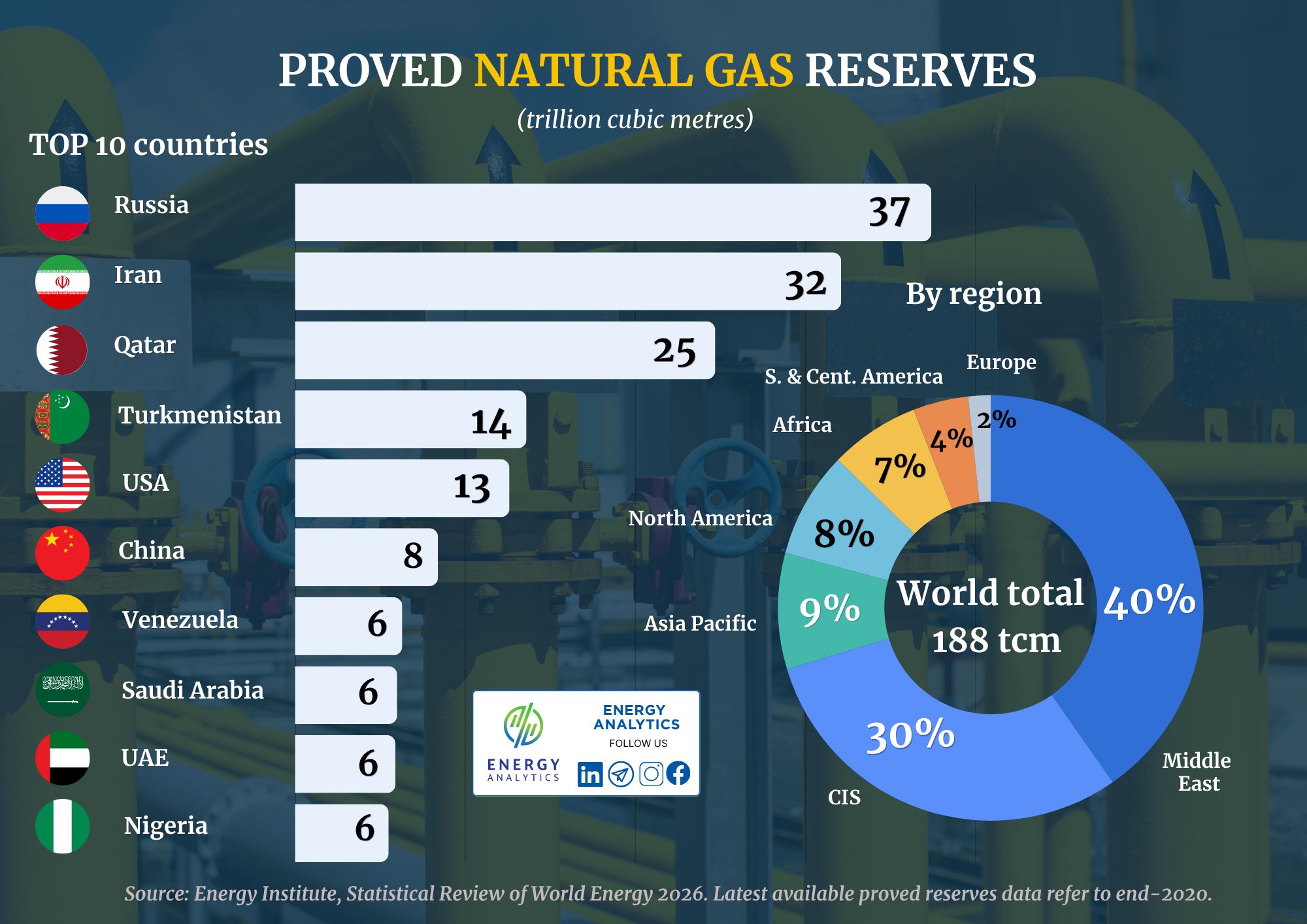
This is particularly evident in the case of Turkmenistan, which was repeatedly described during the discussion as an underappreciated energy power. The country possesses one of the world’s largest gas reserves, but its strategic significance comes from more than the size of its resource base. Turkmenistan sits between China, Iran, the Caspian Sea and the broader South Asian space, making it a potential junction for several competing east-west and north-south routes.
Ken Moriyasu, senior fellow at the Hudson Institute, referred to a discussion with a former U.S. administration official where he illustrated the point with a simple “tic-tac-toe” diagram, placing Turkmenistan in the middle of the map to show how several potential routes from China to the Caspian Sea converge around the country.

Ken Moriyasu, senior fellow at the Hudson Institute.
“So Turkmenistan is the key,” he said, recounting the logic behind the map.
The claim is deliberately stark, but it captures a broader shift in the way the country is viewed. But the question surrounding Turkmenistan is not simply how much gas it has, but how many viable ways it eventually has to move that gas. That question also explains why Uzbekistan’s interest in Afghanistan has become increasingly important. Moriyasu said one of the biggest takeaways from his meetings in the region was “how much the Uzbekistan leaders were talking about the importance about Afghanistan.” For Central Asian states, he said, Iran has historically offered one of the shortest routes to international waters, but political uncertainty and sanctions have made long-term infrastructure planning through Iran more difficult.
“I think there’s a collective souring of sentiment towards Iran because of the situation now,” Moriyasu said, noting that Central Asian governments may be increasingly unwilling to wait for a stable and business-friendly environment in Tehran before developing their external connectivity. His assessment of the emerging hierarchy of routes was blunt. “Right now I think Middle Corridor, then Afghanistan, and then the China Pakistan Economic Corridor (CPEC), and then Iran is plan four.”
Read that as Moriyasu’s interpretation rather than a formal regional strategy, but it captures an important trend: Central Asian governments are seeking redundancy. Uzbekistan in particular has promoted the idea of Afghanistan as a potential connector between Central Asia and Pakistani ports, even while facing serious security, political and water-management concerns related to its southern neighbor.
The contradiction is striking. Afghanistan could provide Uzbekistan and other Central Asian states with a route to the Indian Ocean that bypasses some existing constraints, while developments such as the Qosh Tepa Canal simultaneously create new concerns for downstream countries dependent on the Amu Darya. Yet the prospect of Afghanistan becoming part of a broader regional transport architecture appears increasingly difficult for Central Asian governments to ignore.
From new corridors to new vulnerabilities
For China, these developments matter for a related reason: diversification. Moriyasu said Beijing does not want to become overly dependent on Kazakhstan because existing overland routes are concentrated there.
“China doesn’t want to be too dependent on Kazakhstan because, as I said, everything goes through Kazakhstan right now,” he said.
The China-Kyrgyzstan-Uzbekistan railway is therefore significant not simply as another transport project, but as part of a broader effort to create additional options. One possible route would connect onward towards Turkmenistan and Iran; another, under much more demanding political and security conditions, could eventually connect China through Central Asia and Afghanistan to Pakistan. The strategic logic is not necessarily to replace Kazakhstan, Iran or maritime trade, but to ensure that no single route becomes indispensable.
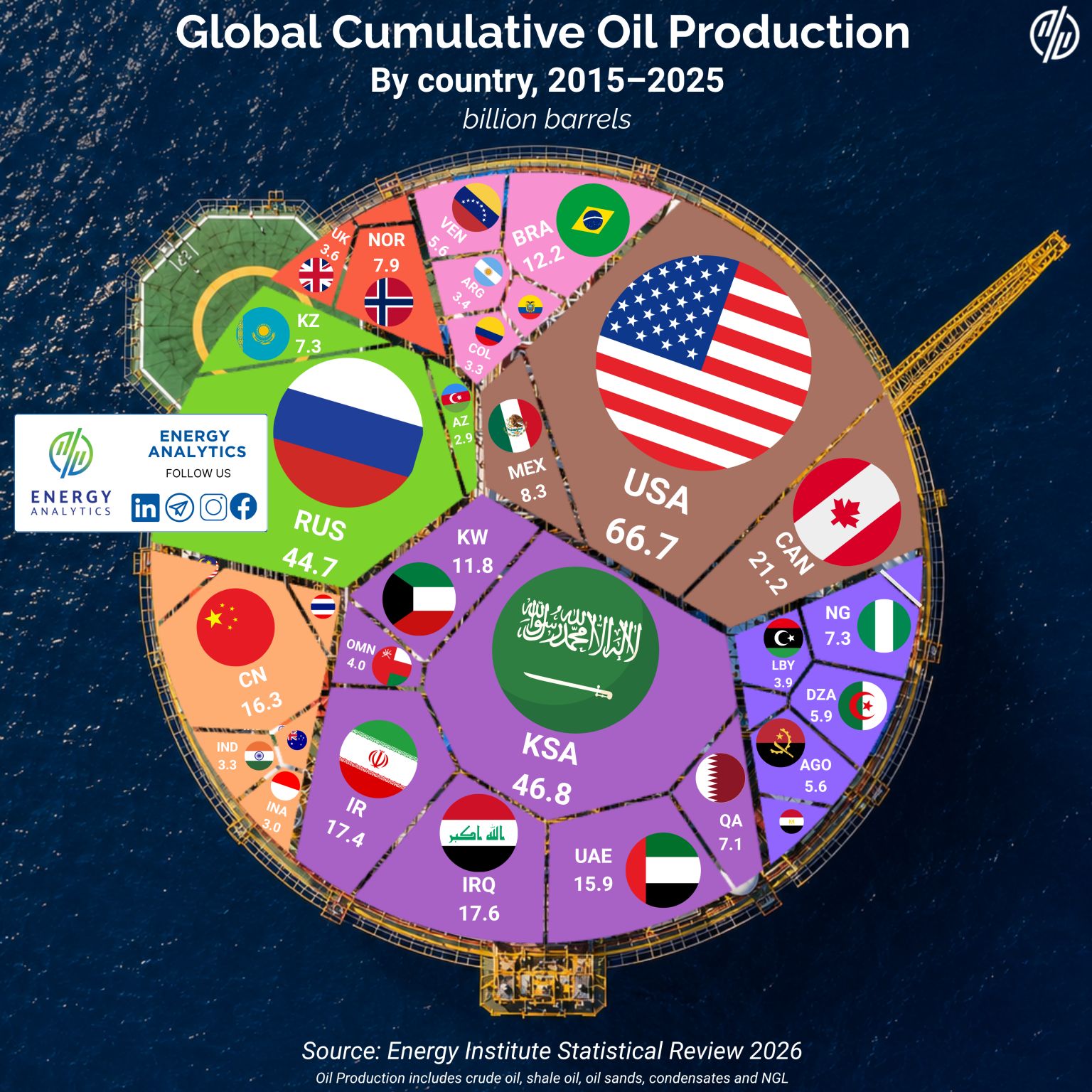
That same logic is increasingly visible in Kazakhstan’s own energy vulnerabilities. For Kazakhstan, the CPC is the clearest example of how a commercial asset can become a geopolitical fault line. The CPC is critical to Kazakhstan’s oil exports, yet the infrastructure runs through Russian territory before reaching global markets, meaning disruptions caused by the war in Ukraine can affect Kazakhstan even though it is not a party to the conflict. Moriyasu said repeated Ukrainian attacks on CPC-related infrastructure reflect what he sees as a broader shift in Kyiv’s strategy.
“The whole purpose of the strikes on the CPC facilities is to internationalize the competition,” he said, noting that the objective is to make other stakeholders, including Kazakhstan, Japan and buyers of Kazakh oil, feel pressure to intervene and, from the Ukrainian perspective, increase pressure on Russia to move toward a ceasefire.
That interpretation is Moriyasu’s assessment rather than an established explanation of Ukrainian policy, and it is precisely because of that distinction that the CPC issue deserves attention. Whatever the stated rationale behind individual strikes, once infrastructure carrying Kazakh oil becomes entangled with another country’s military calculations, the consequences extend well beyond the battlefield.
Kazakhstan’s strategic problem is therefore not simply that its oil exports depend on a particular pipeline. It is that the pipeline connects multiple political and commercial interests, including Kazakhstan, Russia, international oil companies and foreign buyers, meaning that an attack on infrastructure can produce economic and diplomatic consequences across a much wider geography.
Moriyasu interpreted President Kassym-Jomart Tokayev’s engagement with Putin in Omsk through that lens, saying that Kazakhstan increasingly understands the changing character of the risk.
“The real threat he feels is the Ukrainian strategy,” he said.
That conclusion should again be treated as an expert assessment rather than a definitive explanation of Kazakhstan’s policy. Astana has its own reasons for maintaining high-level dialogue with Moscow, just as it has reasons to preserve relations with Ukraine, China, Europe and the U.S. But the CPC shows why the space to separate economics from geopolitics is becoming increasingly narrow. Kazakhstan’s oil exports remain economically essential, but the infrastructure connecting them to world markets can become exposed to a war in which the country has no direct military role. The larger lesson is that Eurasia’s energy map is being redrawn not necessarily because the location of resources has changed, but because the political meaning of the routes around them has.
For decades, energy security was largely discussed in terms of reserves, production and price. Increasingly, it is also about redundancy, chokepoints and political risk. In that sense, Central Asia’s strategic importance is growing for reasons that go beyond the size of its reserves. And resources are no longer enough. The decisive question is increasingly who can move them, through which route, under whose protection and with what alternatives when those routes are disrupted. Across Eurasia, pipelines and ports are no longer merely infrastructure. They are becoming bargaining chips, strategic assets and, in some cases, potential targets, making the geography of energy inseparable from the region’s geopolitics.
