
ASTANA – Kazakhstan’s first election to the new unicameral Kurultai marked a significant stage in the country’s constitutional reform, according to international assessments released after the Aug. 23 vote. An OSCE-led mission found the process technically well prepared but said political competition remained limited.
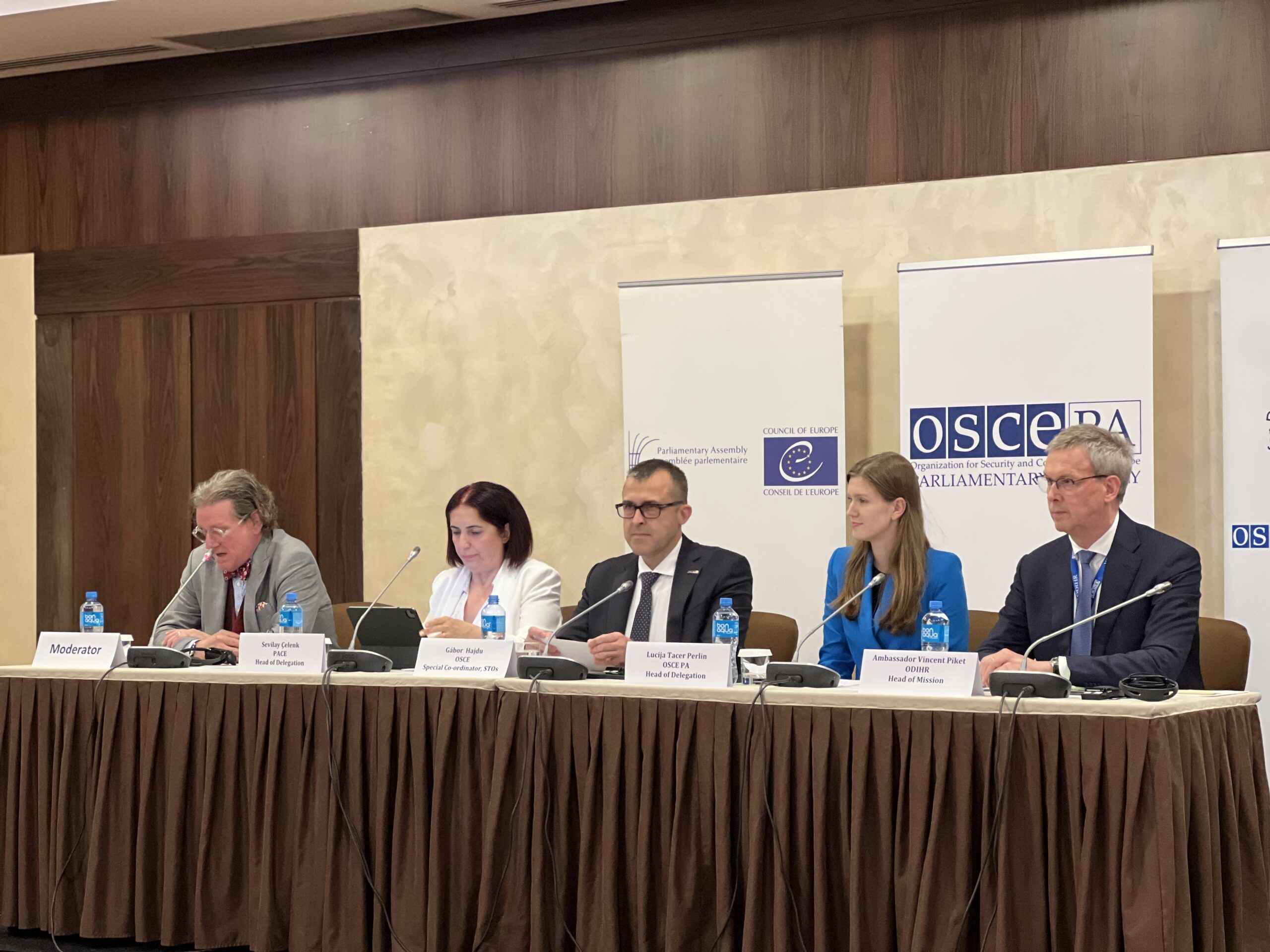
International election observers at an Aug. 24 press conference in Astana. From right: Vincent Piket, Lucija Tacer Perlin, Gábor Hajdu and Sevilay Çelenk. Photo credit: Nagima Abuova / The Astana Times
The International Election Observation Mission presented its preliminary findings in Astana on Aug. 24. It brought together the OSCE Office for Democratic Institutions and Human Rights (ODIHR), the OSCE Parliamentary Assembly (OSCE PA) and the Parliamentary Assembly of the Council of Europe (PACE), deploying 339 observers from 43 countries.
The mission said the campaign and election day were generally calm and orderly and that contestants were provided equal conditions to organize campaign activities. It also cited the range of political parties participating, the absence of independent parliamentary candidacies and differences in party resources as factors affecting the level of political competition.
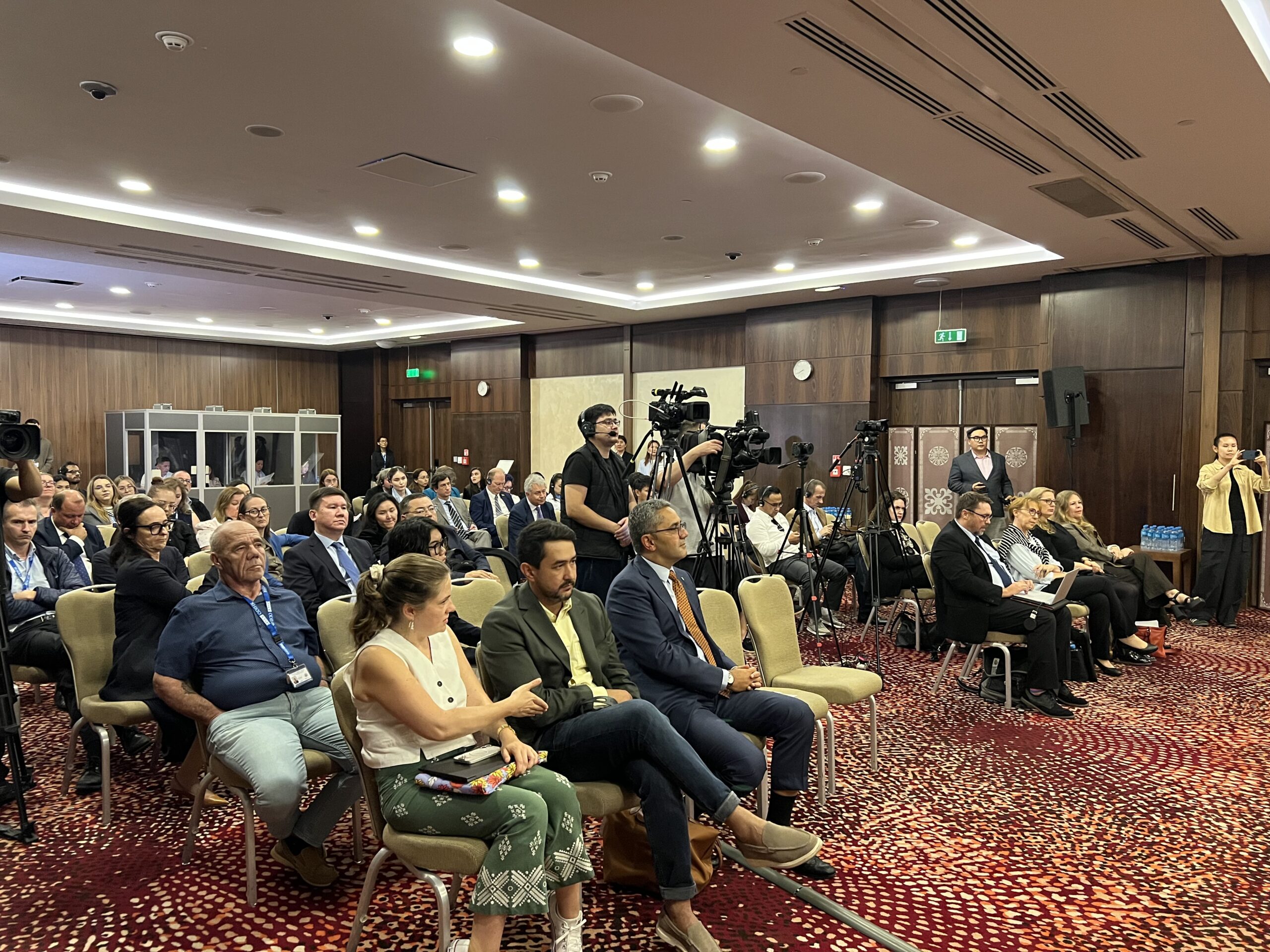
Journalists and international observers attend a press conference on Kazakhstan’s Aug. 23 early parliamentary election in Astana on Aug. 24. Photo credit: Nagima Abuova / The Astana Times
“The elections took place at an important moment for Kazakhstan in the continuation of reforms initiated from 2019, which culminated in this year’s constitutional referendum. After undertaking a constitutional reset of its electoral framework, Kazakhstan’s early parliamentary elections provided an opportunity to see whether these changes opened space for healthy political competition,” said Gábor Hajdu, OSCE Special Co-ordinator and leader of the short-term observer mission. “Despite some positive aspects, there are few genuine opportunities for independent candidacies, limited space for civil society and the independent media, and a lack of a level playing field consistent with OSCE commitments, including for women,” he added.
Political competition and new electoral framework
The Aug. 23 election was the first parliamentary vote under the Constitution that entered into force July 1. The new 145-member Kurultai is elected for five years through closed-list proportional representation in a single nationwide constituency with a 5% electoral threshold.
Seven political parties contested the election with 545 registered candidates. Party platforms addressed a range of social and economic issues, although the mission noted that all contesting parties supported President Kassym-Jomart Tokayev’s policies.
The mission also examined the position of Adilet, which merged with the former ruling Amanat party ahead of the election. Observers said Adilet drew on Amanat’s organizational structures, networks and resources and ran the most extensive and visible campaign. The mission also reported instances involving the use of administrative resources during campaign activities and said these circumstances affected the balance of competition
Lucija Tacer Perlin, head of the OSCE PA delegation, said the wider political environment was important alongside the administration of the vote.
“The absence of parties representing genuine political opposition and the elimination of the right to stand independently for parliamentary elections limited political participation, pluralism, and electoral competitiveness. While party platforms and campaign messages addressed a wide range of social and economic issues, all contesting parties supported the incumbent president’s policies. We also observed that a number of factors affected the level playing field during the campaign,” she said.
The preliminary assessment also addressed political parties’ role in determining who ultimately receives seats in the Kurultai. Some ODIHR interlocutors from local party branches raised questions about the transparency of how lists are compiled and how parties subsequently determine which candidates take seats.
The law maintains a cumulative 30% quota for women, youth and persons with disabilities both on candidate lists and when mandates are distributed. Some 43.9% of registered candidates belonged to at least one of those groups. According to the mission, the combined quota does not guarantee effective representation of each group separately.
Election administration and voting
The mission assessed the technical administration of the election broadly positively, saying election commissions prepared for the vote professionally and within legal deadlines, conducted nationwide training and voter-information campaigns, and took steps to improve accessibility for voters with disabilities. It also noted that contesting parties generally expressed confidence in the election administration.
Election day was described as calm and orderly. International observers assessed opening and voting as overwhelmingly in line with procedures, with voting receiving a positive assessment in 98% of the 1,327 polling stations observed.
Ambassador Vincent Piket, head of the ODIHR election observation mission, said that while much of election day proceeded well, observers identified shortcomings in voting and counting procedures, including discrepancies between observed voter activity and official turnout data.
“While much went well, observers noted a number of serious procedural shortcomings. For instance, they saw identical signatures of voter lists, they saw a lack of enforcement of proper identification requirements by voters, aspiring voters, they saw a non-respect of the secrecy of the casting of ballots, and photographs were taken of ballots in the ballot box and around it. And there were also marked differences between voter activity on the one hand and official turnout data on the other,” said Piket.
Media and public participation
The mission said voters had access to a wide range of media outlets, while noting limited pluralism in the media environment. ODIHR monitoring found that contestants were generally covered in a neutral tone, though election reporting included relatively little analytical or in-depth coverage.
PACE delegation head Sevilay Çelenk said the assessment went beyond election-day procedures to consider the broader conditions for political participation, including media access, political pluralism and public confidence in electoral institutions.
“The relationship between elections and democracy is more delicate than it appears. No democracy can exist without elections, yet the presence of elections doesn’t by itself guarantee democracy. What matters is not just the ballot box, it is also what surrounds it. Campaigns must be free, media access must be equal, institutions must be independent. Political pluralism must be protected. Citizens must trust that their votes will be counted honestly,” said Çelenk.
Broader international perspectives
Additional international commentary on the election focused on the broader constitutional transition and Kazakhstan’s development agenda.
James Whitney, CEO of Car Park Transformer (CPT), welcomed the constitutional reforms and said the company’s infrastructure projects are aligned with Kazakhstan’s broader development priorities and its position between major East-West trade and transport routes.
Honorary Consul of Kazakhstan in Iceland Sigurður Atli Jónsson described the first election to the unicameral Kurultai as a milestone in Kazakhstan’s political development, saying the new framework could bring greater institutional clarity and predictability for international partners and businesses.
“Constitutional reform of this scale is rare, and carrying it through to a new legislature marks the completion of a process that has been years in the making. Seen from Reykjavík, what stands out is the direction of travel,” said Jónsson.
