
ASTANA — Muay Thai is deepening cultural ties between Thailand and Kazakhstan by creating connections beyond language and politics, Ambassador of Thailand to Kazakhstan Piyapin Niyomrerks told The Astana Times. Her comments came as three prominent fighters opened a two-day Muay Thai master class in Astana on Aug. 20.
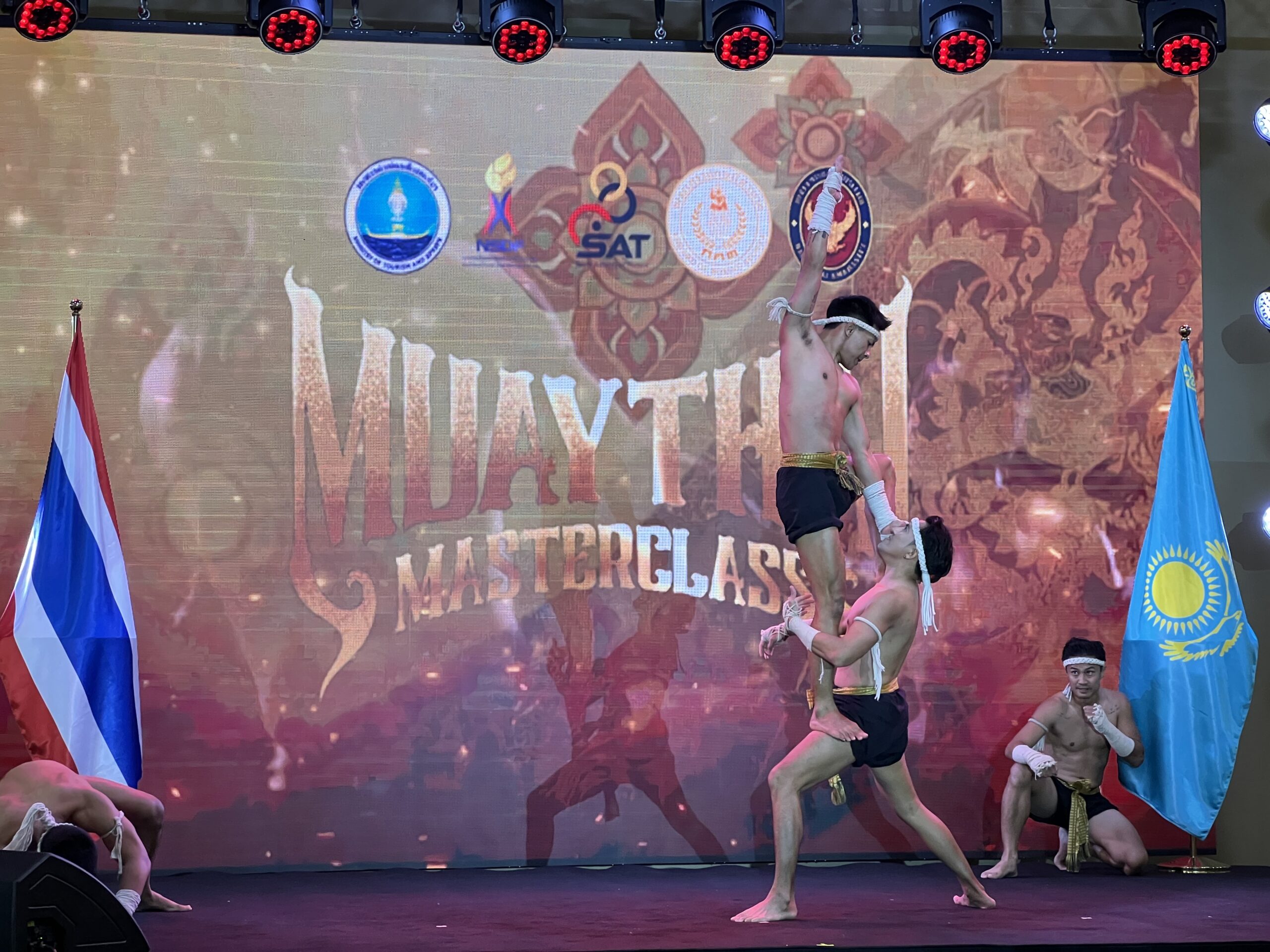
Muay Boran, a traditional Thai martial art that preceded modern Muay Thai performed during the masterclass in Astana on Aug. 20. Photo credit: Nagima Abuova / The Astana Times
“Beyond sports and competition, soft power like our cuisine, our sport and our Muay Thai has always been a pillar of our bilateral relations with Kazakhstan and Central Asia. Even though we have a language barrier – I don’t speak Kazakh, I don’t speak Russian – everyone on the street knows the words Tom Yum, Muay Thai and Phuket. This is how soft power goes beyond the language barrier, goes beyond politics, and creates bonds of friendship through the love of sports,” said Niyomrerks.
Muay Thai champions arrive in Astana
The Muay Thai master class at the Kazakh National University of Sports (KNUS) brings together athletes, coaches, young fighters and enthusiasts for training with internationally renowned Thai fighter Buakaw Banchamek.
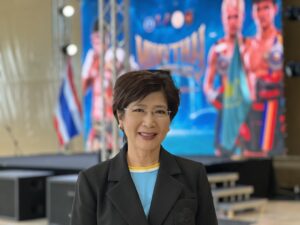
Ambassador of Thailand to Kazakhstan Piyapin Niyomrerks. Photo credit: Nagima Abuova / The Astana Times
Buakaw, a two-time K-1 World MAX champion, is one of the best-known figures in international Muay Thai. His career also includes four World Muaythai Council titles, championships in two divisions at Omnoi Stadium and the 2016 Kunlun Fight Muay Thai Middleweight World Championship.
He was joined by Marie Ruumet, known as the “Snow Leopard,” the current Rajadamnern Stadium female flyweight champion, and Nuenglanlek Jitmuangnon, nicknamed “Million Horsepower,” a former Rajadamnern Stadium interim welterweight and Omnoi Stadium champion.
Niyomrerks said the idea for the event emerged several months ago after she and embassy representatives attended a youth championship organized by the Kazakhstan Muay Thai Federation and saw more than 500 athletes competing in under-16 and under-18 categories.
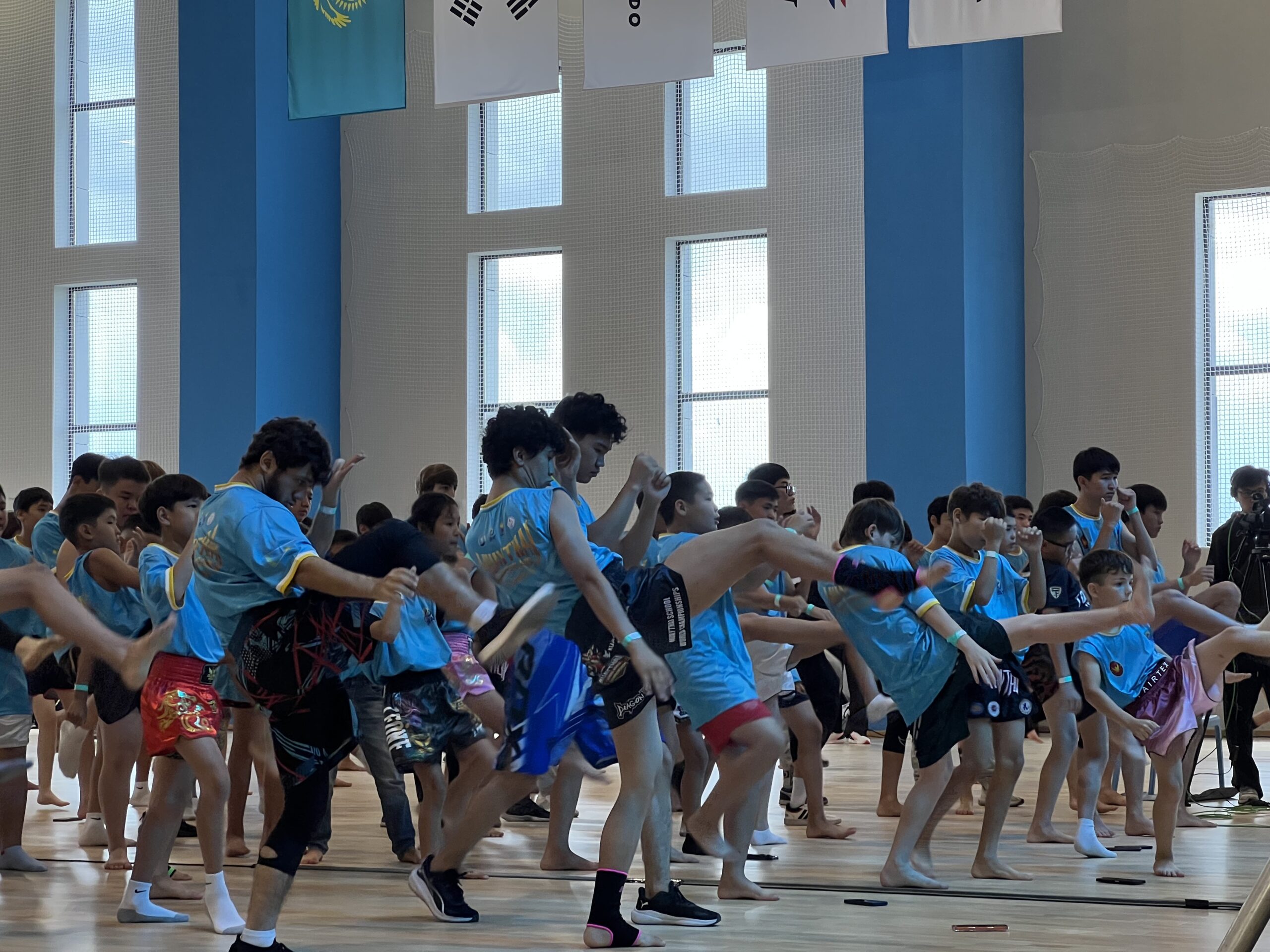
Young athletes practice Muay Thai techniques during the master class. Photo credit: Nagima Abuova / The Astana Times
“That was the first time I witnessed 500 of the young ones wearing Muay Thai kits. They were so determined and were in such a good spirit. We were so proud to see all these 500 children wearing Muay Thai kits and with Muay Thai flags on their sleeves,” she said.
From left to right: Marie Ruumet, Buakaw Banchamek and Nuenglanlek Jitmuangnon. Photo credit: Nagima Abuova / The Astana Times
The embassy initially planned to invite Thai instructors to conduct a master class and teach Wai Kru, the traditional pre-fight ritual performed by Muay Thai fighters. Niyomrerks said the Sports Authority of Thailand recognized Kazakhstan’s strong Muay Thai community and proposed bringing prominent professional fighters.
“After we opened the registration, I think we had over 600 who registered. They even had to close the registration; otherwise, it would go to 800,” she said, highlighting that public interest exceeded initial expectations.
The two-day program features practical training sessions with the visiting fighters, Wai Kru demonstrations, Muay Boran performances showcasing the traditional Thai martial art that preceded modern Muay Thai, and a presentation on Muay Thai’s history. Participants also receive information on training opportunities in Thailand.
Sport expands bilateral exchanges
The Royal Thai Embassy in Astana organized the master class with Thailand’s Ministry of Tourism and Sports, National Sports Development Fund and Boxing Sports Commission, with support from Kazakhstan’s Ministry of Tourism and Sports and Ministry of Foreign Affairs.
Deputy Foreign Minister Alibek Kuantyrov told The Astana Times that sports and cultural exchanges have become another area of cooperation alongside political and economic relations between Kazakhstan and Thailand.
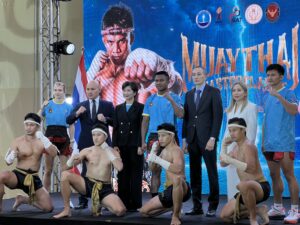
Thai Ambassador Piyapin Niyomrerks, Muay Thai legends, Kazakh officials and Muay Boran performers in Astana on Aug. 20. Photo credit: Nagima Abuova / The Astana Times
“This experience shows that relations between Kazakhstan and the Kingdom of Thailand are developing not only in the economic and political spheres, but also in sport. For the first time, stars of this level in world Muay Thai are coming to Astana, and this gives an opportunity for our young athletes to communicate with them personally, get motivation and learn from their experience,” he said.
Kuantyrov highlighted that such exchanges are particularly valuable for young athletes, schoolchildren and those considering taking up Muay Thai, giving them direct access to experienced fighters and information about the sport’s traditions and training opportunities.
“The most important thing is cultural exchange, when our young athletes, schoolchildren and children who are interested, who are actively training or who are only planning to enter this martial art, have an opportunity to communicate with world stars, gain motivation and receive advice,” said Kuantyrov.
