
ASTANA — When Renat Bekturov first joined what would become the Astana International Financial Centre (AIFC), the institution existed only as an idea. There were no success stories to point to and no guarantee that an international financial center could take root in the heart of Eurasia. Nearly a decade later, the conversation has shifted. The AIFC has grown into an ecosystem with its own exchange, court, arbitration centre, business-friendly regulatory framework and growing international reputation.
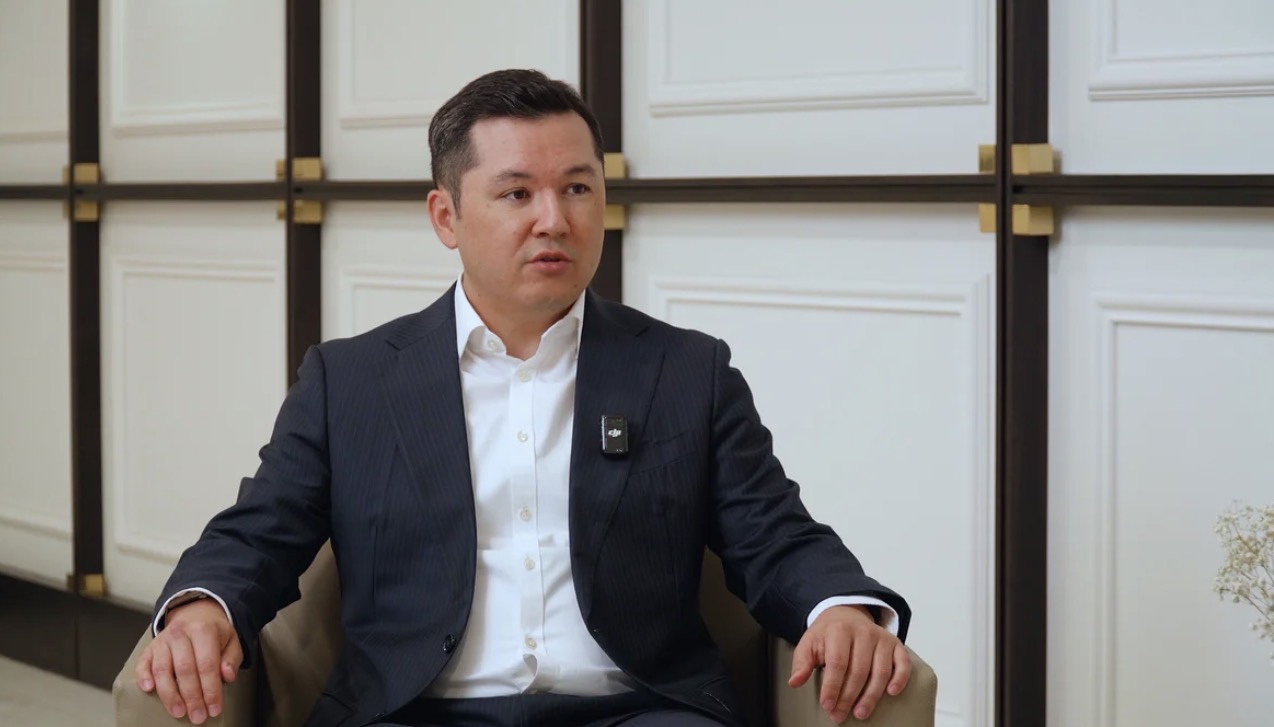
Renat Bekturov, the governor of the Astana International Financial Centre (AIFC). Photo credit: The Astana Times
“It was just an idea. Now this is a real jurisdiction with real working institutions,” he recalled.
That philosophy of institution building runs through nearly every initiative the AIFC pursues. Whether discussing Islamic finance, critical minerals, creative industries or digital assets, Bekturov repeatedly returns to one belief: institutions matter because they outlive the people who create them.
“I believe people create institutions, institutions create policy or culture, and culture affects people again. We’re trying to create an institution that will live beyond us and serve the economy and investors for many years ahead,” he said.
The vision has since translated into tangible results. Nearly a decade after its launch, the AIFC hosts more than 6,000 companies from over 90 countries, including companies from the United States, the United Kingdom, China, Türkiye, Singapore, and the UAE, has attracted more than $25 billion in investment, and has ranked as the leading financial center in Eastern Europe and Central Asia for three consecutive years in the Global Financial Centres Index. Those milestones reflect not only the center’s growth but also the institution-building philosophy Bekturov believes is essential for long-term success.

In an interview with The Astana Times, Renat Bekturov shared his thoughts with Aida Haidar. Photo credit: The Astana Times
That long-term perspective also shapes how the AIFC identifies new areas for growth. Rather than focusing exclusively on traditional banking or capital markets, the center is building financial infrastructure around sectors where Kazakhstan has long-term competitive advantages.
Islamic finance is one example. While still developing in Kazakhstan, Bekturov believes it represents a significant opportunity for both the country and the wider Central Asian region, where many practicing Muslims remain underserved by conventional financial products.
“They have fewer opportunities than people who are not practicing Muslims. They can use current accounts and bank cards, but they cannot use deposits, which means they cannot earn returns on their money. And they cannot leverage financing to buy assets or make investments in the same way that others can,” he said.
Critical minerals are another strategic priority. As global demand rises for rare earth elements used in renewable energy, electric vehicles and advanced technologies, Kazakhstan’s vast mineral wealth is attracting growing international interest. But natural resources alone are not enough.
“The opportunities and ideas are nothing if they don’t have capital,” Bekturov said.
To connect promising exploration projects with investors, the AIFC will launch a dedicated Junior Mining Pitch Day during this year’s Astana Finance Days, taking place inSeptember and borrowing a format familiar from the venture capital world.
“We’ve learned it from the venture capital industry. The founders present their projects to investors. We want to organize the same kind of pitch day for junior miners,” Bekturov explained.
The same approach is now extending to Kazakhstan’s creative economy. Rather than financing films or music directly, the AIFC is building the legal and investment framework that allows private capital to support creative businesses.
“One of the biggest assets Kazakhstan has is its people — the talent and creativity of its people,” Bekturov said.
This year’s Astana Finance Days will also feature a Creative Pitch Day, bringing together filmmakers, producers and investors as part of the AIFC’s broader effort to open new sources of financing for the country’s creative industries.
Looking ahead, Bekturov believes the next transformation of finance will be driven by technology, particularly digital assets. While cryptocurrencies often dominate public discussion, he argues that the real breakthrough lies in tokenization: turning physical assets into digital ones that can be traded more efficiently. He illustrates the idea with a simple example. Gold is a physical asset that requires storage and security, but its ownership can be represented digitally through tokens, making transactions faster and easier.
“I really believe that digital assets will be transformative for the financial industry,” he said.
The technology, however, is only part of the equation. According to Bekturov, the problem is not technology but its adoption. Financial institutions and regulators, he said, will ultimately determine how quickly these innovations become part of the global financial system.
Artificial intelligence presents another challenge. Rather than focusing on whether AI will replace people, Bekturov is more interested in where responsibility should remain.
“We’re already discussing at what time we will give AI the role of a decision-maker and should we ever give that role?” he said.
For him, technology should strengthen financial markets rather than replace human judgment. That balance between innovation and institution building reflects the broader vision behind the AIFC. While the center continues expanding into new areas, from Islamic finance and critical minerals to creative industries and digital assets, its long-term objective remains unchanged: creating a trusted platform that connects global investors with Kazakhstan and Central Asia.
Bekturov often describes the AIFC as a bridge rather than a destination in itself.
“We’re basically a bridge that connects the world with the island of Kazakhstan, or Central Asia wider. People don’t use the bridge because it’s there. They use it because they want to get to a particular location,” he said.
For now, that bridge serves investors seeking opportunities in Kazakhstan and the wider region. Over time, Bekturov hopes it will evolve into a financial hub where international transactions are structured regardless of geography. Ultimately, however, his definition of success extends beyond financial indicators.
“For me, if in 10 years the AIFC is recognized among the world’s top 30 international financial centers, that would definitely be a success. Equally important is seeing a new generation of leaders moving the center forward, ensuring that the institution lives beyond its founders and the people who started it,” he concluded.
