
ASTANA — Kazakhstan and Uzbekistan are expanding their economic partnership beyond bilateral trade by jointly targeting new export markets in Syria and Iraq, reflecting a broader strategy to position Central Asia as a supplier to rapidly growing reconstruction and import-dependent economies. Business delegations from the two countries are expected to travel to Aleppo in late September and Erbil, the capital of Iraq’s Kurdistan Region, in early October following agreements reached during the Kazakhstan-Uzbekistan Business Forum in Tashkent on Aug. 5, Uzdaily reported.
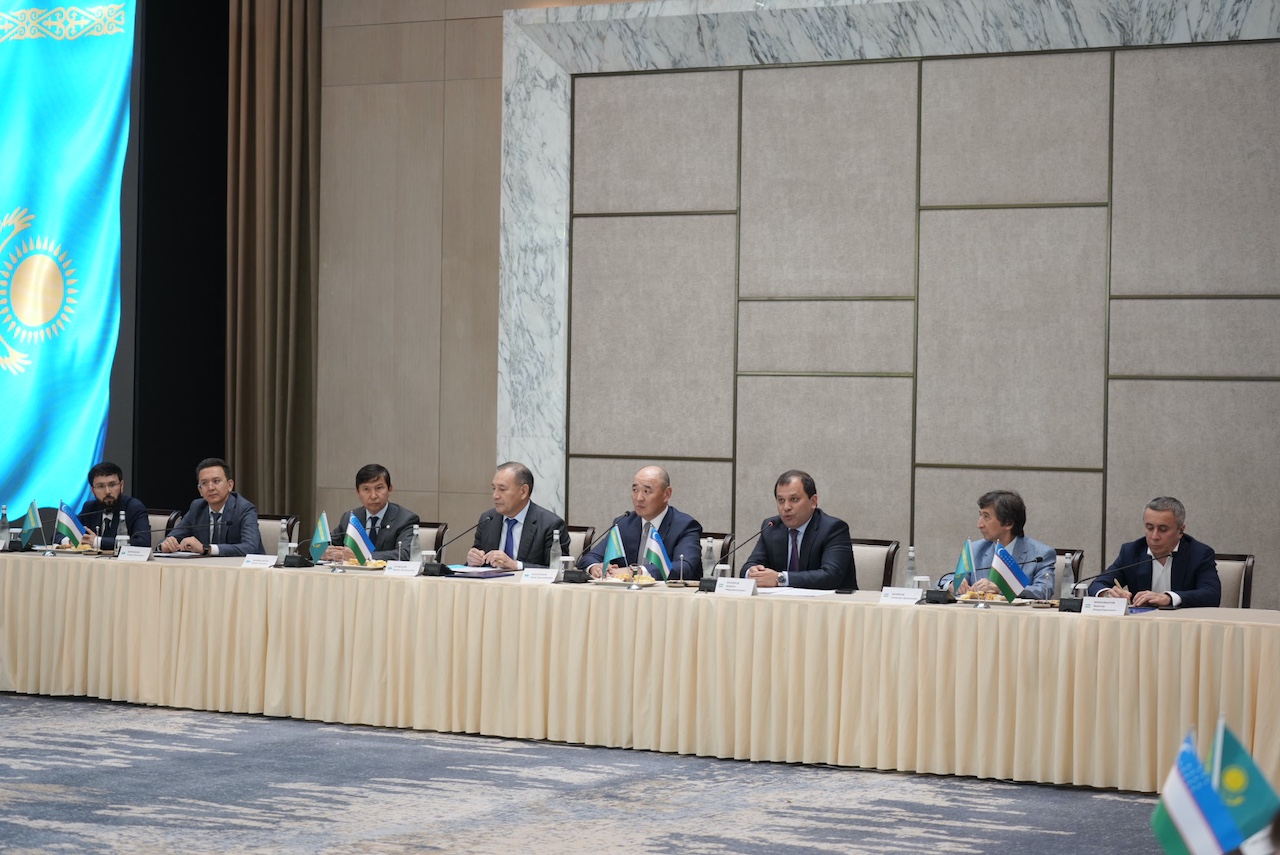
The Kazakhstan–Uzbekistan Business Forum takes place in Tashkent on Aug. 5, bringing together business leaders and government representatives. Photo credit: Atameken
The initiative signals a shift in regional trade strategy. Rather than competing for overseas markets, Kazakhstan and Uzbekistan are increasingly seeking to combine their industrial strengths to reach destinations where demand is being driven by reconstruction and infrastructure development.
Chairman of Uzbekistan’s Chamber of Commerce and Industry Davron Vakhabov proposed assembling a delegation of 20 to 30 companies for Aleppo, where a trilateral business forum involving Uzbek, Kazakh and Syrian businesses is planned. The visit will coincide with the official opening of Uzbekistan’s trade house, which began operating in March.
Syria’s reconstruction creates demand
According to representatives of Uzbekistan’s trade house in Syria, the country is experiencing growing demand for food products and construction materials as reconstruction accelerates following years of conflict. Officials estimate that around six million housing units are planned, creating sustained demand for building supplies.
Among the products in demand are construction materials, sunflower oil and meat products. Kazakh manufacturers could also benefit from exports of galvanized steel and other metal products, which are not produced in Uzbekistan. One example of the emerging cooperation is sunflower oil manufactured in Uzbekistan using raw materials supplied from Kazakhstan.
Kanat Sharlapayev, chairman of the Atameken National Chamber of Entrepreneurs, said Syria deserves separate attention as a destination for Kazakh businesses, noting that Atameken already has contacts with a Qatari holding company involved in reconstruction projects there.
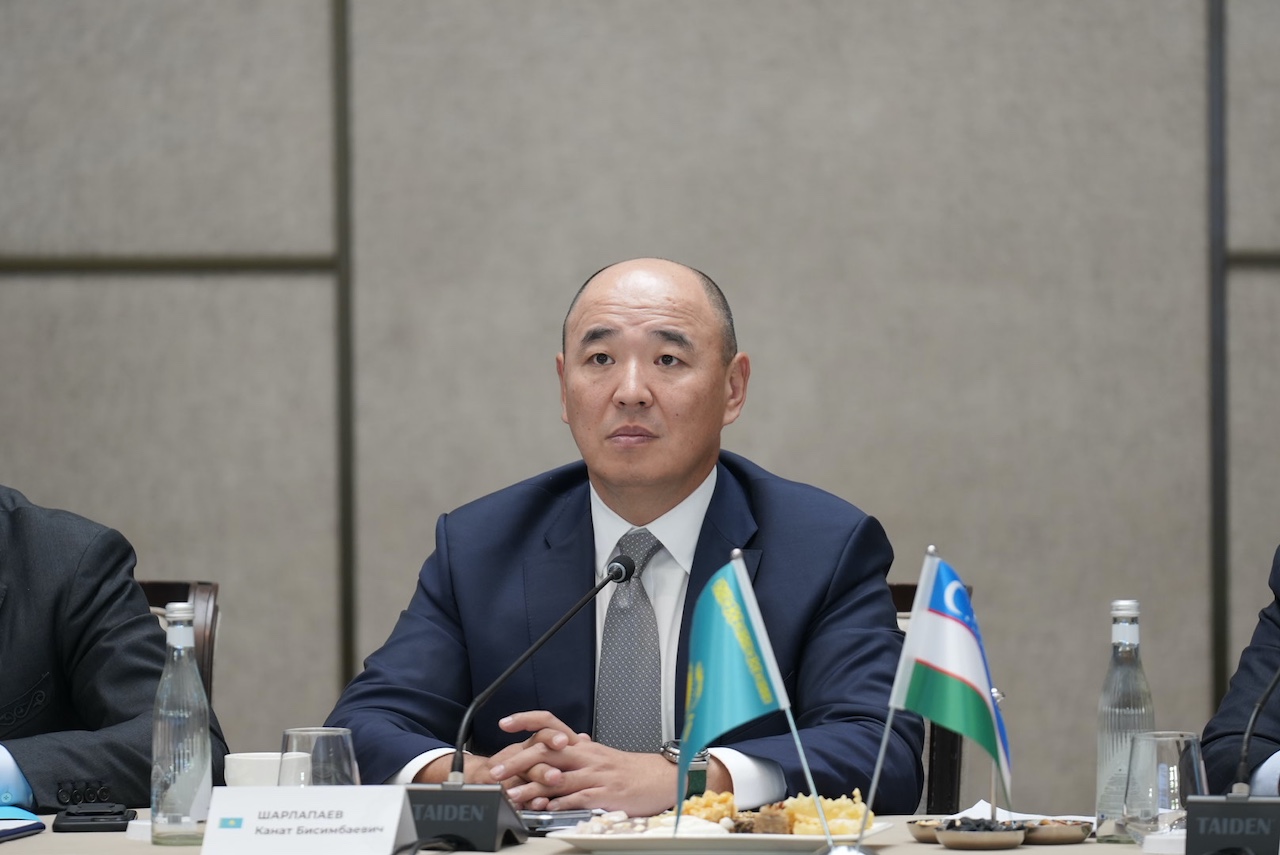
Kanat Sharlapayev, chairman of the Atameken National Chamber of Entrepreneurs. Photo credit: Atameken
“This is an extremely important direction for both Uzbekistan and Kazakhstan,” he said.
Iraq as a regional gateway
The second joint business mission will focus on Erbil, a major commercial hub in Iraq’s Kurdistan Region. According to forum participants, around 180 entrepreneurs from the region visited Kazakhstan and Uzbekistan roughly three weeks ago to explore business opportunities. Sharlapayev noted that much of the imported goods entering Iraq’s Kurdistan Region are subsequently distributed across Iraq or re-exported to neighboring Türkiye and Iran, making the region an attractive entry point into a broader market.
Forum participants estimated Iraq’s annual imports at around $95 billion, while nearly all of its $109 billion in exports come from crude oil, underscoring the country’s dependence on imported manufactured goods. Iraqi partners have already expressed interest in importing seven to eight truckloads of Uzbek confectionery products every month, along with porcelain tiles produced in Uzbekistan’s Fergana Region. Business representatives also highlighted opportunities to export semi-finished products, such as unpackaged household chemicals and polyethylene granules, allowing final processing and packaging to take place locally while reducing production costs.
Looking beyond traditional markets
Vakhabov also contrasted the challenges of entering mature European markets with the opportunities emerging in countries undergoing reconstruction.
“No one is waiting for your products in Germany because the standards are extremely strict. But in countries where domestic production was disrupted for many years, such as Syria and Iraq, the situation is stabilizing, creating significant opportunities,” he said, pointing to Kazakhstan’s rapidly growing exports to Afghanistan as an example of how businesses from Central Asia are finding new demand in neighboring emerging markets.
The trend is reflected in recent trade figures. Bilateral trade between Kazakhstan and Afghanistan reached $342.4 million in the first four months of 2026, up 2.3 times compared to the same period a year earlier. Kazakh exports accounted for $338.5 million, driven primarily by shipments of wheat, wheat-rye flour, sunflower oil and other agricultural products. Kazakhstan has also set a long-term goal of increasing exports to Afghanistan to $3 billion, while discussions are underway to expand banking cooperation to facilitate trade and settlements between the two countries.
Logistics as a competitive advantage
According to Vakhabov, approximately 350,000 Turkish trucks transit Uzbekistan every year and often return empty. Because Turkish drivers do not require visas to cross Turkmenistan, these vehicles could be used to transport Central Asian exports to Syria and Iraq. According to the Chamber of Commerce and Industry of Uzbekistan, shipments along this route cost between $2,900 and $3,500 and take eight to ten days, compared with $6,000-$8,000 for conventional transport routes.
The planned business missions come as Kazakhstan and Uzbekistan continue to deepen their strategic economic partnership. The two countries have set a target of increasing bilateral trade to $10 billion. Trade turnover exceeded $4.1 billion last year, supported by new commercial agreements worth more than 80 billion tenge (US$146 million) signed in July, as well as ongoing work on cross-border industrial cooperation centers, trade hubs and transport corridors.
Rather than focusing solely on expanding trade between themselves, Kazakhstan and Uzbekistan are increasingly positioning their partnership as a platform for jointly entering third-country markets. The upcoming business missions to Syria and Iraq represent one of the clearest examples yet of that strategy in practice.
