
ASTANA – The fourth plenary session of the Global Businesswomen Council on July 2 in Astana announced plans to launch the G-Index Institute, an independent research and analytical platform designed to develop the methodological base for women’s entrepreneurship in Kazakhstan.
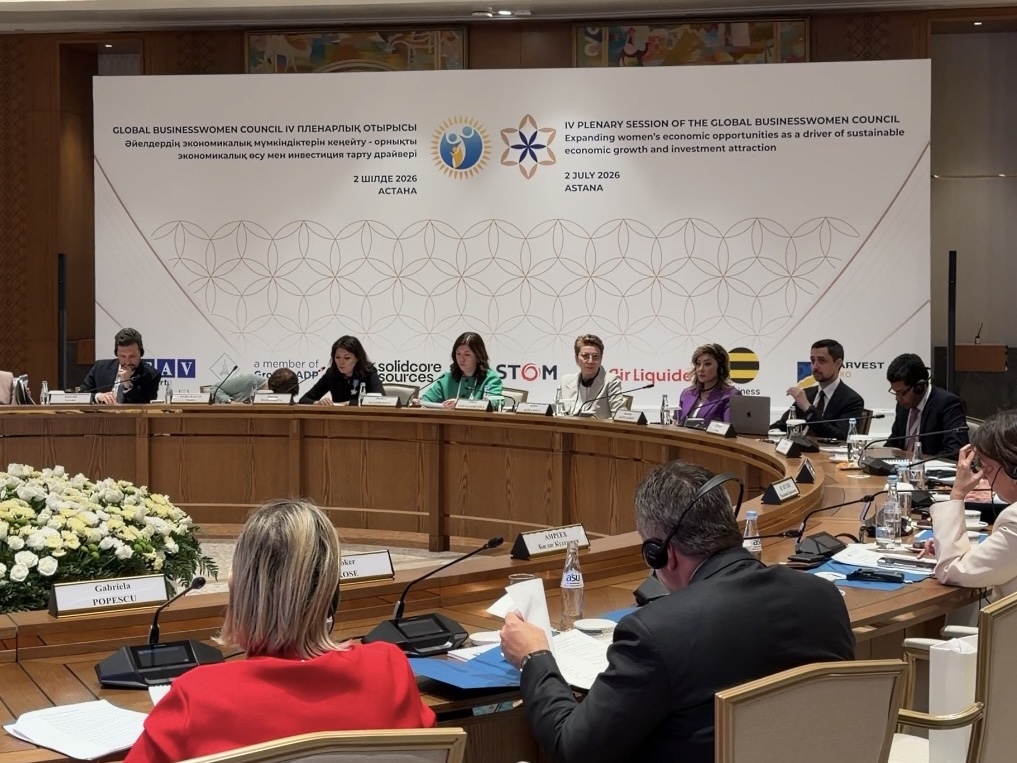
The fourth plenary session of the Global Businesswomen Council. Photo credit: Nargiz Raimbekova/ The Astana Times
“If public policy has already identified the development of human capital, production localization, SME participation in supply chains, job creation and regional development as priorities, the next question is how to move from a broad agenda to practical solutions. For that, high-quality analytics are essential,” said Zhanna Baidasheva, founder of the council.
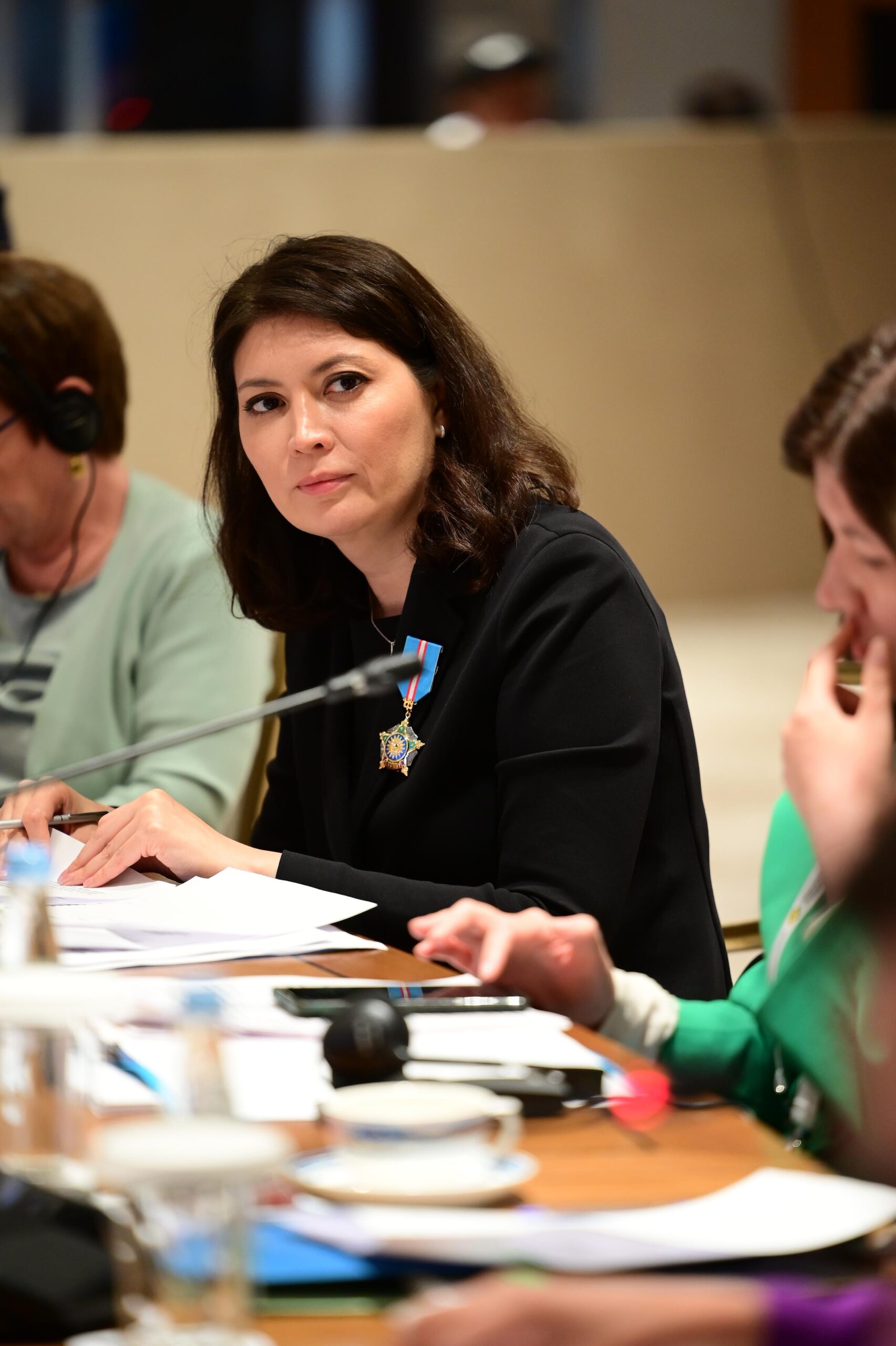
Zhanna Baidasheva. Photo credit: GWBC
She noted it is important to understand where industrial demand is emerging, which areas have potential for localization, which suppliers are ready to grow, which skills need to be developed, and where women’s participation can generate the greatest socioeconomic impact. She noted that women account for 48.5% of SMEs in Kazakhstan.
Baidasheva stressed that G-Index is not designed as a ranking, certification system, financial instrument or supplier selection mechanism.
“Its purpose is to create an objective analytical picture, identify patterns, economic opportunities, limitations and potential areas for development for further consideration by government agencies, businesses, international organizations and development institutions,” she explained.
The council meeting brought together representatives of international financial institutions, the United Nations, government agencies, national companies, international corporations, investors, and development institutions.
Status of women as an indicator of progressive state
Addressing the meeting participations in a video message, Deputy Prime Minister and Minister of Culture and Information Aida Balayeva emphasized that the status of women is one of the markers of a progressive state, and that protecting women’s rights must remain an unconditional priority of public policy.
According to Balayeva, who also chairs the National Commission on Women’s Affairs and Family and Demographic Policy under the President, women are playing an increasingly prominent role in the economy.
“Today, more than one million women entrepreneurs are registered in Kazakhstan. Women head nearly half of small and medium-sized businesses and account for more than a third of employment in the sector. These figures show the significant role women play in developing entrepreneurship and contributing to the national economy,” she said.
At the same time, women-led businesses are still concentrated largely in the service sector. Women also remain underrepresented in large-scale and high-tech entrepreneurship.
Balayeva said the priority is to ensure women find their place in the era of rapidly changing digital technologies and artificial intelligence. “To achieve this, it is important to expand women’s access to technologies, education, financing and mentorship,” she added.
Economic imperative
For European Bank for Reconstruction and Development President Odile Renaud-Basso, expanding women’s opportunities is not just a “wise thing to do,” but also “smart for the economies.”
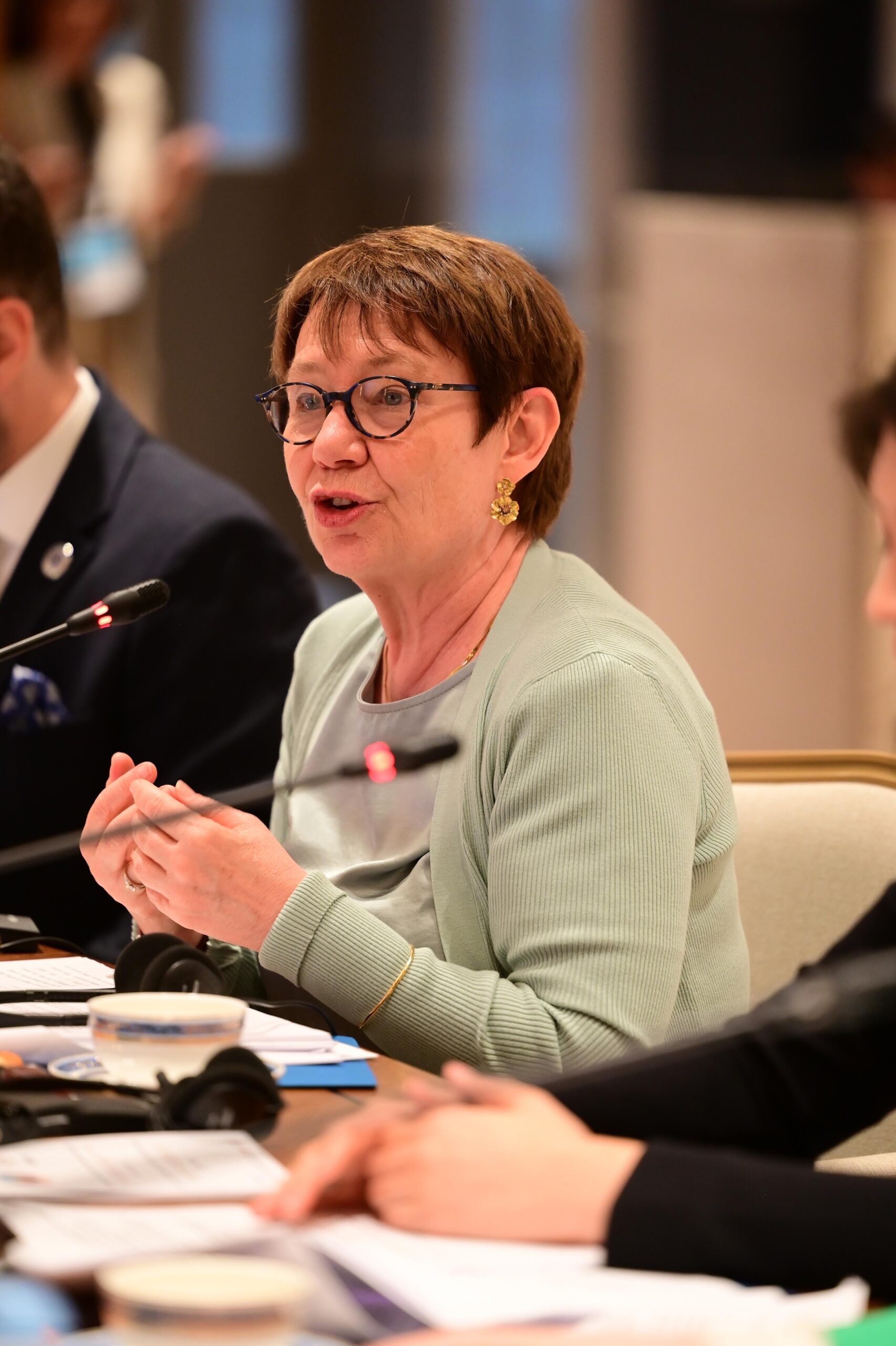
Odile Renaud-Basso. Photo credit: GWBC
“Gender equality is not only a value we hold as a bank, but it is also an economic imperative. Because when women entrepreneurs struggle to access finance, or when they are missing from fast-growing sectors, or when their equities are not reflected in the data, then the whole economy pays a price,” she said.
Renaud-Basso, who attended the Foreign Investors’ Council meeting earlier in the day, said the EBRD’s five-year strategy on gender equality and human capital places equal opportunity at the center of private sector development and investment. Under the strategy, at least 40% of the bank’s annual projects are expected to include specific measures promoting gender equality.
“Here in Kazakhstan, we already see what this looks like in practice. Over the years, we have implemented what we call the Women in Business Program,” she said, adding the program, which is implemented with local banks, provides financing, advisory support, mentoring and training.
Renaud-Basso said “one of the clearest examples” is EBRD’s work on inclusive finance. The bank has channeled more than 135 billion tenge (US$286 million) through banks, microfinance organizations, supporting more than 60,000 women entrepreneurs across Kazakhstan.
“Behind all these numbers, there are real stories with women building companies, creating jobs, contributing to their communities. But access to finance also depends on better evidence, better data,” she added.
Renaud-Basso noted women’s economic empowerment is both a matter of fairness and a driver of innovation, resilient growth and stronger management.
‘Achieving gender equality is centuries away’
Ceren Güven Güres, head of the UN Women Central Asia Liaison Office and representative of the Kazakhstan Country Office, commended the national commission and the council for bringing together government, business, development partners and international financial institutions. She also welcomed the participation of men at the meeting, noting that gender equality discussions are still too often held mainly among women.
“Achieving gender equality is centuries away,” she said. “At the current rate, it will take us 286 years – we will not see this, neither our grandchildren – to close prevailing gaps in legal protections for women and girls if we keep on doing what we are doing at the same pace. 137 years before the eradication of extreme poverty among women and girls, and 39 years before women hold as many seats in parliament as men.”
Turning to Kazakhstan, she said the country has built one of the strongest foundations for women’s entrepreneurship in the region, with women accounting for nearly half of SMEs. However, barriers remain, particularly in access to finance, industry representation and pay equality.
Güven Güres highlighted two key priorities: equality in leadership and recognition of unpaid care work.
“The care economy is one of the most invisible, but the most powerful factors shaping women’s labor force participation. We have gender stereotypes in Central Asia. Men believe that women should spend more time at home than work. This is a fact that we gathered, not only in Kazakhstan, in many countries as well,” she said.
In Kazakhstan, she noted, studies show that young women spend more than twice as much time on unpaid work as men, limiting their opportunities for paid employment, entrepreneurship, professional advancement, political leadership and leisure.
Corporate perspective
Suzanne Coogan, senior vice president and chair of Shell in Kazakhstan, said advancing women’s participation is not only about gender equality, but also about gender equity, which means creating the conditions that allow women to thrive and succeed at every stage of their careers.
Mentioning her own experience of being Shell’s first female country chair in Kazakhstan and a mother of three, she said support from both the workplace and family is critical.
“In Shell, my team here in Kazakhstan, 70% women on the leadership team. (…) My overall team is more than 55% women, and that’s not by accident. Since I joined the industry more than 20 years ago, I have seen Shell move from a reactive state to a proactive state in terms of how we focus on gender equality in the workplace,” Coogan said.
According to her, a structured and integrated approach that reflects the society in which companies operate and involves cooperation with partners can have a real impact on the future of women in Kazakhstan.
