
ASTANA — Every year on June 4, Kazakhstan celebrates the Day of State Symbols, honoring the flag, emblem and anthem that have come to embody the country’s independence, identity and aspirations. While they are familiar elements of daily life, appearing in schools, government institutions and at international sporting events, their significance extends far beyond official ceremonies.
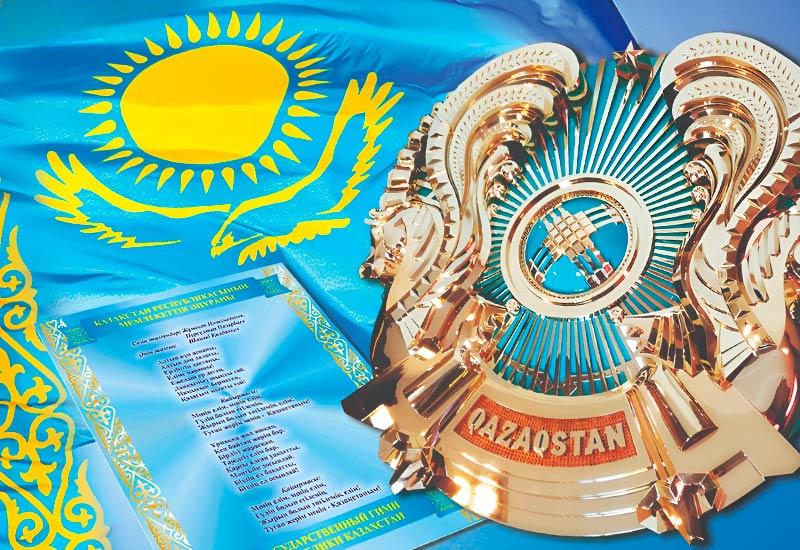
Photo credit: kz24.news
The history of Kazakhstan’s state symbols is closely tied to the country’s emergence as an independent nation. On June 4, 1992, just months after gaining independence, Kazakhstan officially adopted its national flag and state emblem. These symbols reflected the aspirations of a young state seeking to define its place in the world while preserving its cultural heritage. The national anthem was initially adopted in 1992 and was later replaced in 2006 by the current version, based on the patriotic song “Menin Kazakhstanym” (My Kazakhstan).
Today, more than three decades later, the state symbols remain powerful reminders of the values that unite the country’s diverse population.
The national flag, designed by honored artist Shaken Niyazbekov, is one of the most recognizable symbols of modern Kazakhstan. Its sky-blue background symbolizes peace, unity and openness, while also reflecting the ancient Turkic tradition of honoring the eternal sky. At the center is a golden sun with 32 rays, representing life, energy and prosperity. Beneath it soars a steppe eagle, a symbol of freedom, strength and independence. Along the flagpole runs a traditional national ornament that emphasizes the country’s rich cultural heritage.
The process of selecting the flag was highly competitive. According to historical records, more than 600 proposals were submitted before the final design was chosen. The winning concept successfully combined historical symbolism with a modern vision of statehood, creating an image that would become recognized worldwide.
The national emblem also emerged from a nationwide competition that attracted hundreds of entries. Created by architects Zhandarbek Malibekov and Shot-Aman Ualikhanov, the emblem places the shanyrak, the circular crown of the traditional Kazakh yurt, at its center. For centuries, the shanyrak has symbolized family, continuity and home. The state emblem represents the common home shared by all citizens of Kazakhstan.
Radiating outward from the shanyrak are the uyks (the structural supports of the yurt), symbolizing stability and unity. On both sides are the mythical winged horses known as tulpars. Deeply rooted in Kazakh folklore, the tulpars represent courage, strength and the pursuit of progress. Above them shines a five-pointed star, while the word “Qazaqstan” appears below, reinforcing the emblem’s message of national unity and statehood.
The national anthem occupies a unique place among the state symbols because it speaks directly to citizens’ emotions. The current anthem is based on the song “Menin Kazakhstanym,” (My Kazakhstan) written in 1956 by composer Shamshi Kaldayakov and poet Zhumeken Nazhimedenov. The song gained popularity during the Soviet era and later became associated with national pride and identity. In 2006, it was officially adopted as the national anthem, with modifications to the lyrics.
For many Kazakhs, the anthem evokes some of the country’s most memorable moments. Whether played during official state ceremonies or heard as athletes stand atop international podiums, it serves as a reminder of the country’s achievements and shared aspirations.
The importance of state symbols extends beyond their historical origins. They play a crucial role in civic education and fostering a sense of belonging among younger generations. Across the country, schools, universities, museums and cultural institutions organize events dedicated to the Day of State Symbols.
This year, the National Central Museum in Almaty hosted a series of events ahead of the holiday. Visitors attended thematic exhibitions, educational meetings and a patriotic concert program dedicated to Kazakhstan’s state symbols. Organizers also emphasized the importance of respecting citizens’ rights and freedoms, as well as the principles of justice, equality and the rule of law. According to museum representatives, such initiatives help strengthen patriotism and civic responsibility among young people while deepening their understanding of the country’s history and values.
In an increasingly interconnected world, national symbols continue to play an important role in preserving a sense of identity. They remind citizens not only of Kazakhstan’s past, but also of its future ambitions. The flag, emblem and anthem are more than constitutional attributes of statehood. They tell the story of a nation that emerged from independence determined to chart its own path and build a shared future for all its citizens.
As Kazakhstan marks another Day of State Symbols, June 4 serves as an opportunity to reflect on the meaning behind these familiar images and melodies. They are symbols that accompany citizens throughout their lives, from school assemblies and public celebrations to moments of national triumph, reminding them of the values, history and aspirations that bind the nation together.
