
The story of 19-year-old Karagandy resident Riza A. has shocked Kazakhstan. Following another brutal attack by her former husband, the young woman was admitted to intensive care, where doctors were forced to perform an emergency spleen removal surgery. According to media reports, the abuse had continued over a prolonged period and included repeated beatings, psychological pressure and threats.
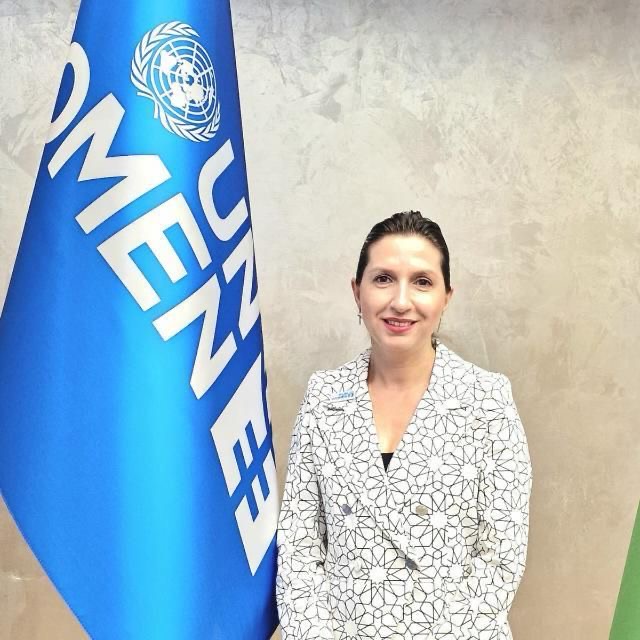
Dr. Ceren Guven Gures. Photo credit: UN Women
But Riza’s story is not only the personal tragedy of one young woman. It is a painful reminder that violence against women remains a reality faced by millions of women around the world, regardless of a country’s level of development, culture or social background.
According to recent United Nations estimates, in 2024 a woman or girl was killed by an intimate partner or family member every 10 minutes globally. Behind these figures are human lives, devastated families and stories that too often remain invisible until they turn into tragedy.
Too often, society learns about such cases only when violence has already resulted in severe health consequences or has become life-threatening. This is why it is so important today to speak not only about response mechanisms, but also about prevention, coordination, early identification of risks and the creation of a system in which every woman knows that help exists and that it is safe to seek it.
Riza’s story resonated particularly strongly during a recent joint mission to the Karagandy region organized by UN Women. The visit brought together high-level representatives of the United Nations and the diplomatic community, including HE Sarangoo Radnaaragchaa, United Nations Resident Coordinator in Kazakhstan, HE Sally Axworthy, His Majesty’s Ambassador of the United Kingdom to Kazakhstan, HE Sylvain Guiaugué, Ambassador of France to Kazakhstan, HE Giorgio Pompilio, Chargé d’affaires a.i. of Switzerland to Kazakhstan, as well as representatives of international partners.
During the visit, the delegation met with Karagandy Region Governor Yermaganbet Bulekpayev to discuss the protection of women’s rights, prevention of domestic violence and further strengthening of support systems for women and children. Importantly, regional authorities openly emphasized the need to strengthen inter-agency cooperation and partnerships with civil society organizations.
As part of the mission, the delegation visited crisis centers (shelters), government-led family support centers and non-governmental organizations in Karagandy and Temirtau. Behind the formal term “support center” lies the immense daily work of people helping women survive and recover.
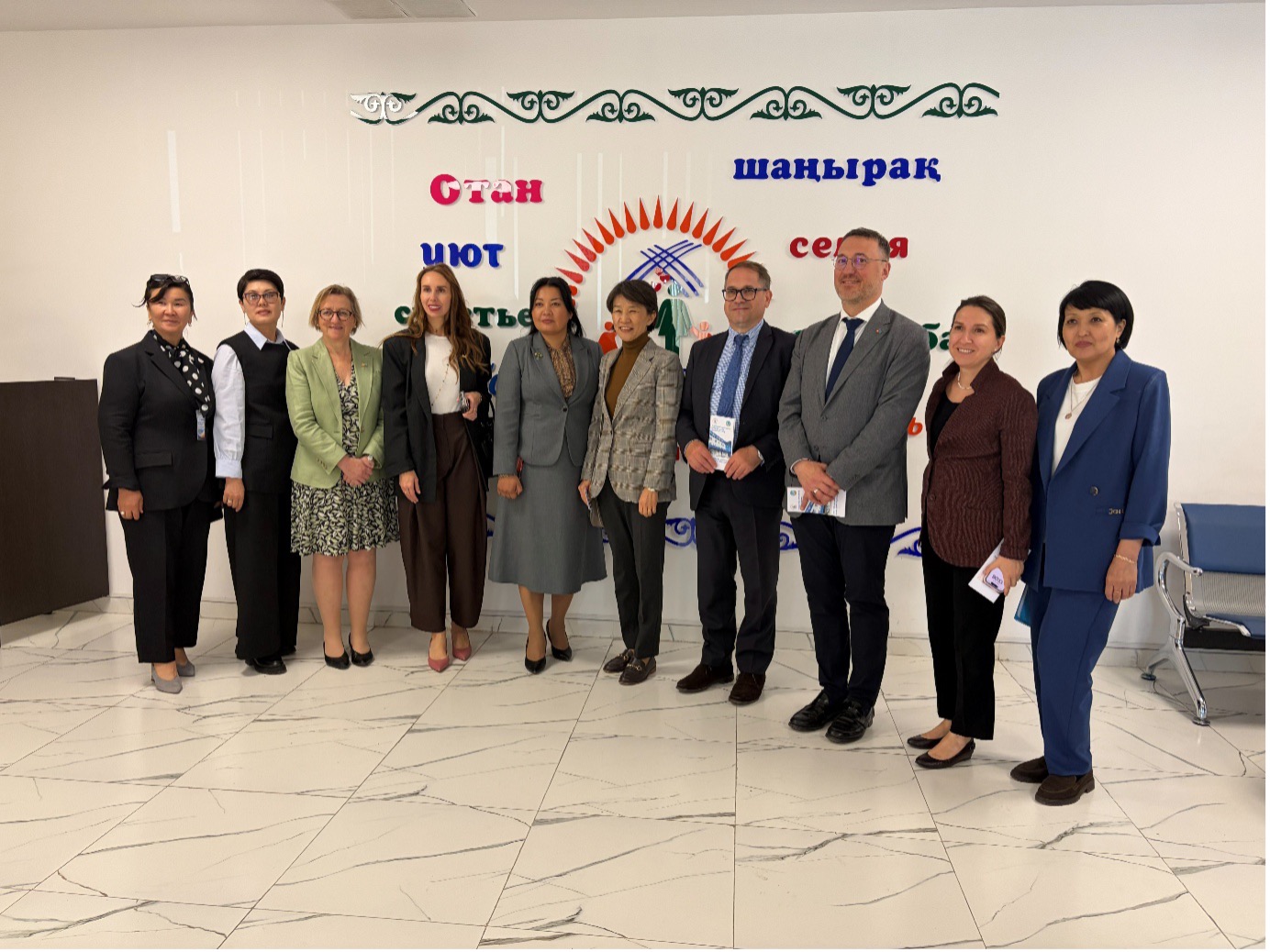
Delegation members also visit the Family Support Center in Karagandy. Photo credit UN Women.
These are psychologists, social workers, lawyers, shelter staff, volunteers and activists who become the first source of safety for women after experiencing violence. It is there that women are often able, for the first time, to sleep peacefully, stop fearing for their children and gradually begin rebuilding their dignity and sense of control over their lives.
It is equally important to recognize that violence against women exists in every country in the world. The United Kingdom, France and other European countries also continue to face this challenge and to strengthen their prevention and protection systems. This is precisely why international cooperation is so valuable. Countries can exchange practices, support the development of social services, strengthen specialist training and jointly identify the most effective approaches.
At the same time, no country can solve this problem through shelters or law enforcement alone.
A comprehensive approach is needed, one in which government institutions, the education and healthcare systems, law enforcement agencies, social services and civil society and community leaders work together. Investments in prevention, family support, youth awareness and women’s economic empowerment are particularly important.
Economic independence remains one of the key factors enabling women to leave abusive situations and begin a new life. This is why supporting women’s entrepreneurship, employment and access to social services is not only economic policy, but also part of a broader violence prevention system. That is why private sector engagement plays a crucial role in protective services to break the vicious circle of violence by providing a new life with economic independence.
Today, Kazakhstan is taking important steps to strengthen mechanisms for the protection of women and to further develop support systems for survivors of violence. But Riza’s story reminds all of us that the effectiveness of any system is measured not only by laws and programmes, but by how quickly a woman can access help, believe that she will be heard and feel safe again.
No girl should ever have to pay for silence with her health or her life.
Riza’s story is not only a story of survival. It is a call to continue the joint efforts of governments, civil society and international partners towards a society where every woman and every girl can live free from fear.
Dr. Ceren Guven Gures is Representative of the UN Women in Kazakhstan and Head of the UN Women Central Asia Liaison Office.
Disclaimer: The views and opinions expressed in this article are those of the author and do not necessarily reflect the position of The Astana Times.
