
The International Finance Corporation (IFC), part of the World Bank Group, notes the key role of guarantee instruments in expanding access to finance for micro, small, and medium-sized enterprises (MSMEs).

IFC Head in Kazakhstan Zafar Khashimov reported that the organization has been operating in the country since 1993 and, over this time, has invested and mobilized more than $2.9 billion in private investment into the economy. According to him, MSMEs account for the largest share of jobs in developing economies, including Kazakhstan. Therefore, their support remains a key priority for IFC and the World Bank Group.
“Across the world, small and medium-sized businesses face difficulties in access to attracting borrowed funds. Typically, this is linked to a limited collateral base, insufficient credit history, and an insufficient level of own capital. As a result, their opportunities for development are often limited. The presence of such instruments as guarantees helps them unlock potential and gain access to financing in cases where, without the provision of guarantees, this would have been impossible for them,” said Khashimov.
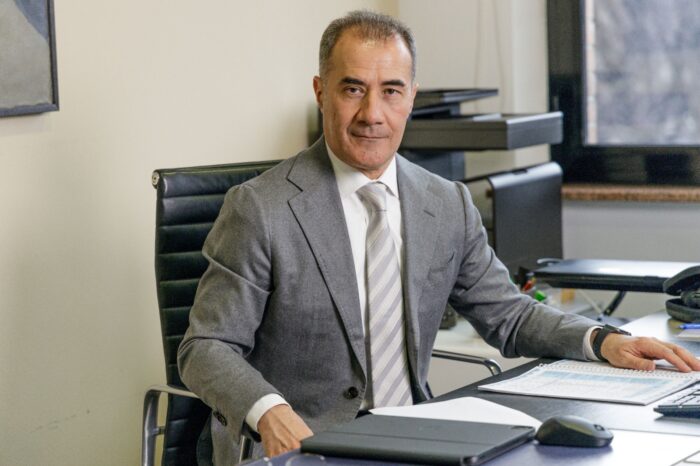
Zafar Khashimov
In this regard, IFC considers the transition from interest rate subsidies to more market-based instruments, such as guarantees, a viable approach that contributes to the development of a sustainable business environment.
“Based on IFC’s experience, we see that expanding access of MSMEs to financing, typically, requires the participation of the state, including through specialized development institutions. In many countries, such institutions play an important role in reducing risks for the financial sector and stimulating business lending. In Kazakhstan, this function is performed by the Damu Entrepreneurship Development Fund, on the basis of which market-based guarantee products are being developed. Guarantee instruments are an effective mechanism of support for MSMEs, since they allow sharing credit risk with financial institutions. This, in turn, contributes to reducing requirements for collateral and the capital burden on banks, which facilitates expanding access to financing for a wider range of entrepreneurs. As a result, MSMEs gain the opportunity to attract loans on market terms, increasing their resilience and competitiveness,” he added.
In the World Bank’s 2025 analytical report titled “Do State SME Programs Work? Evidence from Loan Subsidies and Credit Guarantees in Kazakhstan,” dedicated to assessing the impact of interest rate subsidies and credit guarantees on employment and SME sales, notes a positive initiative to reform the Damu Fund’s business financial support programs. The document emphasizes the importance of guarantee instruments, which align creditors’ interests and facilitate better selection and monitoring of businesses.
It is worth recalling that under instructions from the head of state in 2025, the Damu Fund, a subsidiary organization of the Baiterek National Investment Holding, launched two paid guarantee programs. They aim to support the real economy sector by expanding access to financing for both MSMEs and large projects.
Guarantee Fund 1 supports projects up to 7 billion tenge, and Guarantee Fund 2 is intended to finance large infrastructure projects exceeding that threshold.
Under Guarantee Fund 1, more than 3,900 projects have been supported with total loans exceeding 600 billion tenge, of which micro and small businesses account for 88.5%, medium-sized businesses for 10.4%, and large enterprises for 1.1%.
Under Guarantee Fund 2, support has been provided to 10 projects with total loans of approximately 457 billion tenge.
Agreements under Guarantee Fund 1 have been concluded with 11 banks, the Social-Entrepreneurial Corporation Aktobe, Shinhan Bank Kazakhstan, and subsidiaries of the Baiterek holding, including the Agrarian Credit Corporation and the Industrial Development Fund. An agreement with the leasing company Halyk Leasing is at the signing stage.
Overall, under the Fund’s programs, 13,000 projects were supported in 2025 for 2.2 trillion tenge, 29% more than in 2024.
