
ASTANA — Scientists are exploring whether the human body can function as if it were younger by reversing aging at the cellular level, as research led by Nazarbayev University Professor Prim Singh advances “partial reprogramming,” a method that restores how aging cells work. The field is gaining global attention and investment as it moves toward clinical trials.

Photo credit: deposit photos
“We not only had the idea that partial reprogramming can turn back the aging clock. But we also proved it experimentally in human cells. We actually did the ‘proof-of-principle’ as well. We had the idea and we proved it. This is a settled matter in the scientific community,” Singh told The Astana Times.
The idea that cells could be reset emerged from decades of research in regenerative medicine. The field traces back to 1962, when Sir John Gurdon demonstrated that a mature cell could be reprogrammed to an embryonic state, a discovery that later earned him the Nobel Prize. Gurdon was at Cambridge University, where Professor Singh was a student.
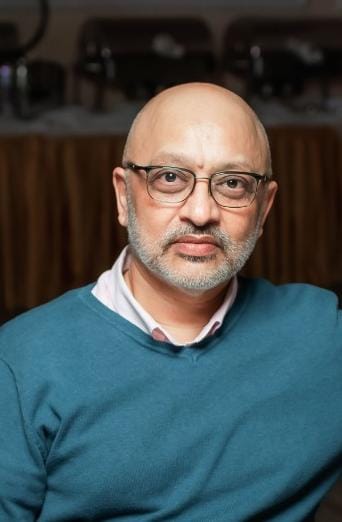
Nazarbayev University Professor Prim Singh. Photo credit: Professor’s personal archives
This scientific path also includes Dolly the sheep, the first mammal cloned from an adult somatic cell in 1996, a project Singh contributed to in Edinburgh. In 2006, Japanese scientist Shinya Yamanaka identified four factors capable of reprogramming adult cells into a stem-cell-like state, transforming the field. Yamanaka was awarded the Nobel Prize along with Gurdon.
Building on this, Singh and his colleague Fred Zacouto proposed a different approach in 2010: instead of fully reprogramming cells, they suggested stopping the process midway so cells could regain youthful function. This concept, known as partial reprogramming, was later experimentally confirmed in human cells by Maria Manukyan and Singh in 2014.
The work has since gained international recognition, including a front-cover feature in Nature on April 9, reflecting growing global interest in the field.
“Our method has been shown to be a robust way in which to make old cells young in various experimental models. This has been shown by scientists at Cambridge University, Stanford University and Harvard University. They’re some of the best-known universities in the world,” said Singh.
“But, as the Nature article says, the person who started off is here in Astana at Nazarbayev University,” he added.
Building on these findings, Singh outlined the next areas of focus in the research.
“One, is that we show that rejuvenation of tissues from very old people, of 80-year-old people, is as efficient as rejuvenating tissues from 60-year-old people. We have to have technology to ensure that very old people become rejuvenated to the same degree as old people. That’s very important clinically,” said Singh.
Another area he highlighted is the study of brain rejuvenation in age-related neurological disorders such as Alzheimer’s, noting that restoring brain function has already been demonstrated in mice.
“And finally, this is a difficult technical bit, how to rejuvenate DNA organization that is known to change as we age. This is fundamental. We’re working out how to reverse it because all rejuvenation technologies must be able to do that,” he added.
From lab models to real-world therapies
Much of the progress in the field comes from experiments in animal models, particularly mice, which is a fundamental necessary step before human trials. Studies show that partial reprogramming can improve tissue repair, restore organ function, and, in some cases, extend lifespan.
“Rejuvenation of organ function has been achieved in mice. That’s why everybody is excited because mice are the model system for humans. You have to work on a model system and then slowly work into clinical trials,” said Singh.
The approach focuses on reversing the deterioration of cells over time. As people age, cells gradually lose their ability to function properly, affecting everything from memory to organ performance. This decline is linked in part to changes in the epigenome – chemical signals that control how genes are switched on or off. Partial reprogramming appears to reset some of these signals, allowing cells to function more like younger ones.
“What it means to ‘make a cell younger’ is to reverse the decline in cell function that occurs as we age. What partial reprogramming should do is slow down or even reverse age-related decline, restore vision, enhance memory function, and help with organ function as well,” he said.
Early-stage clinical trials are now being prepared to test whether these effects can be safely replicated in humans. While results so far are promising, translating laboratory findings into treatments requires time and careful testing to ensure safety.
“We should see robust therapies. They have to go through clinical trials. Therapies will begin to develop over the next decade. People sometimes say why can’t I just buy it from the shop today? It’s because all clinically useful medicines take time because they have to be safe,” said Singh.
According to Singh, earlier approaches focused on fully reprogramming cells into an embryonic state, which later raised concerns about how such cells behave in medical applications. His method instead focuses on a more controlled form of cellular rejuvenation.
“They [cells] will just be younger, not embryonic. The idea was met with skepticism at that time. Most scientists didn’t believe me,” said Singh.
“But in fact, after we showed it first and when other scientists tried it, it worked in everybody’s hands. In mice, they have even extended lifespan – this could add many years to human lifespan. And that’s the ultimate goal of our methodology: to extend healthy lifespan so people stay healthy for a longer period of time,” he said.
Global race, and Kazakhstan’s opportunity
The commercial potential of partial reprogramming is drawing increasing global attention, as therapies targeting age-related diseases could also improve overall health and longevity. According to a 2023 review article in Aging Cell, extending healthy lifespan by just one year is estimated to be worth more than $38 trillion globally.
In recent years, numerous biotechnology companies have entered the field. Among them, Altos Labs stands out with a record $3 billion investment from tech investor Yuri Milner and Amazon founder Jeff Bezos, making it one of the largest biotech startup financings to date.
Despite this momentum, the technology remains at an early stage. Most companies are still in preclinical development, with limited movement toward human trials, while safety challenges, including the risk of abnormal cell behavior, continue to shape research priorities.
According to Singh, Kazakhstan has an opportunity to take part in this rapidly developing field.
“You can see from the Nature article that the ideas come from my laboratory. So rather than waiting for other people to capitalize on this and then license the technology back to Kazakhstan, the best thing we can do is to put investment in here,” he said.
He added that developing local expertise could benefit both science and the economy.
“This is the Holy Grail. That is to extend a healthy lifespan. Young scientists will be excited by this topic. Importantly, there are very good students here that we can train in partial reprogramming, which will enhance the health and well-being of Kazakh people and generate money for the Kazakh economy,” said Singh.
