
ASTANA – In Poland, Yuriy Serebriansky is known as a cultural scholar and editor of a magazine focused on the history and life of Kazakhstan’s Polish diaspora. In Kazakhstan and beyond, he is recognized as a writer whose works span poetry, prose, children’s literature and nonfiction, all shaped by a life lived across cultures, countries and professions.
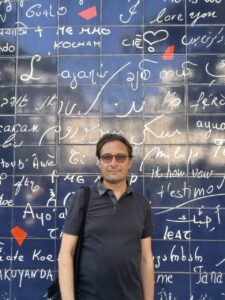
Yuriy Serebryansky, a Kazakh writer. Photo credit: Yulia Samosenko
Serebriansky, who has published since 2006, has followed an unconventional path. Trained as an ecologist, he once worked as a tour guide in Thailand, later served as editor-in-chief of Esquire Kazakhstan, pursued postgraduate studies in Poland and now focuses on academic research and literary translation. Each stage, he said, left an imprint on his creative voice.
“All these periods were no less important than the others. I call them lives. Each has dear people who rarely intersect with those from the next life. It resembles reincarnation, including experience, knowledge and a writer’s baggage migrating from one to another. That is what makes writing possible,” Serebriansky said in an interview with The Astana Times.
Writing through a Kazakh lens
Despite publishing internationally, his texts have appeared in Poland, Ukraine, the United States, Chile and India. Serebriansky stressed that every landscape he describes is ultimately filtered through Kazakhstan.
“I was born and raised here. Even when I write about other places, the perception remains Kazakh. Readers abroad always interpret meanings differently – as Umberto Eco wrote about the empirical reader. Everyone approaches a book with their own mood, culture and reading history,” he said.
He added that foreign readers can discover the country through his books.
Last year, the Kolkata-based publisher Chair Poetry Books released “Buddha,” his first English-language poetry collection. The book debuted at the International Chair Poetry Evenings festival, where Serebriansky became the first Kazakh author to participate.
Preserving the memory of deportation
In 2024, Serebriansky published “Altynshash,” a novel about deported Poles in Kazakhstan, which received a state literature prize for promoting interethnic harmony. The book explores the history of deportations to Kazakhstan through both fiction and documentary testimony.
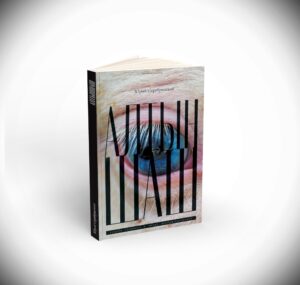
Serebryansky’s “Altynshash” novel about deported Poles in Kazakhstan, received the Assembly of the People of Kazakhstan state prize. Photo credit: yuriyserebriansky.com
Serebriansky noted that the first part tells the story of a Polish girl deported to Kazakhstan in a freight wagon during the Stalin period. In 1936, the Soviet Government ordered the eviction of Polish and German families from Ukraine to Kazakhstan. The campaign marked the first large-scale forced deportation in the USSR carried out on the basis of ethnicity.
The second part gathers authentic memories of deported Poles and their descendants, tracing several waves of displacement that reshaped communities across the steppe.
“The novel is very important to me, and I am not its sole author. It matters that this history is known and remembered. Textbooks can be rewritten, but the memories of witnesses are much harder to erase,” Serebriansky said.
He noted that 90 years after those events, generations of ethnic Poles have grown up in Kazakhstan, becoming part of its social and cultural fabric. The novel, in his view, restores continuity between past trauma and present belonging.
Creating modern Kazakh folklore
Another strand of Serebriansky’s work turns toward childhood imagination. His book “Kazakhstan Tales,” first published in 2017 and reissued in 2025, builds stories from landscapes and symbols recognizable to Kazakh children, such as mountains, steppes, apples, irrigation canals and city landmarks.
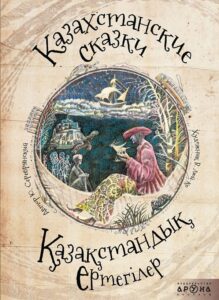
“Kazakhstan Tales” builds stories from landscapes and symbols recognizable to Kazakh children such as mountains, steppes, apples, irrigation canals and city landmarks. Photo credit: yuriyserebriansky.com
“These stories are an attempt to create modern Kazakh folklore. The book has gone beyond Kazakhstan. It is translated and read in many countries, but it remains about us and for us,” he said.
The collection was named best children’s publication at the Along the Great Silk Road book fair in Astana and has entered school and university curricula in Kazakhstan and the U.S. Individual stories have appeared in English, Polish, German, Chinese, French, Spanish and Arabic. German scholar Nina Friess later published a monograph devoted to the work.
An excerpt from one of the tales evokes the blending of myth and landscape:
“Once upon a time, atop Kok Tobe overlooking the city, stood a vast castle of knights who ruled these lands. In stormy weather, the white stone fortress loomed against black clouds, inspiring fear. But when the sun appeared, a ridge of snowy mountains rose behind it, making the castle seem small and unthreatening. The people loved their mountains, only they inspired true respect.”
Literary identity across borders
Serebriansky moves frequently between Kazakhstan and Poland, and the contrast between their literary infrastructures is noticeable. Poland’s state-supported Book Institute funds translations into and from Polish, accelerating circulation across languages. Kazakhstan’s publishing landscape is smaller.
He also highlighted Kazakhstan’s Steppe&World publishing house for translating contemporary global literature into Kazakh.
“The speed at which new books appear in Polish is astonishing. Poland has 37.9 million people, Kazakhstan 20.4 million, and the proportion of publishers is not in our favor,” he said.
Questions of identity remain central to his work. Of Polish origin and writing in Polish, Russian and English, Serebriansky noted that cultural identity is fluid and complex, particularly in Kazakhstan’s multicultural context.
“If my origin was never in doubt, cultural identity can change. This is natural for our country. I teach at the Al-Farabi Kazakh National University, and even some of my students reflect on identity,” he said.
He added that he aspires to be recognized as a Kazakh writer but believes such recognition should come from readers and peers.
“I want to become a Kazakh writer. However, I oppose self-proclaimed titles. I never called myself a writer; editors and critics did. Likewise, only colleagues and readers can call me a Kazakh writer, even though all my books are translated into Kazakh,” Serebriansky said.
