
ASTANA – The second day of the Eighth Congress of Leaders of World and Traditional Religions on Sept. 18 featured a series of panel sessions addressing urgent global issues, with the spotlight on the Second Forum of Young Religious Leaders. The forum explored the role of young faith leaders in advancing sustainable development and the place of religion in an era of rapid technological change.
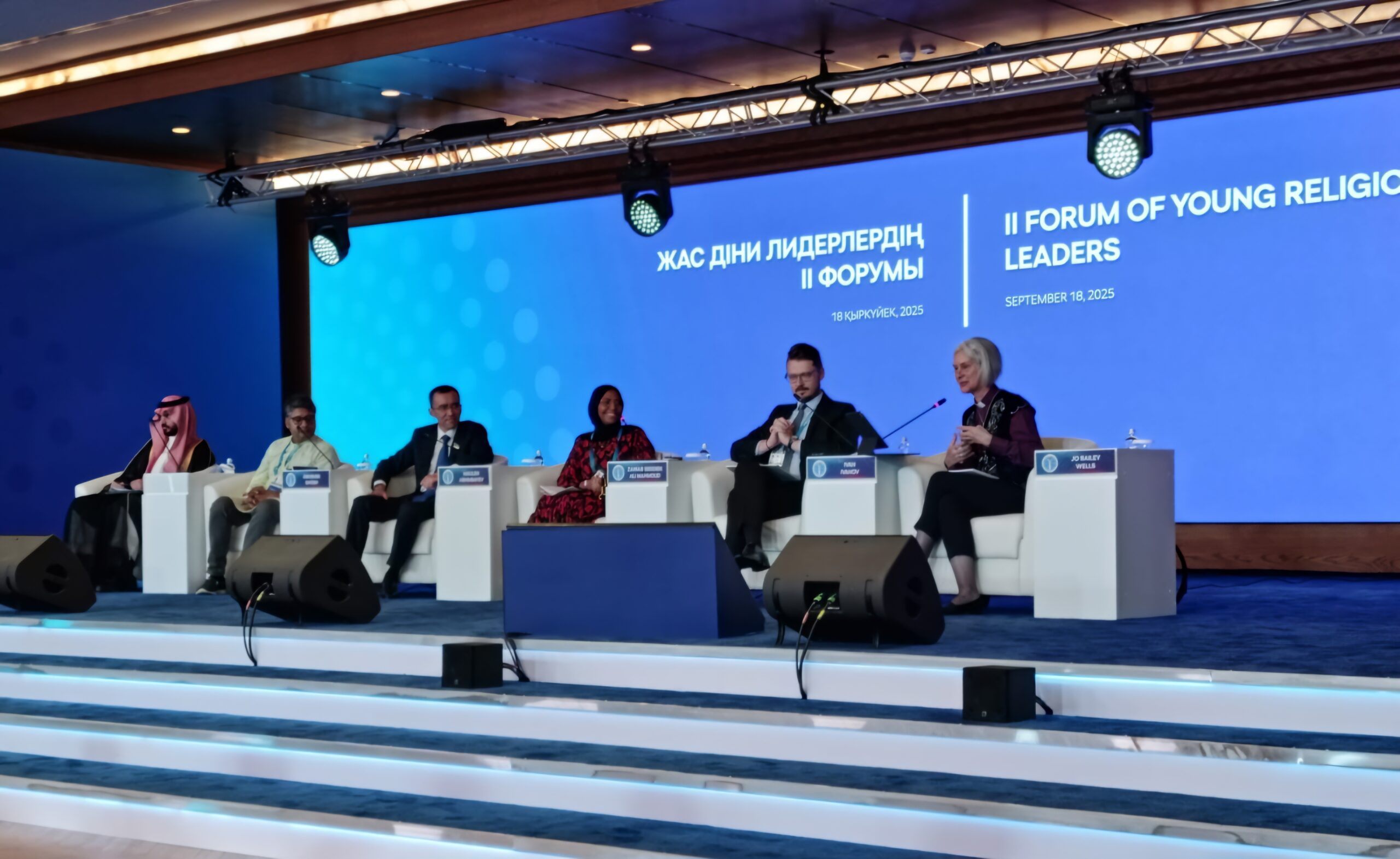
From left to right: Abdullatif Yosef Almutlaq, Abhishek Ghosh, Maulen Ashimbayev, Zainab Seddiek Ali Mahmoud and Jo Bailey Wells. Photo credit: The Astana Times
Kazakh President Kassym-Jomart Tokayev, who opened the congress the day before, said he places high hopes on the younger generation.
“The younger generation should grow up in a spirit of deep respect for representatives of all religions and cultures. Today’s youth face many challenges. Despite differences in beliefs and worldviews, young people are united by common concerns. That is why a Forum of Young Religious Leaders is being held within the framework of the congress for the second time. The participants demonstrated their willingness to exchange opinions and work together openly,” said Tokayev.
Maulen Ashimbaeyv opened the Second Forum of Young Religious Leaders on Sep.18 Photo credit: The Astana Times
Senate Chairman Maulen Ashimbayev, who heads the Secretariat of the Congress, opened the forum by stressing that empowering young leaders to address key global issues is “the demand of the times.”
“We are facing the destructive consequences of climate change and environmental disasters, while also shaping laws and policies to combat them. That is why we need new ideas and approaches to resolve the major issues of our time. I appeal to you, young leaders, who will have to take control of the challenges of the 21st century. It is crucial to preserve and strengthen the interregional cooperation we have already built,” said Ashimbayev.
He highlighted the innovation, responsibility, and energy of young leaders in shaping the future of peace and development.
“Today, we unite the wisdom of our elders with the energy of the young to chart a path forward that is just, stable, and sustainable,” he said.
Abdullatif Yosef Almutlaq, under-secretary general for legal affairs of the Muslim World League, focused his remarks on the responsibilities shared by religious communities in confronting global crises. He called for a new era of justice, respect and solidarity.
Abdullatif Yosef Almutlaq, under-secretary general for legal affairs of the Muslim World League, praised Kazakhstan as a living example of peaceful coexistence, where diverse ethnic and religious groups thrive together. Photo credit: The Astana Times
“Young people aspire to build a reality based on hope and a prosperous future, where goodwill and human dignity prevail,” he said.
Almutlaq emphasized the need to strengthen the identity of Muslim youth, protect them from exclusion and negative influences, and build their capacity for communication across cultures.
He praised Kazakhstan as a living example of peaceful coexistence, where diverse ethnic and religious groups thrive together.
“This diversity has not been an obstacle to the unity of Kazakh society. On the contrary, it provides a foundation for dialogue and complementarity that has strengthened the nation over the years,” he said.
Ivan Ivanov, executive chairman of the International Center Alliance of Civilizations, underscored that while youth make up the majority of the global population and are “carriers of new energy,” they remain underrepresented in policymaking.
“Young leaders are becoming architects of change. However, for their potential to shape reality, we must break down outdated frameworks,” he said.
He emphasized the role of education in fostering tolerance and respect, noting that intergenerational dialogue is essential for young people to learn from the past and shape a better future.
“Education must equip young people not only with skills but also with a moral compass, ideals, and creativity. It must encourage students to ask difficult questions, to seek freedom of thought, and to balance knowledge with values,” said Ivanov.
“This means breaking down rigid frameworks, integrating philosophy and art into learning, and placing as much value on ideals as on practical skills. Only through such a holistic approach can education prepare young people to live with peace and harmony,” he added.
At the close of the congress, participants adopted a declaration addressing some of the most pressing global challenges. The document outlined potential solutions and appeals of religious leaders to the international community. It also proposed holding the next congress in Astana in 2028. The declaration will be presented at the 80th session of the UN General Assembly.
