
ASTANA – Kazakhstan has become one of the first three countries worldwide to report on its climate commitments under the Paris Agreement, presenting its second Biennial Transparency Report (BTR2) at the 31st United Nations Climate Change Conference (COP31) in Antalya.
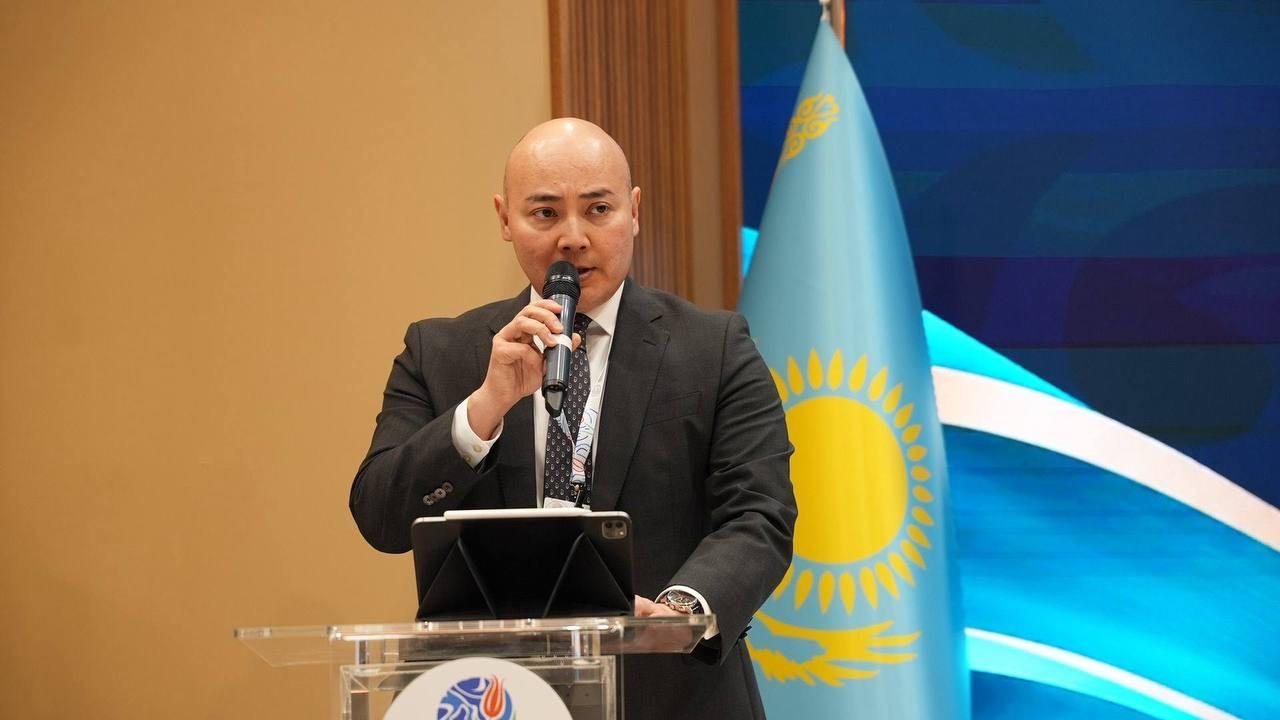
Kazakhstan’s Minister of Ecology and Natural Resources Alibek Kuantyrov holds meetings with international partners and business leaders on the sidelines of COP31 in Antalya, Türkiye, to discuss environmental cooperation, climate initiatives and opportunities for joint projects. Photo credit: Ministry of Ecology and Natural Resources.
The report and the country’s ninth National Communication were presented during a session at the Kazakhstan Pavilion focused on implementing Kazakhstan’s climate commitments. The session also marked the launch of a new national project to strengthen the country’s climate monitoring and reporting systems, reported the Kazinform news agency.
Kazakhstan previously submitted its first Biennial Transparency Report at COP29 in Baku. After international experts reviewed it under the United Nations Framework Convention on Climate Change (UNFCCC), the country is now working to strengthen its national system for monitoring climate indicators.
The new project, titled “Strengthening Kazakhstan’s Capacity to Meet the Requirements of the Enhanced Transparency Framework under the Paris Agreement,” is being implemented under the Capacity-building Initiative for Transparency (CBIT). The initiative was launched with an official exchange of documents between Kazakhstan’s Ministry of Ecology and Natural Resources and the Food and Agriculture Organization of the United Nations (FAO).
The initiative aims to strengthen institutional and technical capacity, improve climate data collection and analysis, and develop the Enhanced Transparency Framework (ETF). The framework allows countries to assess progress in meeting their climate commitments, including reducing greenhouse gas emissions and implementing their nationally determined contributions (NDCs).
Government representatives and international organizations discussed priorities for the next stage of climate action, including improving data reliability, strengthening interagency cooperation and digitalizing monitoring and verification processes.
Representatives of Central Asian countries also exchanged experience in developing national monitoring, reporting and verification (MRV) systems and discussed shared challenges and opportunities for coordinating future climate reports.
EU carbon rules put pressure on exporters
The need for accurate emissions data is also becoming increasingly important for Kazakhstan’s industrial exporters as the European Union’s Carbon Border Adjustment Mechanism (CBAM) enters its mandatory phase.
The requirements were discussed at a separate session at the Kazakhstan Pavilion on Nov. 13, bringing together representatives of Kazakhstan’s and EU government bodies, international organizations, industry experts and businesses.
Since Jan. 1, CBAM has applied to imports into the EU of iron and steel, aluminum, cement, fertilizers, hydrogen and electricity. The mechanism requires accounting for emissions generated during the production of these goods, with corresponding financial obligations for European importers.
The cost depends on the volume of emissions and the carbon price under the EU Emissions Trading System (ETS). In 2023–2025, the carbon price ranged from approximately 73 to 85 euros per ton of carbon dioxide.
European importers must submit their first annual CBAM declaration for goods imported in 2026 by Sept. 30, 2027. They must also surrender the corresponding carbon certificates by that deadline.
For Kazakhstan’s producers, the requirements mean they need to accurately measure and verify emissions and consider modernizing production to reduce the carbon footprint of their goods.
Impact on Kazakhstan’s exports
The EU remains one of the largest markets for Kazakhstan’s metallurgical products. In 2025, Kazakhstan exported 110,184 tons of aluminum to the EU, worth 274 million euros (US$303 million). The EU’s share of Kazakhstan’s total aluminum exports increased from approximately 6% to 54%. Exports of iron and steel to the bloc reached 396,318 tons, worth 337 million euros (US$372 million), accounting for around 6% of Kazakhstan’s total exports of these products.
The new requirements could affect supply costs, the competitiveness of Kazakh companies, and their investment decisions.
At the COP31 session, participants discussed exporters’ readiness for the new rules, focusing on emissions monitoring, accounting and independent verification. They also examined emissions trading mechanisms and the circulation of carbon allowances.
The discussions identified key challenges facing Kazakh exporters and produced proposals to support businesses, modernize production and strengthen international cooperation. Participants also considered ways to develop trade ties along the Trans-Caspian International Transport Route.
Kazakhstan began preparing aluminum and ferrous metallurgy exporters for the new EU requirements in June 2026. A study by QazTrade and the International Trade Center estimated that potential annual CBAM-related costs across four product categories could reach approximately 114 million euros (US$126 million), based on 2025 export volumes.
