
ASTANA – Kazakhstan’s domestic policy should focus on constitutional values, a new public ethic and an orientation toward the future, Vice President Erlan Karin said in a Telegram post on Sept. 16, outlining three key priorities for the country’s domestic policy.
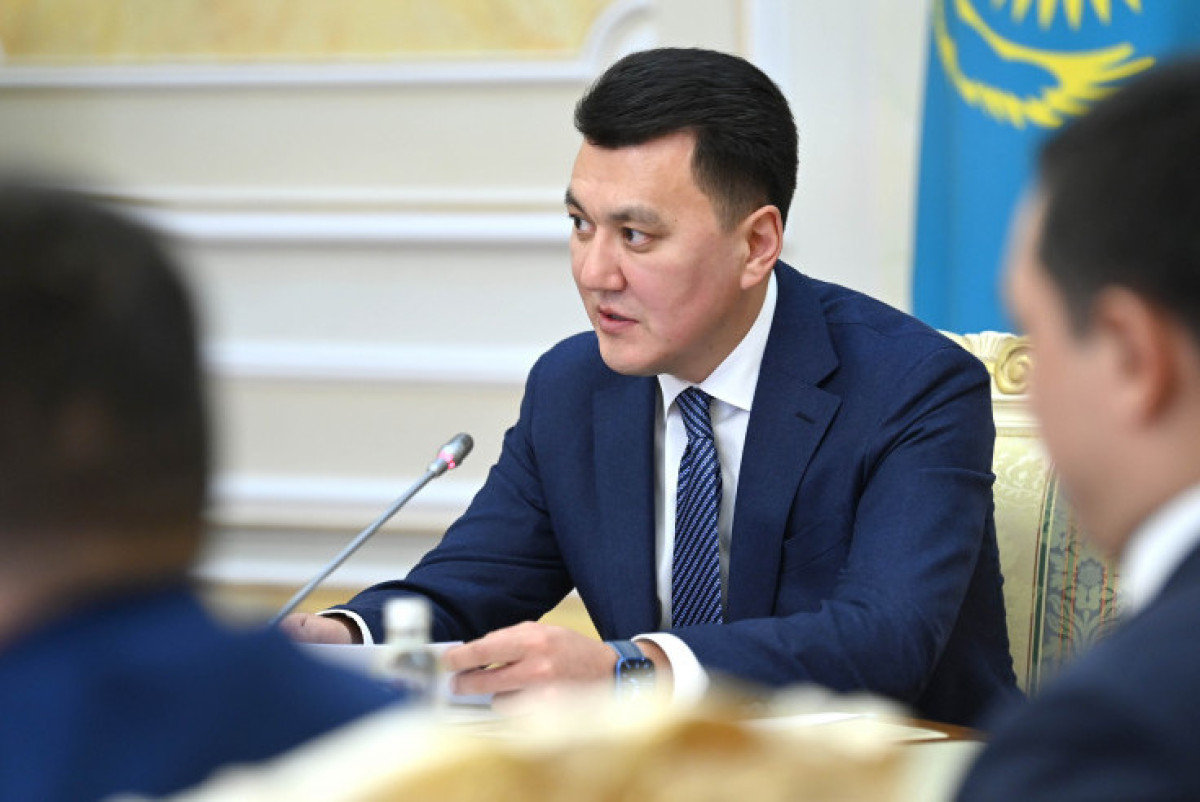
Vice President Erlan Karin. Photo credit: Akorda
Constitutional values
The first priority is constitutional values, which form the foundation of President Kassym-Jomart Tokayev’s strategic reform agenda. These include the rule of law and order, national unity, interethnic and interfaith harmony, the values of culture and education, science and innovation, hard work and progress, environmental responsibility, and responsible and constructive patriotism.
Karin said relevant government bodies should focus on consistently implementing the Presidential Decree on Approving the Basic Principles, Values and Directions of the Domestic Policy and the Action Plan for promoting the Constitution.
“Systematic expert and methodological, informational, cultural and educational work is needed to explain the key provisions of the Constitution and promote constitutional values,” Karin said.
A new public ethic
The second priority is a new public ethic.
“It is about embedding progressive norms and patterns of behavior in society, strengthening our own value foundation, countering the archaization of public life and attempts to replace historical facts,” Karin said.
He also emphasized the need to implement the Law and Order principle in practice, as well as the Taza Qazaqstan (Clean Kazakhstan) project and the Adal Azamat (Honest Citizen) education program.
“New approaches and formats of work are needed. In particular, the President’s Taza Qazaqstan initiative should be scaled up through the creation of a unified digital platform, the introduction of a national cleanliness standard and a regional cleanliness ranking,” he said.
Focus on the future
The third priority is an orientation toward the future, focusing on developing human capital through science and education, innovation and technology, culture and public enlightenment.
According to Karin, strategic documents initiated by President Tokayev set the conceptual direction. The main goal is to build a strong state and a progressive society that looks to the future with optimism. Summing up the three priorities, Karin linked them to the broader question of what kind of society Kazakhstan is building.
“All three priorities answer the main question: what kind of society are we building and what kind of country will we live in. To achieve this, we need to follow a constructive agenda and constitutional values,” he concluded.
Kazakhstan’s first vice president
Karin, 50, was elected Kazakhstan’s first vice president on Aug. 31 after President Tokayev nominated him during a meeting with the leaders of political party factions in the Kurultai. A total of 141 out of 145 Kurultai members voted in favor of his candidacy.
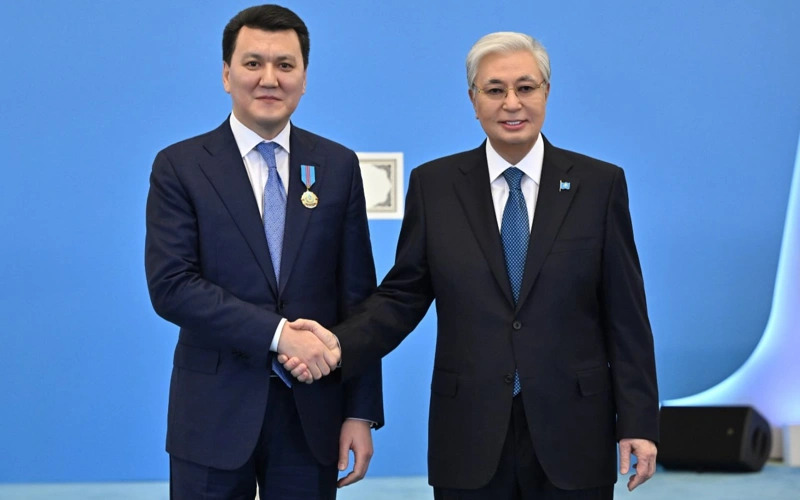
Tokayev and Karin during a state award ceremony, March 2026. Photo credit: Akorda
The position was established under Kazakhstan’s new constitutional framework. Under the Constitution, the President appoints the Vice President with the consent of the Kurultai, and while in office, the Vice President may not be elected as a deputy of a representative body, hold other paid positions, engage in business activities or belong to a political party.
The Constitution also provides that the Vice President represents the President in interaction with the Kurultai, the Government and other state bodies and exercises other powers determined by the President.
Under the President’s outline of the role, the Vice President is also expected, at the President’s instruction, to represent the head of state in international forums and negotiations, engage with foreign and domestic political, scientific, cultural and educational organizations, represent the President in Parliament and carry out other assignments.
Karin has held several senior public-service positions, including director of the Kazakhstan Institute for Strategic Studies, aide to the President, state secretary and state counselor. On June 30, he was appointed first deputy head of the Presidential Administration before becoming Vice President.
