
The first Korea–Central Asia Summit in Seoul has ended. The agreements have been signed, the Seoul Declaration adopted, and a relationship that began nearly two decades ago at the vice-ministerial level has now reached the presidential table.
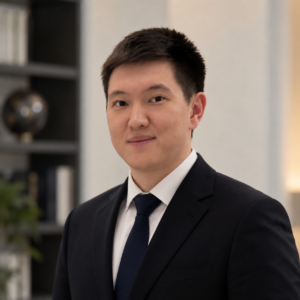
Alisher Amangeldinov.
But for Kazakhstan, the most important question begins after the summit.
Before the meeting, much of the discussion centered on why South Korea was becoming more interested in Central Asia: critical minerals, energy, supply-chain diversification and access to new markets. These interests remain important. Yet the outcome in Seoul suggests that the relationship could develop into something more ambitious.
The language has shifted from access to resources toward value chains; from individual projects toward industrial capacity; and, in Kazakhstan’s case, from attracting investment toward localization, technology transfer and production for third markets.
That shift matters.
Kazakhstan now has an opportunity to test a proposition that extends well beyond its relationship with South Korea: Can growing international demand for its resources become a catalyst for industrial development, rather than simply another cycle of raw-material exports?
Seoul changed the terms of the conversation
The summit on Sept. 16 brought together South Korean President Lee Jae Myung and the presidents of all five Central Asian states for the first leaders-level meeting in the history of the Korea–Central Asia format.
The institutional result was significant. The six countries adopted the Seoul Declaration, agreed to continue meetings at the leaders’ level, and Kazakhstan is set to host the next summit in 2028.
But the economic language of the meeting may prove more consequential.
Lee argued that cooperation should move beyond individual projects and infrastructure construction toward jointly developing industrial capabilities and mutually beneficial value chains. The logic is clear: Central Asia possesses critical minerals, energy resources and growing markets, while South Korea brings manufacturing capacity, technology and industrial expertise.
The countries backed this vision with an agreement on industrial and supply-chain cooperation covering manufacturing, infrastructure, critical minerals, energy and digital transformation. They also established a consultative mechanism among industry ministers to help translate political commitments into implementation.
This is precisely where the summit begins to differ from many conventional “Central Asia plus” meetings.
The question is no longer only what South Korea wants to buy from Central Asia. Increasingly, it is what the two sides can produce together.
Kazakhstan brought an industrial proposition
Kazakhstan used the summit to make that distinction explicit.
President Kassym-Jomart Tokayev proposed developing a Central Asia–Korea industrial and technological partnership built around localization, technology transfer, stronger regional supply chains and exports of finished products to third-country markets.
That is an important formulation because it addresses the central dilemma facing Kazakhstan in the current global competition for critical minerals.
International demand for uranium, lithium, rare earths and other strategic resources gives Kazakhstan geopolitical and commercial leverage. But demand alone does not guarantee industrialization.
A country can diversify its buyers while leaving its economic model largely unchanged.
If resources are extracted domestically but most processing, technological development and manufacturing take place elsewhere, Kazakhstan remains primarily at the lower end of the value chain.
The objective should therefore not be simply to export more minerals to more destinations.
It should be to capture more value before those resources leave the country.
The agreements reached around President Tokayev’s visit indicate that this transition is at least beginning to enter practical discussions.
Among the projects announced were cooperation on joint drilling at the Bakennoye lithium deposit involving Tau-Ken Samruk and the Korea Institute of Geoscience and Mineral Resources, as well as cooperation involving POSCO Holdings on rare-earth processing and refining.
Beyond minerals, QazaqGaz and Hyundai Engineering agreed on a gas-processing project at Karachaganak, while KazMunayGas and Samsung E&A reached an agreement connected with expansion of the Pavlodar refinery.
Taken together, the broader package of announced Kazakhstan–Korea projects and agreements was valued at approximately $19 billion, although these initiatives are at different stages of development.
The headline number is impressive. But it should not become the principal measure of success.
What matters is what kind of economic capacity those investments leave behind.
From investment volume to investment quality
For Kazakhstan, the next stage should therefore focus less on how much investment is announced and more on what that investment does.
A successful project should ideally generate several layers of value.
The first is obvious: capital, production and jobs.
The second is more important over time: local suppliers, engineering expertise, workforce development and technological capabilities.
The third is the most difficult: integrating Kazakh enterprises into international production networks so that they can eventually compete beyond the domestic market.
This is where South Korea is particularly relevant.
Korea’s economic strength does not come from natural resources. It comes from its ability to transform imported inputs into sophisticated manufactured products through technology, engineering, skills and export-oriented industrial ecosystems.
That experience makes Korea a potentially different kind of partner for Kazakhstan.
The relationship should therefore not be framed simply around Korean investment in individual Kazakh projects. The more ambitious objective should be the gradual creation of industrial ecosystems around those investments.
A Korean-backed processing facility, for example, becomes significantly more valuable to Kazakhstan if local engineering companies can supply it, universities train specialists for it, research institutions work with it and domestic companies eventually enter its supply chain.
That is how foreign investment becomes industrial capacity.
Critical minerals should be the beginning, not the entire relationship
Critical minerals will remain one of the strongest drivers of Korea–Central Asia cooperation. The Seoul Declaration reflects a shared interest in combining Central Asia’s mineral resources with Korean technology and expertise.
But Kazakhstan should resist allowing minerals to define the entire partnership.
The summit also produced an initiative on artificial intelligence and science and technology. Cooperation covers digital transformation, energy and other advanced sectors.
These areas matter because the next stage of Kazakhstan’s development cannot depend only on extracting different commodities more efficiently.
The country needs engineering capability, applied research, digital infrastructure, advanced manufacturing and human capital.
This is also where cooperation with Korea could acquire greater strategic depth.
South Korea’s experience in electronics, automotive manufacturing, energy infrastructure, digital technologies and research-intensive industries provides potential areas for cooperation that are not dependent on commodity cycles.
Education should be part of the same conversation.
Technology transfer does not happen merely because a memorandum contains the phrase. It requires engineers, technicians, researchers and managers capable of absorbing and eventually improving imported technologies.
Industrial agreements should therefore increasingly be accompanied by partnerships between Korean companies and Kazakh universities, technical training programs, joint laboratories and applied research initiatives.
The ultimate objective should be not only technology transfer, but technology absorption.
Kazakhstan can connect industrialization with connectivity
There is another reason why the partnership should move beyond resources.
Kazakhstan’s value to South Korea is geographic as well as geological.
Seoul is seeking greater diversification of markets and supply chains at a time when economic security and national security are becoming increasingly interconnected.
Kazakhstan sits at the center of emerging transport routes connecting China and Central Asia with the Caspian Sea, the South Caucasus and Europe.
This creates an opportunity to connect two agendas that are often discussed separately: industrialization and the Middle Corridor.
Transport routes become considerably more valuable when they do not merely move goods through a country but carry goods produced there.
If Kazakhstan can combine Korean investment, domestic resources, processing capacity and improved trans-Caspian connectivity, its role changes.
It becomes not simply a transit state or a resource supplier, but a production and logistics platform linking Asian industrial networks with European markets.
That is a much more ambitious proposition.
A regional opportunity
The Seoul summit also demonstrated that this transformation does not need to stop at Kazakhstan’s borders.
South Korea and Central Asia increasingly speak in terms of regional value chains.
That approach makes economic sense because no single Central Asian country possesses every resource, industrial capability, energy source or transport connection required for a complete production chain.
Kazakhstan brings significant mineral resources, energy, industrial capacity and transport infrastructure. Uzbekistan offers a large market and expanding manufacturing base. The Kyrgyz Republic and Tajikistan possess important hydropower and mineral potential, while Turkmenistan brings major energy resources and a strategic position toward the Caspian.
Greater regional complementarity could allow Central Asia to offer external partners something larger than five separate markets.
For Korea, that could mean access to an emerging regional production platform.
For Central Asia, it could mean stronger negotiating power and a greater ability to retain value within the region.
The summit’s regional format is therefore important not simply because five presidents sat at the same table in Seoul. It matters because the format can gradually encourage the region to think about what it can offer — and demand — collectively.
CFive Analysis: Astana 2028 should be the deadline
The most important outcome of the Seoul summit may ultimately be that it created a clock.
Kazakhstan is expected to host the next Korea–Central Asia Summit in 2028.
That gives Astana roughly two years to demonstrate whether the language of industrial partnership can produce measurable results.
By the next summit, the relevant questions should be concrete.
How many of the projects announced in Seoul have moved into implementation?
How much Korean investment has entered processing and manufacturing rather than extraction alone?
Have local suppliers entered Korean-led projects?
Have joint laboratories, engineering programs or training centers been established?
Has cooperation on critical minerals produced processed materials or higher-value exports from Kazakhstan?
And have any Kazakh enterprises become part of Korean or wider international supply chains?
These indicators would tell us considerably more than another headline investment figure.
The Seoul summit has already provided the political framework. It established leaders-level cooperation, adopted the Seoul Declaration, created an industrial consultation mechanism and placed value chains, technology and industrial capacity at the center of the relationship.
Kazakhstan now has to convert that framework into economic structure.
Before the summit, the central question was whether Kazakhstan would remain primarily a resource supplier or use Korean engagement to become an industrial partner.
Seoul did not resolve that question. But it produced a clearer pathway toward the second option.
The next two years will determine whether that pathway becomes reality.
By the time the leaders meet again in Kazakhstan in 2028, success should not be measured by how many new memorandums are ready to be signed.
It should be visible in what Kazakhstan and Korea have already begun to build together.
The author is Alisher Amangeldinov, a senior research analyst at CFive analytical firm, Kazakhstan.
The article is published as part of the partnership between The Astana Times and CFive think tank.
