
ASTANA – President Kassym-Jomart Tokayev has outlined a broad legislative and institutional agenda for Kazakhstan’s first Kurultai, calling on deputies to modernize national legislation, strengthen the quality of lawmaking and help build a stronger system of checks and balances.
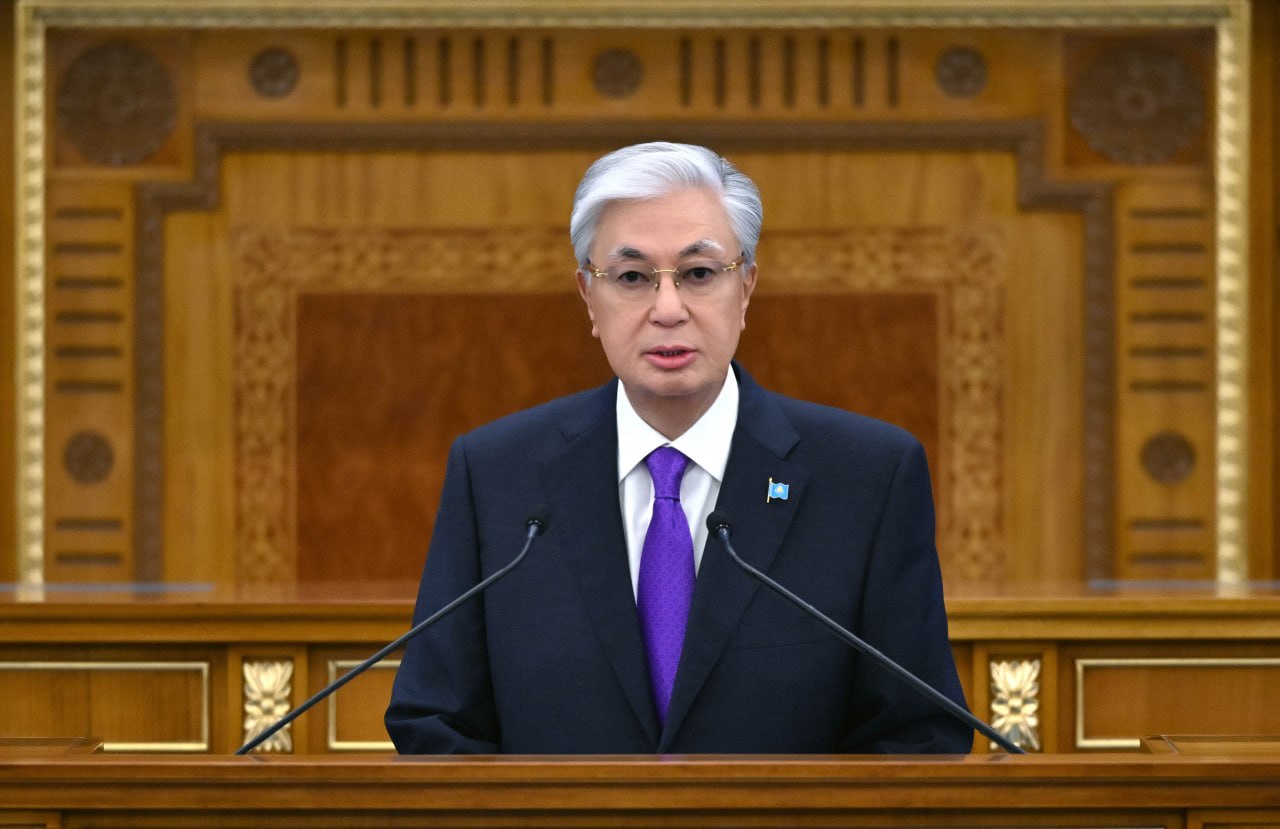
President Kassym-Jomart Tokayev outlines key legislative and institutional priorities for Kazakhstan’s first Kurultai. Photo credit: Akorda
Speaking at the opening session of the first Kurultai on Aug. 28, Tokayev said the new legislative body has received significantly broader powers under the New Constitution and will play an important role in shaping the country’s system of government.
“The beginning of the Kurultai’s activities gives a start to fundamental institutional changes in the system of public administration, since this body plays an important role in shaping the system of government,” he said.
The Kurultai will participate in appointing Constitutional Court judges, members of the Central Election Commission, and the Supreme Audit Chamber. Deputies will also have the authority to appoint and dismiss Supreme Court judges upon the President’s proposal, as well as address topics concerning the legal immunity of judges and deputies.
According to Tokayev, these powers significantly expand the legislature’s influence.
“Thus, we have significantly strengthened the influence of the legislative body. This means strengthening the system of checks and balances between the branches of government,” he said.
First Deputy Head of the Presidential Administration Erlan Karin said the launch of the Kurultai marks a new stage in the country’s institutional transformation.
“Thus, President Tokayev’s reforms provide a real opportunity for many bright citizens and professionals in their fields to realize their potential,” Karin said in a Telegram post.
“With the beginning of Kurultai’s work, a complete institutional reboot of the political system is beginning. This will ensure the final transition to a new, more dynamic and open state-political model,” he added.
Legislative modernization
Kurultai’s first major task is to update Kazakhstan’s legislation in line with the New Constitution.
Tokayev instructed deputies to comprehensively review the existing regulatory framework and bring it into compliance with constitutional principles. He also called for stronger scrutiny of draft laws to address legal gaps and ensure consistency between legislative provisions.
“Lawmaking is a very responsible job. Laws must be fair, understandable to people and progressive, that is, meet modern requirements,” he said.
President Tokayev called for broader use of artificial intelligence to improve legislative analysis and minimize corruption risks, while stressing that digital technologies cannot replace professional legal expertise.
An e-Parliament information system is being developed to identify legal risks and integrate digital services. Tokayev instructed state bodies and deputies to introduce it into Kurultai’s work as soon as possible.
Priority legislation
During its first session, the Kurultai is expected to consider a package of key bills, including legislation on artificial intelligence in secondary education, digital assets and the Digital Qazaqstan strategy.
The government is also expected to submit a bill on migration policy. The measures are intended to support efforts to attract highly qualified specialists, advanced technologies and foreign investment, including through the introduction of the Altyn (Golden) Visa.
Another priority is a new law on library and publishing activities, which Tokayev said is important for strengthening the nation’s intellectual potential.
The Kurultai will also consider legislation on comprehensive support for children with special needs, including measures to improve access to education and the quality of medical and social services.
The President also supported the government’s proposal to prohibit registering children under 16 on social networks.
“I support this initiative. I believe this issue should be considered as a matter of priority,” Tokayev said, while stressing that the mechanisms for implementing the measure must be carefully developed.
New generation in government
Tokayev also highlighted Kurultai’s role in the broader renewal of Kazakhstan’s political and public institutions.
He noted that the proportion of women and young people has increased significantly compared with the previous Parliament, describing the emergence of a new generation in government, public organizations and business as an important result of the reforms.
“The ultimate goal of institutional transformations is precisely the renewal of personnel in all branches of government, that is, the involvement in politics of innovative-minded, constructive citizens,” he said.
The President called on deputies to demonstrate professionalism, initiative and responsibility and to put national interests above personal interests.
“If we do not bring the reforms to completion and miss the historic opportunity on the path of building a just and fair Kazakhstan, future generations will never forgive us,” Tokayev said.
The President also announced that the Kazakhstan Khalyk Kenesi (People’s Council) is expected to be formed in the second half of September. The new constitutional consultative body will represent the country’s ethnic, regional, social and socio-political diversity and will have the right of legislative initiative.
“The first convocation of the Kurultai opens a new chapter in the development of the country. The people place great hopes in you,” Tokayev said.
Following the President’s address, deputies supported Tokayev’s nomination of Aibek Dadebai as Chairman of the Kurultai. Dadebai is the former Head of the Presidential Administration and current Chairman of the ruling Adilet party.
