
ASTANA – Kazakhstan is preparing for a nationwide construction drive that will direct nearly 6.5 trillion tenge (US$14.3 billion) toward infrastructure development through 2029, as President Kassym-Jomart Tokayev calls for a new phase of economic modernization built around tangible improvements in people’s lives.
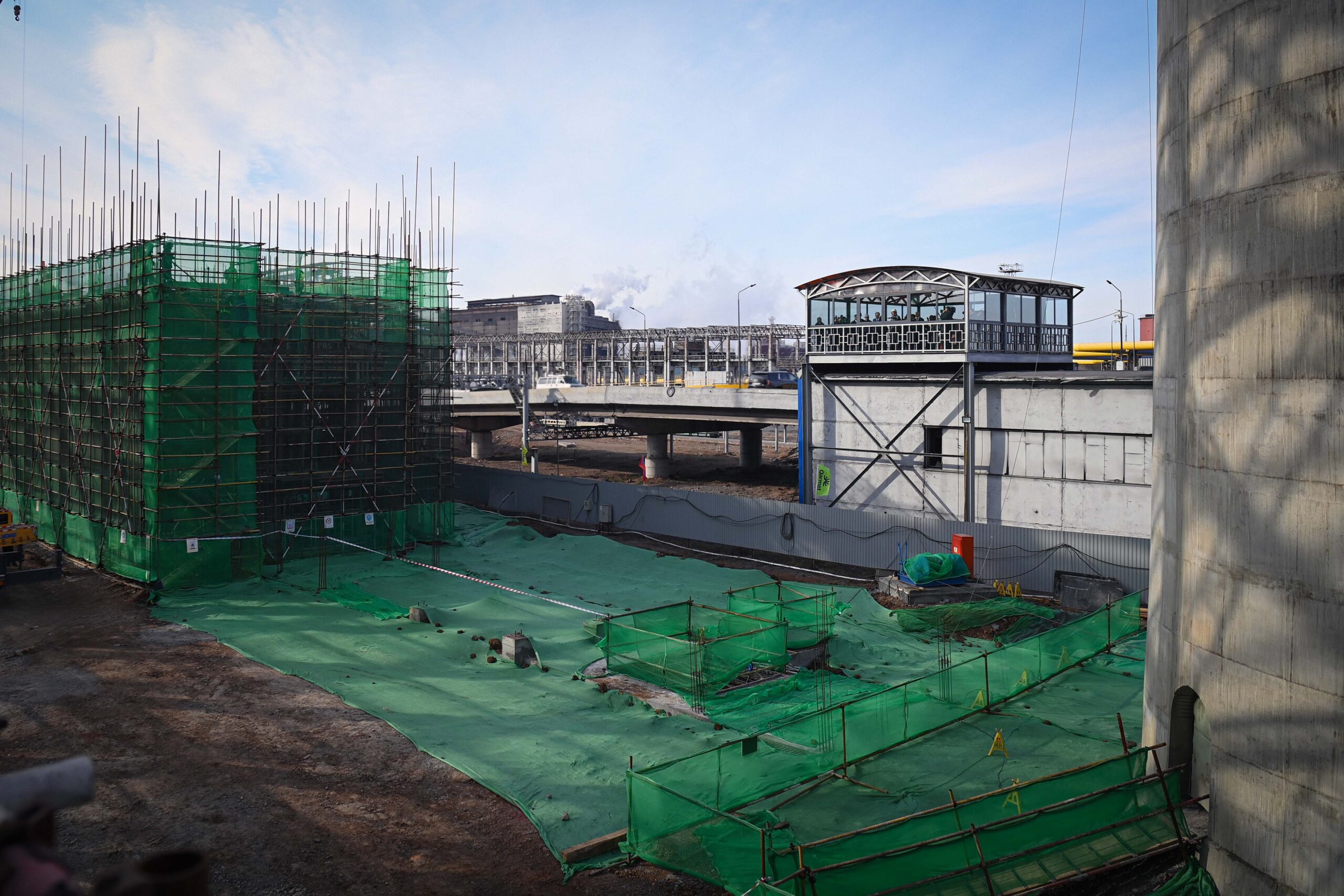
The construction of the new coke-production facilities undergo in the Karagandy Region. The project was presented to the President during his visit to the Qarmet plant in Temirtau on Nov. 2. Photo credit: Akorda.
The initiative, known as Khalyktyq Qurylys or the People’s Construction program, will cover roads, airports, railway stations, power plants, hospitals, schools, rehabilitation centers, sports facilities and other public infrastructure across the country. The government is expected to begin implementing the program next year, designated by Tokayev as the Year of Nationwide Large-Scale Construction.
“The entire meaning of the People’s Construction initiative can be expressed in simple words: ‘Build! Once again – build!’ We must leave present and future generations not merely programs and concepts, valuable as they may be, but tangible results, above all social infrastructure,” Tokayev said during a working visit to the Karagandy Region on Nov. 2.
Economic background
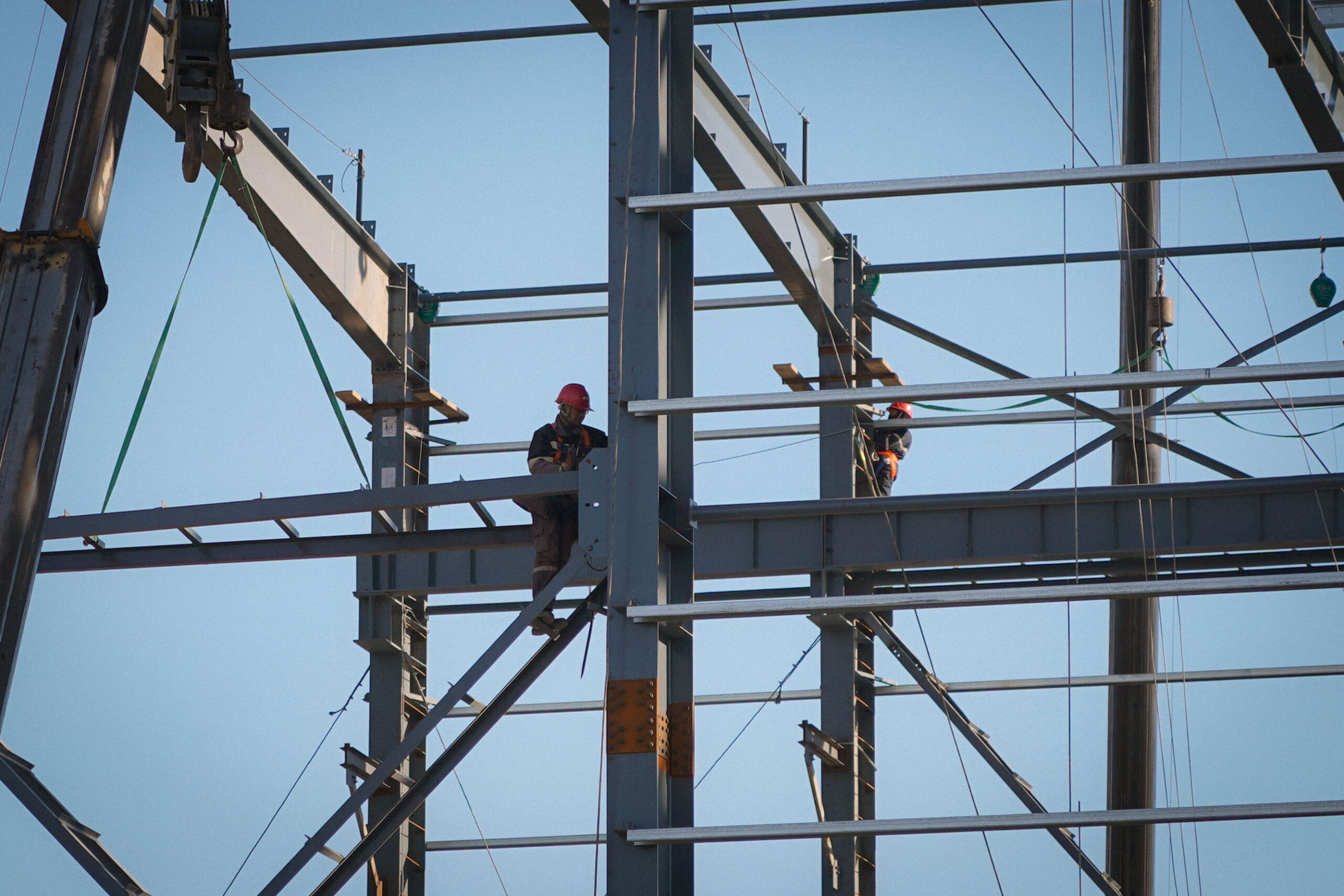
Kazakhstan’s planned construction drive comes amid sustained economic growth and expanding activity in several key sectors. According to the Bureau of National Statistics, the country’s gross domestic product grew by 6.5% in real terms in 2025. GDP per capita increased from $9,813 in 2019 to $15,006.4 in 2025, representing a 52.9% rise over the period.
Construction was among the fastest-growing sectors, expanding by 17.5% in 2025. These figures provide an economic backdrop for the government’s infrastructure plans.
Construction as an investment in quality of life
The government’s immediate priority is to identify the infrastructure most urgently needed in each region and prepare a coordinated list of projects before the end of 2026. At an Oct. 29 government meeting, Prime Minister Olzhas Bektenov instructed the ministries responsible for industry and construction, transport, energy, healthcare and education to work with regional administrations to assess demand for infrastructure and social facilities.
The review will cover local roads, housing and utility networks, educational institutions, cultural facilities and medical infrastructure.
“The People’s Construction program will become the largest infrastructure project in our history. The results of its implementation will depend on the clearly coordinated work of the government and regional administrations,” Bektenov said.
The emphasis on regional needs reflects the program’s stated objective of improving living conditions across the country, rather than concentrating investment in major urban centers.
Construction as a source of jobs and business opportunities
Beyond physical infrastructure, the nationwide construction drive is expected to create new economic opportunities, including employment, business development and cooperation between domestic and international companies.
“This is all part of one major effort to build Kazakhstan. At least, that is how I see it. And what does construction mean? Beyond modernization, of course? It is a process, jobs and opportunities that were not even visible before,” wrote financial analyst Andrei Chebotaryov, commenting on the address.
For regional businesses and potential investors, the program could also provide a basis for longer-term industrial cooperation.
“In my view, this opens up opportunities for regional partners to establish joint ventures in Kazakhstan, engage in technological cooperation and train specialists. Sustained demand allows businesses to plan production expansion,” said Aidar Kurmashev, head of the Asian Studies Department at the Kazakhstan Institute for Strategic Studies under the President of Kazakhstan.
Such cooperation could help strengthen domestic production capacity while bringing new technologies, expertise and investment into the country.
Modernizing industry and developing mineral resources
Alongside construction and transport, the address places renewed emphasis on Kazakhstan’s industrial base and its ability to develop the natural resources needed by emerging technologies. Tokayev has called for changes to the country’s approach to geological exploration. The Ministry of Industry and Construction has been instructed to integrate and structure the Unified Subsoil Use Platform, including through the application of artificial intelligence.
Digital tools could support the organization and analysis of geological information, helping to improve access to data and inform decisions on the exploration and management of mineral resources.
The government is also expected to work with the business community to develop specific measures for the further development of the mining and metallurgical sector by Dec. 15. One area under consideration is the use of offtake agreements, which can provide producers with guaranteed demand for their output. The broader objective is to connect resource extraction, processing and manufacturing more effectively, allowing regions to build on their existing industrial strengths.
Agriculture, water and digital management
The government’s development priorities extend beyond construction sites and industrial facilities to the resources required for sustainable economic growth. Agriculture is expected to play a greater role in meeting domestic demand and strengthening Kazakhstan’s export position. Achieving that goal will require investment in modern production, storage and processing facilities, supported by long-term preferential financing.
Digitalization is another element of the agricultural modernization agenda. The Ministry of Agriculture, working with the Ministry of Artificial Intelligence, has been instructed to establish the E-APK digital platform and complete the creation of a sectoral data lake in 2027.
In addition, the Ministry of Industry and Construction, the Ministry of Water Resources and regional administrations are expected to develop mechanisms encouraging large water consumers to switch to technical, circulating and reused water supplies where appropriate.
These measures connect infrastructure development with the efficient management of natural resources. New industrial and agricultural capacity will need reliable water supplies, while reducing losses and improving reuse will be important for balancing competing demands.
Turning national priorities into tangible results
Tokayev has said the program will extend across the country, covering cities and districts alike. New and renovated roads, airports, railway stations, power plants, hospitals, clinics, schools, rehabilitation centers, youth facilities and sports infrastructure are intended to serve present and future generations.
“The entire meaning of the People’s Construction initiative can be expressed in simple words: ‘Build! Once again – build!,’” he said.
With 6.5 trillion tenge (US$14.3 billion), earmarked through 2029, the program is set to become one of Kazakhstan’s largest infrastructure investment drives. Over the coming years, the scale of this effort will become visible in the places where people live and work: in better roads, new public facilities, modernized utilities and expanded industrial capacity. For many communities, the changes will be measured not in figures or construction plans, but in what has actually been built and how it improves everyday life.
