
ALMATY – Kazakhstan is seeking to turn growing trade with South Korea into broader opportunities for domestic producers, with more than 200 representatives of businesses and government agencies from the two countries gathering in Almaty on Aug. 27 for a Kazakhstan-Korea Business Forum and business mission organized with the Korea Importers Association (KOIMA).
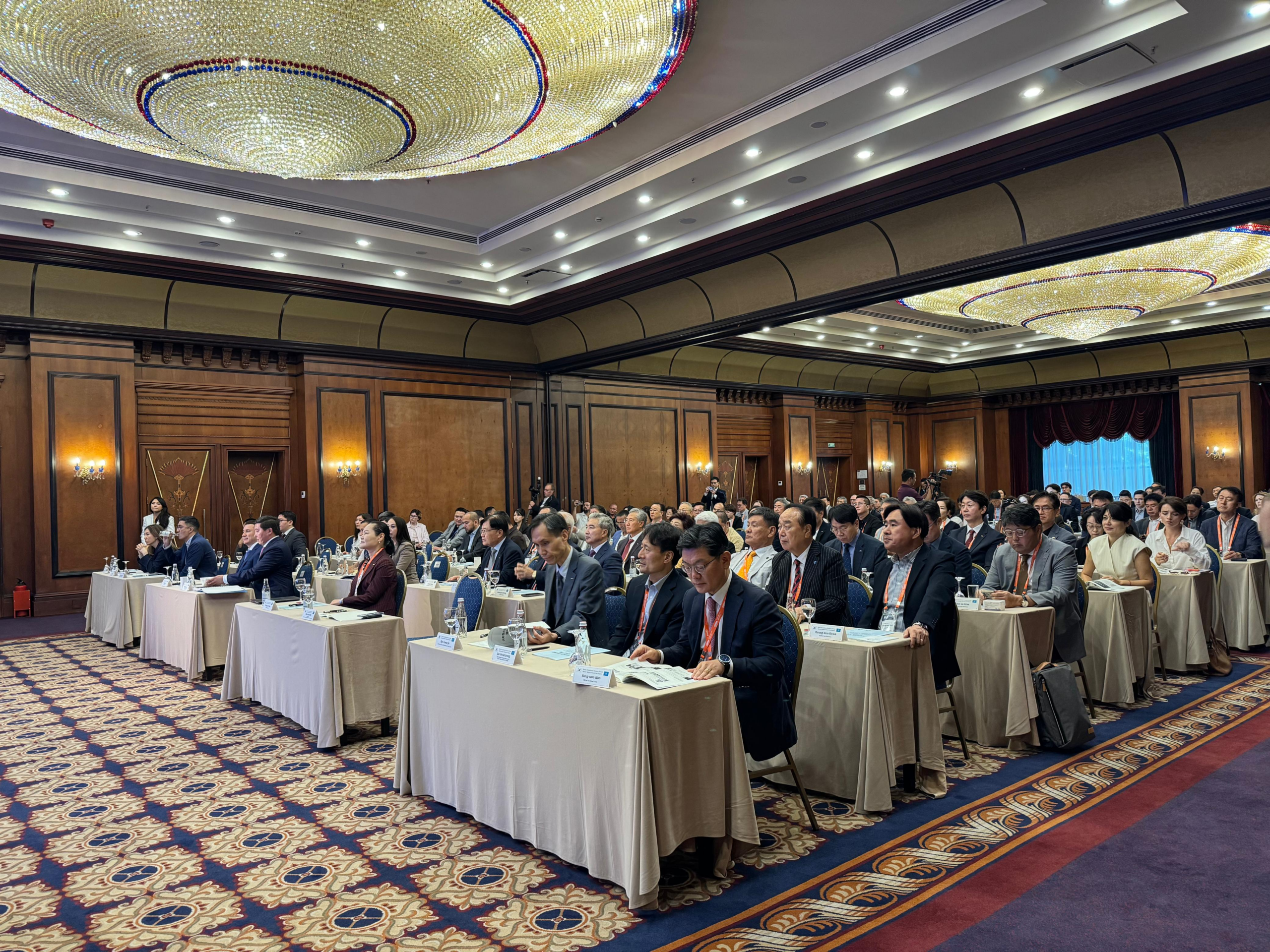
The event brought together nearly 100 representatives from the Korean side, including importers and business leaders. Photo credit: The Astana Times.
The forum focuses on a practical question facing Kazakhstan’s export strategy: how to move beyond traditional commodity exports and secure a larger share of the Korean market for agricultural, food, industrial and other higher-value products.
The event brought together nearly 100 representatives from the Korean side, including importers and business leaders, alongside Kazakh producers and government and industry representatives. The program included presentations of Kazakhstan’s export potential and one-on-one B2B meetings between pre-selected Kazakh exporters and Korean importers.
From trade growth to export diversification
According to the Ministry of Trade and Integration, Kazakhstan and South Korea have maintained expanding economic ties, with bilateral trade reaching $3.17 billion in 2025, up 1.4% from the previous year. In January-June 2026, trade reached $1.3 billion, while Kazakhstan’s exports to South Korea increased 17.2% to $510 million, according to Vice Minister of Trade and Integration Aidar Abildabekov.
While Kazakhstan’s exports remain concentrated in commodities such as oil, ferroalloys and titanium, the government is seeking to expand the range of products reaching the Korean market.
“We are interested in further expanding and diversifying mutual trade, and also in ensuring that business interaction between our countries increasingly results in concrete commercial agreements, sustainable supplies and long-term partnerships,” Abildabekov said.
Kazakhstan’s participation in the Korea Import Expo in Seoul in June provided an initial platform for presenting domestic products. Fifteen Kazakh food and agricultural companies participated, showcasing beef, flour, pasta, confectionery, dairy products, camel milk powder, flaxseed oil, snacks and beverages.
The latest forum brings that effort closer to the commercial stage by putting producers directly in front of potential buyers.
Why the Korean market matters
KOIMA Chairwoman Yoon Young Mi. Photo credit: The Astana Times.
For Kazakhstan, South Korea represents not only a large consumer market but also an opportunity to diversify the geographic and product structure of its exports in East Asia. KOIMA Chairwoman Yoon Young Mi said Korean importers are actively looking for new and reliable suppliers, creating opportunities for Kazakhstan to expand exports beyond raw materials.
“Kazakhstan has not only abundant natural resources, but is also an important economic and logistics hub connecting Europe and Asia,” Yoon said.
She highlighted Kazakhstan’s energy, industrial and critical-mineral resources, as well as its agricultural and food industries, as areas that could help South Korea diversify and strengthen its supply chains.
“We see significant potential for expanding imports from Kazakhstan. This is not limited to raw materials and natural resources, but also includes agricultural and food products and other competitive goods,” she said.
The statement points to a potentially broader role for Kazakhstan in South Korean supply chains, provided domestic companies can meet the market’s technical, certification and quality requirements.
Direct negotiations aim to close the gap
The forum’s B2B meetings were structured around specific matches between Kazakh exporters and Korean importers, allowing participants to discuss product ranges, potential volumes, commercial terms, certification and the steps required to enter the Korean market.
This approach is intended to address one of the persistent challenges of export promotion: generating not only interest in Kazakh products, but actual commercial transactions.
Abildabekov emphasized that understanding technical requirements before products are shipped is essential to reducing additional costs and barriers for exporters.
“Our task is for the Kazakh producer to understand these requirements even before production and shipment of the export batch, which will help minimize technical barriers and additional costs for businesses,” he said.
He said cooperation among QazTrade, KOIMA and KazStandard could help create detailed “maps” of technical requirements for priority products, covering standards, testing, certification, labeling, packaging and documentation.
The Aug. 27 forum is part of a broader sequence of trade-promotion activities. QazTrade and KOIMA have already established contacts through the Korea Import Expo, while a Kazakhstan trade and economic mission to South Korea is planned for Sept. 14-16.
