
ASTANA – Kazakhstan has launched a new phase of its effort to revive the iconic aport apple, a variety once renowned worldwide but now considered at risk of disappearing. Scientists are expanding orchards and establishing specialized nurseries to restore commercial production of the historic cultivar and supply growers with high-quality planting material.
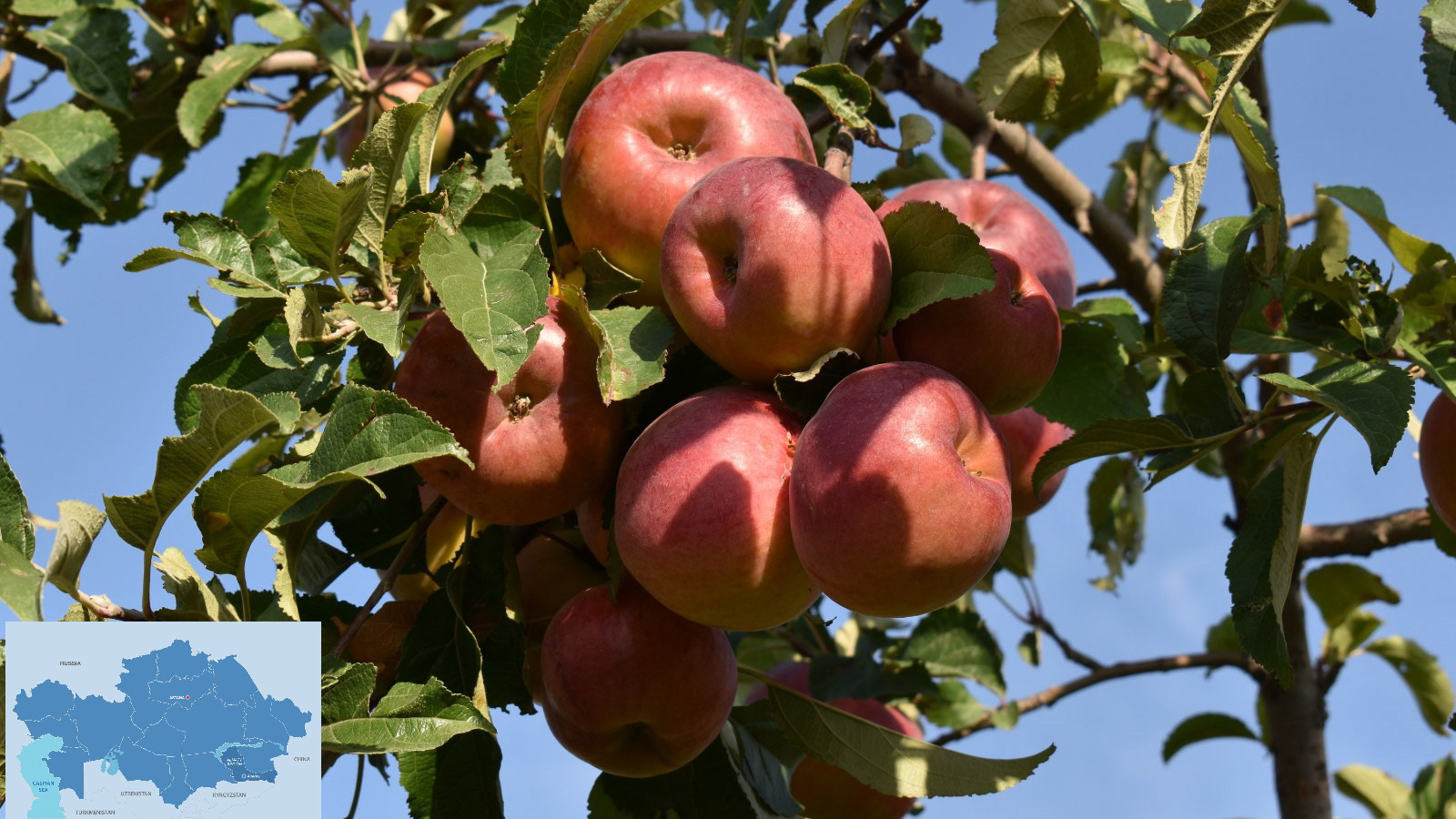
Aport remains highly valued in Kazakhstan for its distinctive flavor, large fruit, and historical significance. Photo credit: primeminister.kz Click to see the map in full size. The map is designed by The Astana Times.
The Kazakh Ministry of Agriculture leads the initiative in partnership with the country’s research institutions.
Unlike most commercial apple varieties, aport requires highly specific growing conditions. The trees thrive only at elevations between 850 and 1,250 meters above sea level, limiting cultivation to select foothill areas of Almaty and the surrounding Almaty Region. The variety is also slow to mature, typically producing fruit after eight to nine years, compared with four to six years for conventional apple orchards. Despite these challenges, aport remains highly valued in Kazakhstan for its distinctive flavor, large fruit, and historical significance.
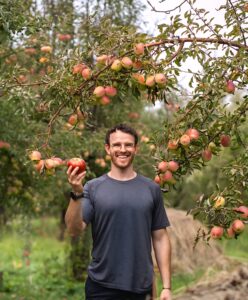
During his trip to Almaty, Scottish traveler Ross Jennings visited apple orchards and tasted the famous aport apple. Photo credit: Jenning’s personal archieve
The national Aport Revival Program, which runs from 2024 to 2028, aims to produce enough planting material to restart large-scale commercial cultivation. During the first stage in 2024, researchers collected seeds from the wild sievers apple, widely recognized as the ancestor of many modern cultivated apples, and began developing national cultivation standards for Kazakhstan’s aport variety.
According to Bakytzhan Duisembekov, chairman of the board of the Zhiembayev Kazakh Research Institute of Horticulture, restoring the variety has become one of the institute’s top scientific priorities.
“In 2015, we planted the first five-hectare ecological orchard of aport apple trees. Today, a program is underway to expand the area to 100 hectares,” Duisembekov said.
The next phase focuses on expanding nursery production to supply saplings to fruit growers nationwide.
“Creating nurseries will allow us to propagate the saplings and distribute them to our orchardists. This is how we can restore the former glory of the aport apple, which was once recognized worldwide,” he said.
Duisembekov noted that Kazakhstan has established a 10-hectare nursery where two-year-old saplings are being cultivated. Next year, they will be ready for planting in commercial orchards.
The broader initiative has received more than $5 million in funding, including around 500 million tenge (US$1 million) dedicated specifically to restoring the aport variety.
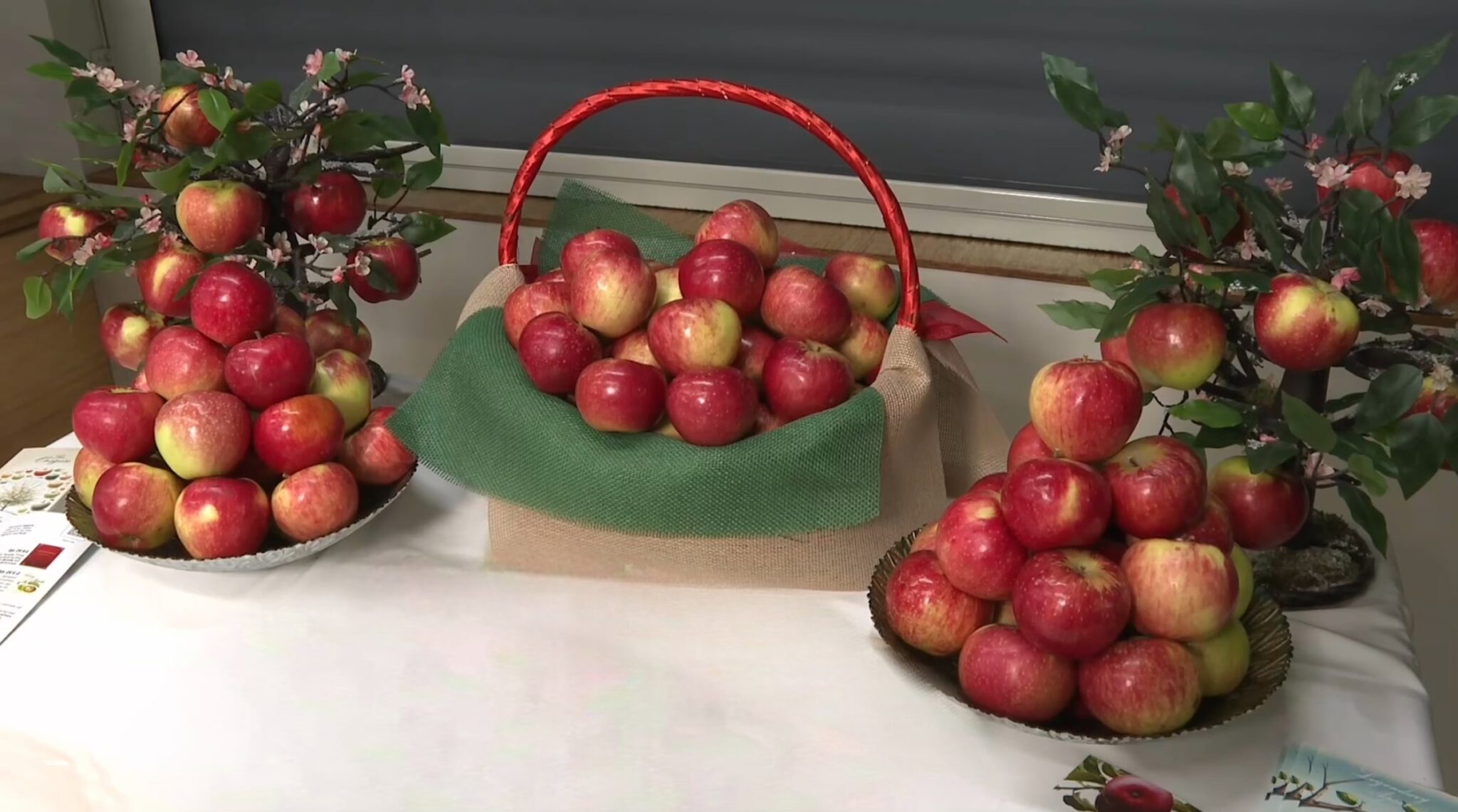
Almaty Aport on Kazakhstan’s stand in Rome. Photo credit: Ministry of Agriculture.
Researchers say expanding nursery production could eventually support the establishment of thousands of hectares of new orchards and help restore the country’s aport apple as one of the world’s most recognizable heritage apple varieties.
Last year, Scottish traveler and musician Ross Jennings visited Kazakhstan, inspired in part by the country’s reputation as the birthplace of the apple.
The article was originally published in Kazinform.
