
ASTANA – The Syrdarya-Turkistan State Regional Natural Park in southern Kazakhstan has become the country’s only site for restoring the endangered Bukhara deer population.
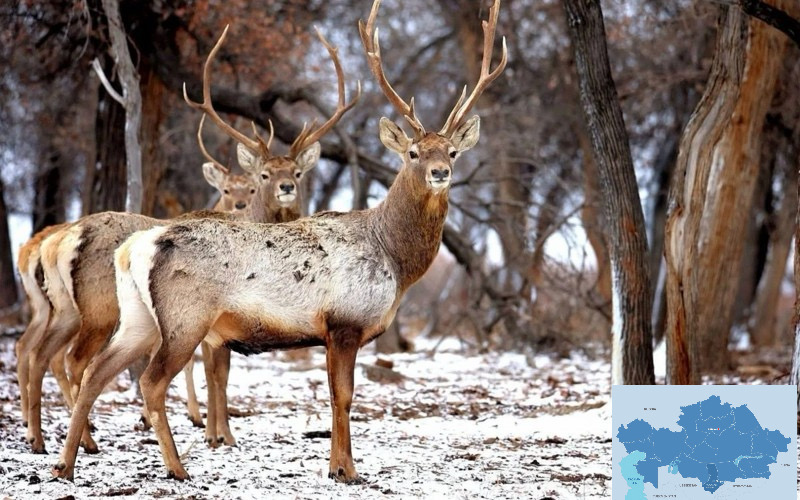
Since 1999, Bukhara deer population has grown from six animals to to 319 deer at the Syrdarya-Turkistan State Regional Natural Park. Photo credit: Gani Nazarbek Click to see the map in full size. The map is designed by The Astana Times.
Reintroduction efforts began in 1999 with just six animals. Since then, the population has grown to 319 deer, according to the park officials.
The Bukhara deer, endemic to Central Asia, historically inhabited forests along the Amu Darya and Syr Darya rivers, as well as the Kyzylkum region. By the mid-20th century, the species had nearly disappeared from Kazakhstan.
With support from the World Wildlife Fund and zoologists from Almaty and Moscow, Kazakhstan launched its first Bukhara deer restoration initiative along the Syr Darya River in 2000.
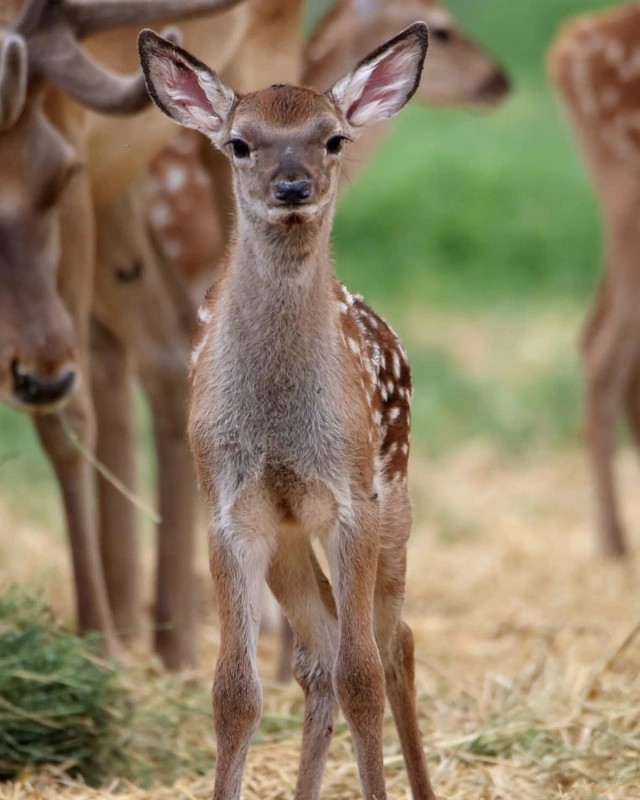
Every two years, part of the growing Bukhara deer population is released into the wild. Photo credit: Gani Nazarbek
Gani Nazarbek, the park’s senior researcher, said the program has significantly expanded the population over the past two decades.
“Around 50 Bukhara deer are kept under special care and receive daily feeding. Every two years, part of the growing population is released into the wild. During winter, additional feed is also provided to animals living in natural conditions,” he said.
A unique protected ecosystem
The park includes tugai forests along the Syr Darya and Arys rivers, as well as the Boraldai mountain range. Established to preserve rare endemic species and restore ecosystems, the protected area now covers nearly 120,000 hectares.
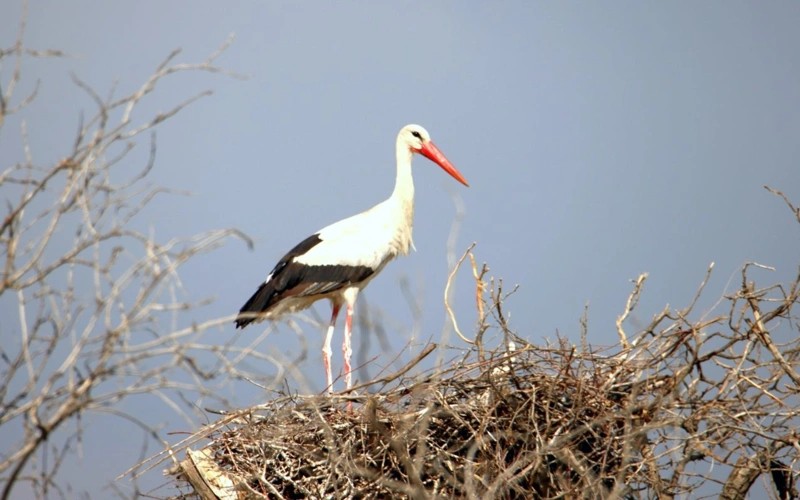
The park is home to 309 bird species, more than half of all bird species recorded in Kazakhstan. Photo credit: Gani Nazarbek
In 2012, the Arys, Boraldai and Turkistan forestry and wildlife protection institutions were merged into the current park structure.
According to Bekzat Kalbayev, an entomologist at the park’s science, information and monitoring department, the territory is home to 309 bird species, more than half of all bird species recorded in Kazakhstan. The park also contains 715 invertebrate species, 59 mammal species and 992 plant species.
The park includes mountain, forest, wetland, steppe and semi-desert landscapes, creating rich biodiversity and habitats for numerous rare species.
Among the animals found in the park are Karatau argali sheep, roe deer, wild boars, wolves, jackals, corsac foxes, stone martens and badgers. Researchers also occasionally record sightings of the Tian Shan brown bear in the Boraldai branch.
Other species inhabiting the territory include gazelles, marals, marmots, jerboas, muskrats and Indian porcupines.
More than 350 employees work in the park, including scientists and monitoring specialists.
According to Nazarbek, researchers use drones and camera traps, among other modern technologies, to monitor wildlife and vegetation. One state inspector is assigned for every 1,000 hectares of protected territory.
The park also serves as a growing ecotourism destination. The public can stay in wooden guest houses and explore eight tourist routes developed along the Syr Darya River and the Boraldai Mountains. According to park officials, tourist activity increases significantly during weekends and holidays, when additional supervision measures are introduced.
The article was originally published in Kazinform.
