
ASTANA — Kazakhstan has completed its first-ever stage of the International Fencing Federation (FIE) Epee World Cup, marking a key milestone in the country’s athletic growth and establishing it as a new location on the global fencing calendar. Kazakhstan became the first Central Asian country to host a World Cup event for epee, one of fencing’s three Olympic disciplines.
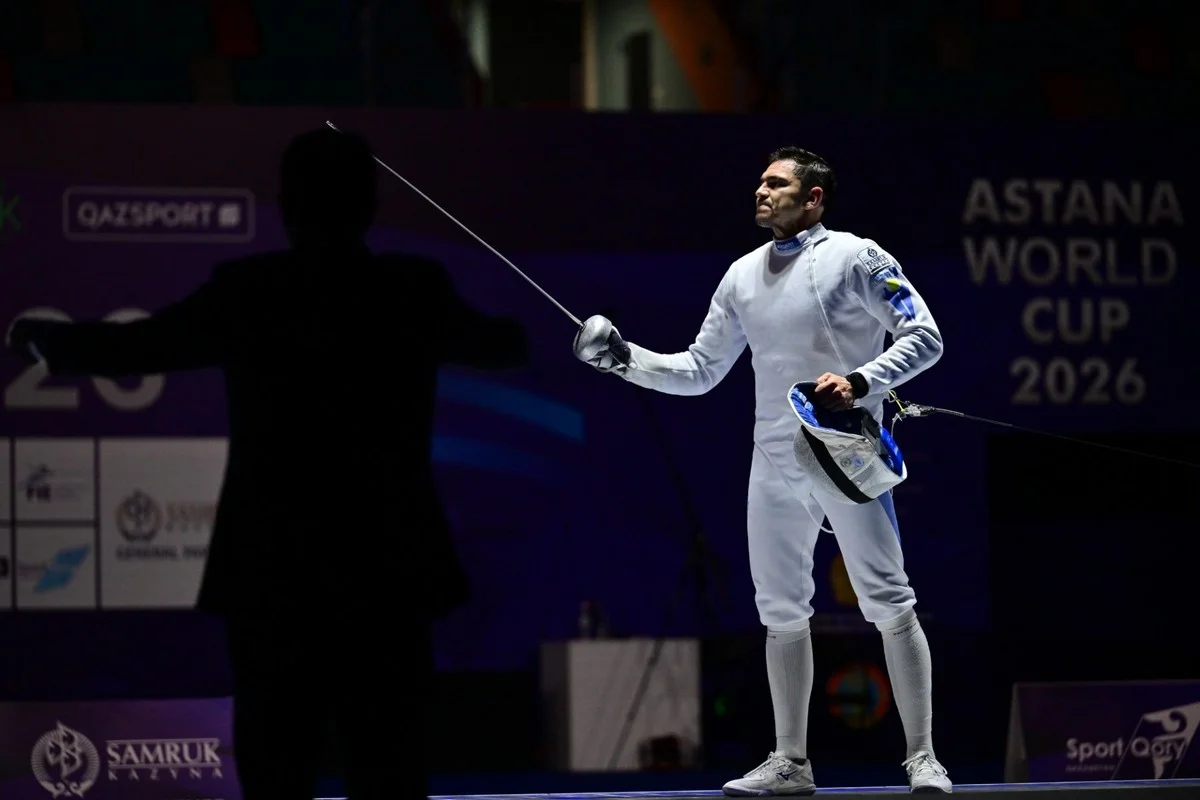
Photo credit: Sali Sabirov
Kurbanov Secures Silver on Home Ground
Ruslan Kurbanov, who advanced to the final and won a silver medal after losing to Roman Svichkar 13-15, was Kazakhstan’s most notable performance. Kurbanov overcame several elite opponents on the way to the final, including Olympic and world champion Koki Kano. He continued to compete after getting hurt during the elimination rounds and finished on the podium.
“This medal is special for me. Competing at home brings a different level of responsibility and motivation,” Kurbanov said.
His outcome comes after his recent victory at a World Cup stage in German Heidenheim. Kurbanov discussed his long-term objective of achieving Olympic gold and the psychological demands of competing at the highest level in an interview with The Astana Times.
Other Kazakh athletes also gave notable performances. Irina Bakaldina’s performance was a historic breakthrough for the women’s team, while Kirill Prokhodov placed in the top 16. Kazakhstan’s men’s team placed fourth overall in the team competition and advanced to the semifinals. Throughout the events, the team, which included both younger fencers and seasoned athletes like Elmir Alimzhanov and Vadim Sharlaimov, showed great unity. Kazakhstan overcame Australia (45-35), Poland (42-41), and the United States (45-40) before losing to France in the semifinals.
In the bronze medal match, the team narrowly lost to Japan.
The Kazakhstan Fencing Federation’s president, Mirbulat Abuov, says that the country’s hosting of the World Cup is a reflection of years of methodical progress and rising international confidence.
“The World Cup in Astana is not just a competition, but a platform to promote fencing, strengthen our national system, and expose young athletes to the highest level,” he said.
More than 500 athletes from over 60 countries competed in the tournament, along with coaches, referees, and official delegations. The total number of participants approached 1,000 people.
