
ASTANA – The Kazakh capital convened an extraordinary meeting of the Regional Contact Group of Special Representatives of Central Asian countries on Afghanistan on Feb. 16, with trade and economic ties as well as transit topping the agenda.
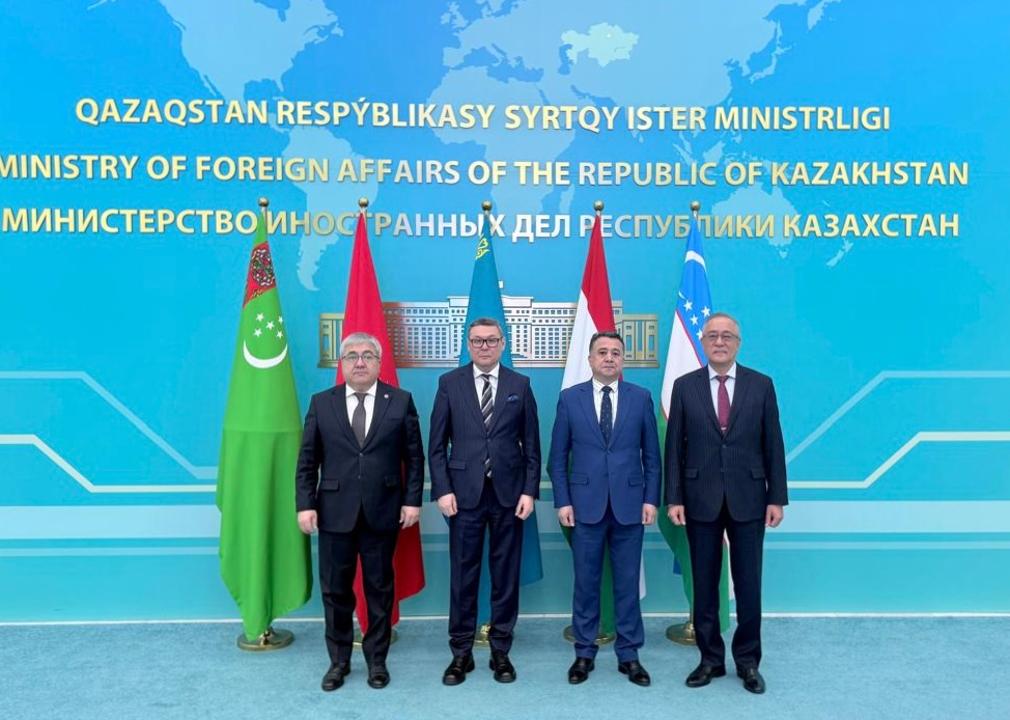
The meeting brought together the representatives of Kazakhstan, Kyrgyzstan, Tajikistan, and Uzbekistan. Photo credit: Kazakh Foreign Ministry
Special Representative of the Kazakh President for Afghanistan – Ambassador-at-Large Yerkin Tukumov said the meeting agenda was both substantive and strategically important.
“These meetings are held to help Central Asian countries develop a common position, which is critically important,” Tukumov said. “Our agenda is very full; it includes trade and economic relations and transit issues. But above all, we must coordinate our approach to Afghanistan.”
He noted that while Kazakhstan, like the international community, has not formally recognized the Taliban authorities since they came to power, Astana continues to engage with Afghanistan in trade, economic, and humanitarian areas.
“Humanitarian assistance is especially important. Kazakhstan has consistently provided aid, including flour, tents, and food supplies during emergencies,” he said.
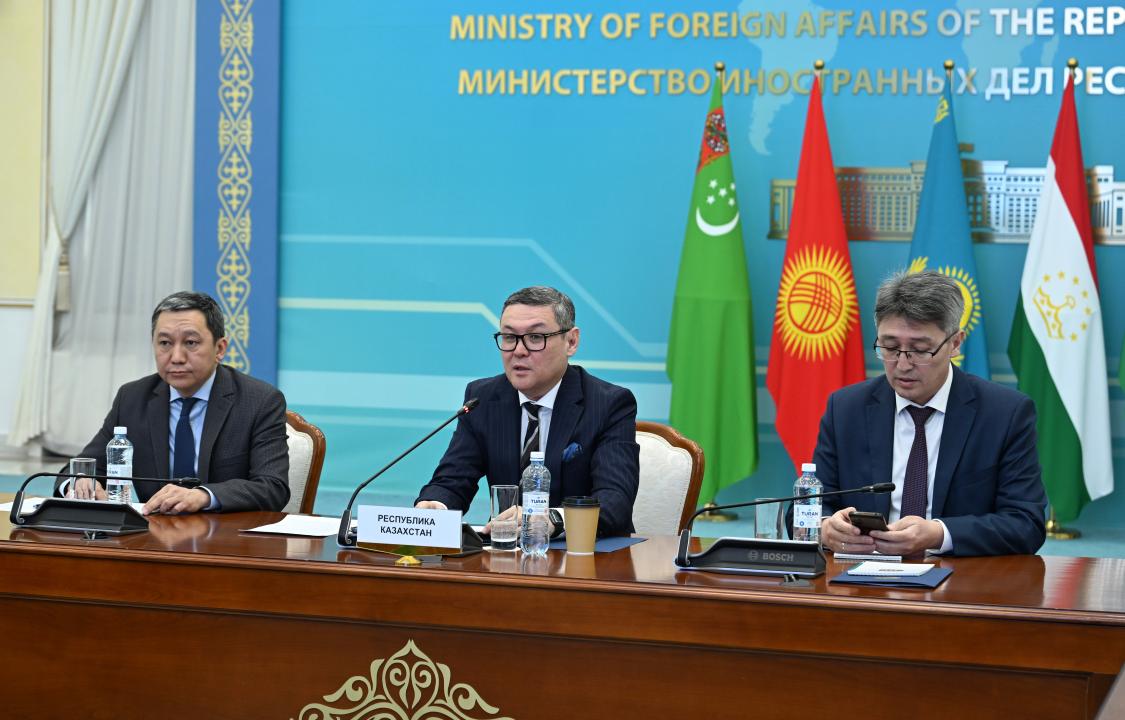
Yerkin Tukumov in the center. Photo credit: Kazakh Foreign Ministry
Kazakhstan has also expanded educational and humanitarian engagement, including the enrollment of Afghan students at Kazakh universities. Last year, the country sent medical assistance to Afghanistan for the first time.
From an economic perspective, Tukumov described Afghanistan’s roughly 45 million population as a promising market. He also emphasized Afghanistan’s importance as a transit corridor for Kazakhstan, a landlocked country, seeking access to the Indian Ocean. However, he pointed out that Afghanistan lacks a functioning railway network, aside from a short section linking Termez and Mazar-i-Sharif.
“Without railways, there is no connectivity,” he said, adding that Central Asia needs reliable access to the Indian Ocean and Indian ports.
He highlighted the scale of nearby markets, noting that India and Pakistan together account for nearly two billion people, while Afghanistan has a population of roughly 45 million. All are located just one to two hours away by air.
“Yet our trade turnover with these countries remains very low. I believe this is fundamentally wrong,” Tukumov said.
Tukumov stressed that Afghanistan’s situation should not be viewed through a single lens. The country is going through a difficult period after nearly 50 years of war and faces acute shortages of skilled professionals and major infrastructure gaps.
Tukumov said Kazakhstan’s own perception of Afghanistan is evolving. “Previously, we viewed Afghanistan only through the lens of threats. Today, we also see opportunities,” he said, stressing that risks have not disappeared but must be assessed alongside potential benefits.
Ambassador of the Kyrgyz Republic to Afghanistan Turdakun Sydykov said his country considers the meeting in Astana and the regular dialogue within the contact group format to be especially important for addressing Afghanistan-related issues.
“The main focus is on reviewing trade, economic, and transport projects, the implementation of which is a key condition for a peaceful and stable future for Afghanistan and the region as a whole,” he told journalists.
Special Representative of the President of Uzbekistan for Afghanistan Ismatulla Irgashev said Central Asian countries may soon move toward joint project implementation in Afghanistan, describing the country as a potential land bridge between Central and South Asia.
He cited growing economic engagement as evidence of that shift, noting that Uzbekistan’s trade turnover with Afghanistan reached nearly $1.7 billion last year. He added that Kazakhstan and Uzbekistan, through these projects, have turned Afghanistan into one of their major trading partners.
“We are all well aware of the existing challenges, and therefore we want to exchange views and combine our efforts to ensure regional security,” he said, stressing that regional powers should play a leading role in shaping approaches toward the Afghan market.
From that perspective, he said, the work of the contact group is particularly important, as it aligns with broader strategic agreements reached by Central Asian leaders.
Speaking to journalists, Tukumov dismissed claims of competition and rivalry among regional states as artificial.
“Talk about competition [between Central Asian countries] is honestly contrived. There is no such thing. We are all here together, and we will jointly discuss how to engage with Afghanistan. That is what really matters,” he said.
