
Nostalgia is a deceptively sweet feeling, one that can get a person into hours and days of reminiscing about what it was like in a particular moment. That feeling swept across social media in early 2026, with millions of people posting photos and videos dated to 2016. These photos are not of the best quality, unfiltered, the kind of pictures no one would post now without a second thought.
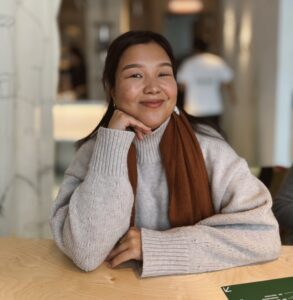
Assel Satubaldina. Photo credit: personal archive
The scale of the trend is substantial. There are around 2.2 million videos under the #2016 hashtag, and according to the BBC, searches for “2016” jumped 452% in a week, with users creating more than 55 million videos using the app’s year-themed filter. But why 2016? Why now?
In 2016, life seemed to flow differently. Smartphones were already part of our lives, but they have not yet claimed every moment of it. Instagram already existed, and it was largely used to post photos to remember, not to make an impression, and wasn’t so tied to money and judgment. People seemed more carefree, and not because life was easier, but because it felt less observed.
When 2016 photos started appearing in my social media feed, I found myself asking: who was I then? One year away from graduation, no longer a child, not yet an adult, my first extended stay abroad in a new environment and with new people. It was the year when “Closer” by The Chainsmokers and Halsey, Drake’s “One Dance,” and Sia’s “Cheap Thrills” played everywhere. Although times were uncertain, including back home in Kazakhstan amid national currency devaluation and the aftershocks of falling oil prices, there was still a sense that the uncertainty was temporary and that the world, somehow, made sense to us.
Ten years are not supposed to feel like a lifetime. However, after everything that happened in between, it does.
There was a feeling, not always conscious, that time was on your side. The Covid pandemic shattered that assumption, leaving a generation to account for years that moved forward without delivering the progress they were meant to contain.
The unease did not end with the pandemic. Instead, it became the background of daily life. Conflicts and wars multiplied, the climate crisis intensified, and new technologies began advancing faster than we could trust them. Each day brought more information, but less certainty about what came next.
What this nostalgia trend suggests is that people are not missing the year per se, but the state of mind it evokes. It reflects what is often described as “millennial optimism”: the belief, common among those coming of age in the 2010s, that the future was workable, uncertainty was temporary, and social media had not yet become a constant source of pressure or anxiety.
Social media has indeed a big part to play in ending that moment. After 2016, social media underwent a structural change, putting algorithms at the forefront and allowing them to decide which content you would consume. Being online stopped being passive and started demanding performance.
Looking back now, it is not surprising that people miss those earlier versions of themselves, their postures less guarded, their expressions more sincere, and their attention less divided. That version of being online, however, did not last.
But nostalgia is a double-edged sword. It can turn the past into a measuring stick against which the present would always come short. When too many people linger there, the future begins to feel like something to endure rather than anticipate.
The task now is to learn how to move forward without the illusion that time will take care of everything on its own.
