
ASTANA — European companies operating in Kazakhstan are shifting from entry-focused strategies to institution-led planning as reforms accelerate and the country positions itself as a regional platform, say leaders of the European Business Association of Kazakhstan (EUROBAK). In an interview with The Astana Times, they explained how predictability, governance, and practical engagement shape investment decisions.
From access to institutions
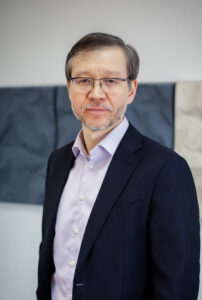
Erlan Dosymbekov, EUROBAK chairman and managing partner at EY for the Caucasus and Central Asia. Photo credit: EUROBAK
Erlan Dosymbekov, EUROBAK chairman and managing partner at EY for the Caucasus and Central Asia, said the biggest change over the past two decades is not technological speed but institutional depth.
“In the early years, the key questions were about entry and access: access to resources, access to infrastructure, access to growth. Today, the questions are more structural: how predictable the rules are over time, how institutions function in practice, how human capital, infrastructure, and capital interact, and how the country fits into regional and global value chains,” said Dosymbekov.
He highlighted that technology and digitalization play an important role, but mainly as tools rather than drivers.
“The deeper shift is institutional: higher expectations around transparency and governance, more sophisticated investors, and a stronger understanding that long-term growth depends on consistency, not just speed,” said Dosymbekov.
“Kazakhstan today is being assessed not only as a national market, but as a regional platform for Central Asia – in logistics, production, services, and connectivity,” he added.
What does soft infrastructure mean in practice

Julie Kussidi, EUROBAK executive director. Photo credit: EUROBAK
Julie Kussidi, EUROBAK executive director, said the association’s value lies in practical institutional knowledge rather than informal shortcuts.
“When we speak about the ‘soft infrastructure,’ we do not mean insider information, informal arrangements, or unspoken rules in the sense of bypassing formal processes,” said Kussidi.
Instead, she said, the association provides experience gained through long-term, transparent engagement with both the business community and public authorities. That support often involves clarifying how regulations are applied in practice.
“A typical example of behind-the-scenes support is helping companies understand how regulations are interpreted and implemented in practice, how administrative processes are sequenced, and how to structure communication with the government so that it is constructive, timely and effective,” said Kussidi.
Managing reform without chasing every change
Dosymbekov noted that rapid reform is not unique to Kazakhstan, but the scale and regional ambition of the reforms raise the stakes for investors. Companies that adapt well focus less on reacting to every rule change and more on resilience.
“Successful adaptation is less about chasing every change and more about building resilience. (…) Many challenges arise not from the law itself, but from how it is interpreted and implemented. Businesses that engage early, ask practical questions, and participate in structured dialogue tend to reduce uncertainty significantly,” he said.
Among EUROBAK members, he identified three common approaches: aligning business models with long-term infrastructure priorities, strengthening internal governance and local leadership, and treating Kazakhstan as part of a broader Central Asian network rather than a standalone market.
“Digital tools help, but people, processes, and decision-making discipline matter more. Clear internal controls, compliance culture, and local leadership capability often determine whether a company can absorb change without disruption,” said Dosymbekov.
He added that recurring concerns include tax and customs administration, stability for capital-intensive projects, coordination across state bodies, workforce skills, environmental, social, governance (ESG) expectations, and geopolitical risk management.
“Companies usually work through these challenges by combining collective dialogue, professional advisory support, and realistic planning horizons rather than expecting perfect stability,” he said.
New entrants versus established players
Kussidi said expectations and working styles between European companies and Kazakh businesses are largely aligned. The difference often lies in administrative familiarity.
“Business is business. Core priorities such as transparency, predictability, efficiency, and long-term partnership are shared across markets. (…) However, European companies operating in Kazakhstan often face additional practical and regulatory questions, particularly for newcomers,” she said.
These typically include migration and visa procedures, residence permits, employment of expatriates, and routine interaction with state authorities. Long-established local companies, she added, often benefit from greater familiarity with administrative processes and institutional context.
“This is precisely where associations like EUROBAK play a key role. European and multinational companies join us not because their business culture is different, but because local knowledge matters and EUROBAK serves as a platform where all meet,” said Kussidi.
Formal channels for public-private dialogue
Kussidi also highlighted EUROBAK’s formal approach to public-private engagement. Member concerns are consolidated and presented to the government through official letters or position papers, followed by clarification meetings when needed.
“In recent years, the e-Otinish system has been implemented in Kazakhstan, providing a highly transparent platform through which associations and individuals can raise issues and receive official responses,” she said.
“This system allows all parties to track the process, the responsible official, and at what stage of consideration the matter currently stands,” she added.
