
ASTANA – Kazakhstan’s national currency strengthened in 2025. But analysts warn that structural pressures could lead to gradual weakening in 2026.
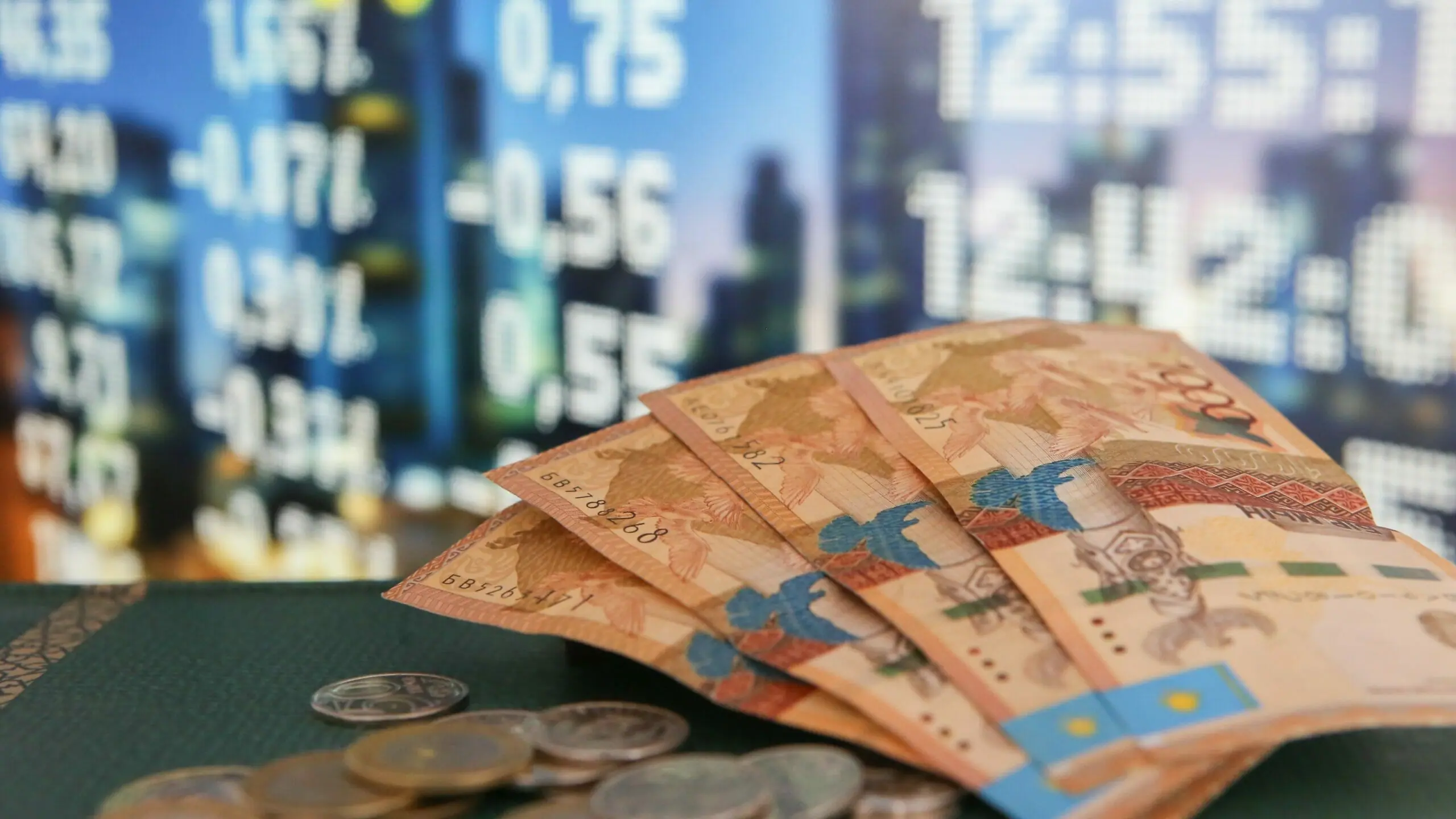
Photo credit: Askar Akhmetullin
The tenge gained 1.3% in December, closing at 505.73 per U.S. dollar, according to the National Bank of Kazakhstan. Average daily trading volume on the Kazakhstan Stock Exchange rose to $359 million, up from $280 million in November, with total monthly turnover reaching $7.9 billion.
For the full year, the tenge strengthened by 3.7%, rising from 525.10 to 505.73 per U.S. dollar. Annual trading volume reached $63 billion, a 15% increase year-on-year.
In December, the government sold $400 million from the National Fund to finance budget transfers and the construction of the Taldykorgan-Usharal gas pipeline. The amount accounted for 5% of total market turnover, or around $18 million per day. Total National Fund currency sales in 2025 reached $8.2 billion.
As part of its mirror operations linked to gold purchases, the National Bank sterilized 475 billion tenge (US$930 million) in December. In total, mirror operations accounted for $7 billion in foreign currency sales in 2025.
In the first quarter of 2026, authorities plan to sell foreign currency worth approximately 1.1 trillion tenge (US$2.1 billion) to absorb excess liquidity, partly driven by high gold prices.
Alternative FX sources drive December surge
According to Saltanat Igenbekova, an analyst at Halyk Finance, the tenge strengthened despite a $651 million decline in traditional foreign-currency supply sources, including national fund sales, mirror operations, quasi-state-sector revenues, and on-resident investments in government bonds.
She said the surge in trading volumes suggests that alternative foreign currency sources, likely from external borrowing by state and quasi-state entities in late 2025, boosted supply.
Igenbekova noted that planned reductions in both mirror operations and National Fund currency sales are expected to increase pressure on the tenge in 2026.
Uncertainty remains over whether mirror operations will continue beyond the first quarter and how much National Fund financing will be directed to the quasi-state sector.
She highlighted that the lack of transparency complicates exchange-rate forecasting and adds to market volatility.
“Additional risks include a weakening trade balance due to slow export growth and lower foreign currency earnings, as well as declining interest from nonresident investors in Kazakhstan’s government securities market. As a result, the tenge is expected to weaken gradually, unless there is a sharp exit by foreign investors from government bond holdings,” Igenbekova said.
Foreign investors shape the exchange rate
Carry trade strategies became attractive to foreign investors from October 2025 following increases in base rates and currency sales. The combination of high yields and currency stabilization reduced foreign exchange risks.
In November, foreign investment in government bonds surged by $652 million, helping strengthen the tenge. However, in December, inflows slowed to $256 million.
Igenbekova warned that foreign investors’ activity significantly affects the currency market.
“Nonresident investments in Kazakhstan’s government securities have a strong impact on the foreign exchange market, and their volatility can pose risks. External or internal shocks could trigger capital outflows, increasing demand for foreign currency and putting pressure on the tenge,” she said.
January outlook
Kazakhstan plans to sell $350-$450 million in foreign currency from the National Fund in January. A reduction in budget transfers from the fund to 2.77 trillion tenge (US$5.4 billion) in 2026, down from 5.25 trillion tenge ($10.2 billion) in 2025, is expected to cut average monthly currency sales from around $683 million in 2025 to roughly $370-$387 million in 2026, putting pressure on the tenge.
“Uncertainty also remains over how much foreign currency will be converted to finance quasi-public sector bond purchases. Authorities have not disclosed the size or timing of such transactions, reducing market transparency and making exchange-rate movements less predictable,” said Igenbekova.
The rule requiring quasi-public companies to sell 50% of their foreign currency revenue will remain in effect in January. The nation’s Pension Fund will not resume foreign-currency purchases because its target share of foreign assets has been reached.
Total net foreign-currency sales by the National Bank in January are expected to reach approximately $1.12 billion, including National Fund sales and proceeds from gold-related operations. This is lower than the average monthly level in 2025.
Igenbekova noted that reduced currency sales from the National Fund and smaller mirroring operations will reduce the foreign-currency supply in the market.
“At the same time, a persistent trade imbalance, with weak export growth and strong import demand, continues to weigh on the tenge. Declining investment activity by foreign investors in Kazakhstan’s government bond market is also limiting foreign currency inflows,” Igenbekova said.
She highlighted that the sharp rise in currency supply seen in December came from temporary and non-transparent sources and had only a short-term effect on the exchange rate.
“These factors are expected to put pressure on the tenge and lead to a gradual weakening. A sudden exit of foreign investors from government bonds remains a key risk that could accelerate depreciation,” Igenbekova said.
