
ABU DHABI — The global energy system is shifting away from a centralized, fossil-fuel-based model toward a more decentralized system built on renewable energy, Director-General of the International Renewable Energy Agency (IRENA) Francesco La Camera said at the 16th IRENA Assembly on Jan. 11.
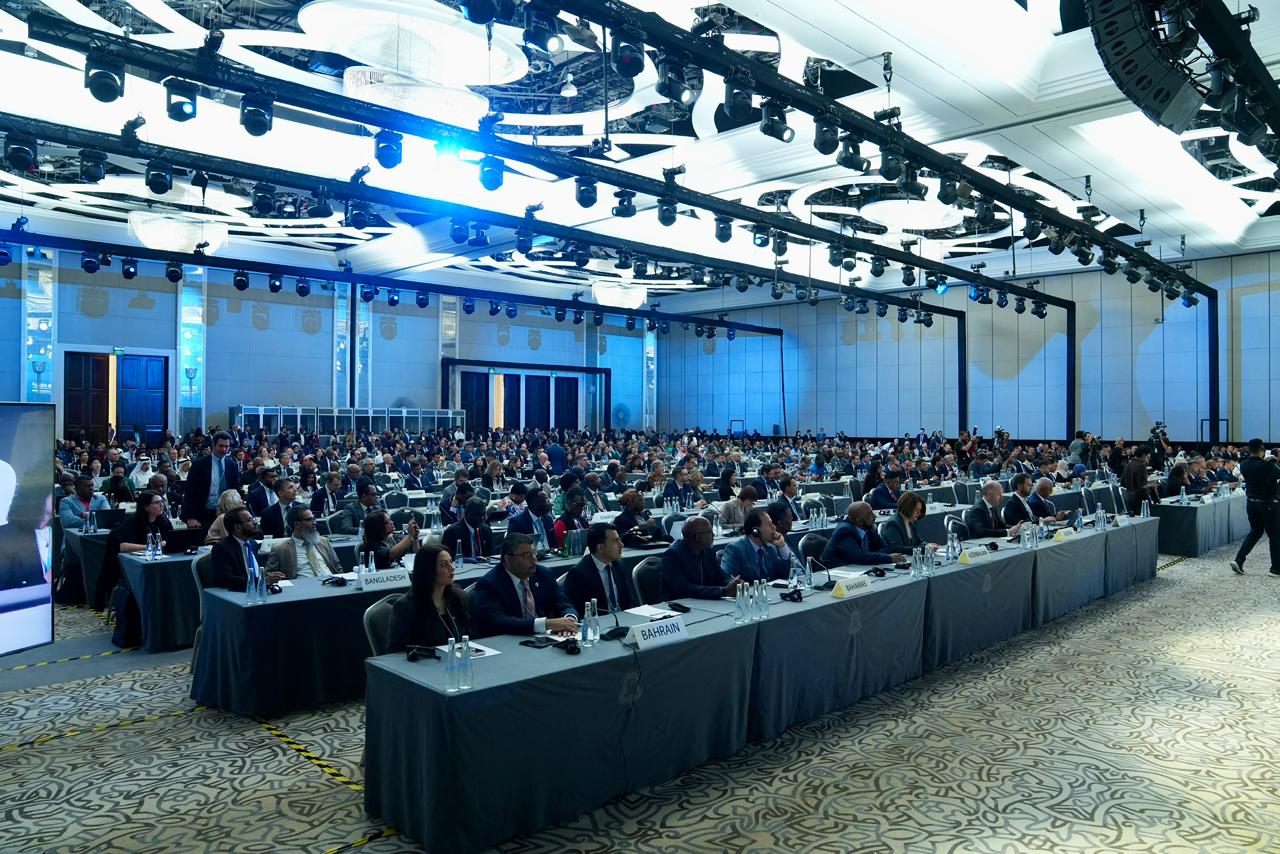
The IRENA Assembly is the agency’s highest decision-making forum, where governments align on renewable energy policy, finance, and global cooperation. Photo credit: IRENA press service
Held under the theme Powering Humanity: Renewable Energy for Shared Prosperity, the assembly brought together global leaders to define shared priorities for an energy future that the international community can rally behind in 2026. According to La Camera, the market has already made its choice.
“Last year, 92% of newly installed power capacity was renewable. This year, we are heading toward another record, with nearly 700 GW of new renewable capacity expected. In just one year, we have installed twice the total nuclear capacity built over the past seventy years,” he said.
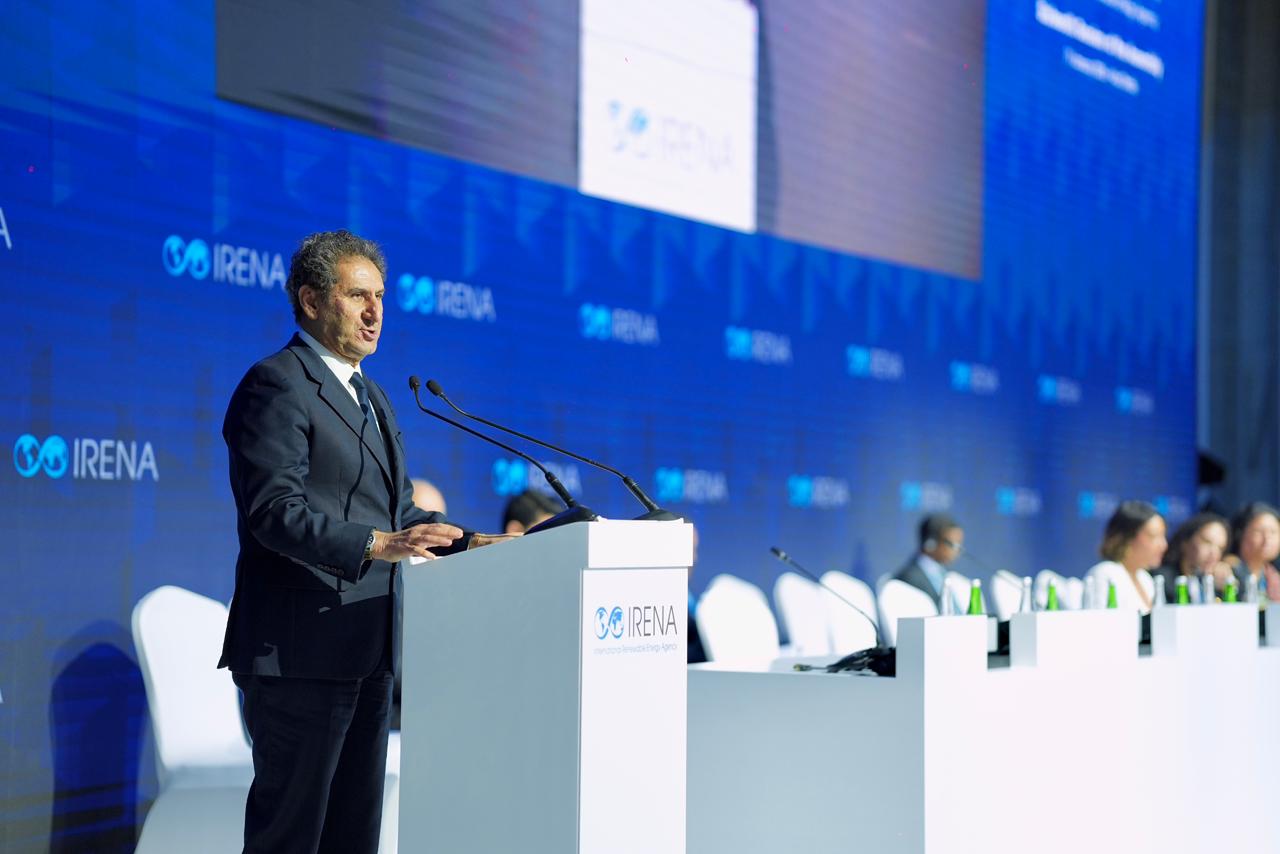
La Camera said the world is facing multiple, overlapping crises: geopolitical tensions, economic pressures, widening inequalities on Jan. 11 Photo credit: IRENA press service
He reiterated that renewables are today the most competitive way to generate electricity, outperforming fossil-fuel alternatives on cost, resilience, and long-term stability. This, he noted, is backed by every dataset and publication IRENA delivered last year, confirming that renewables have secured their dominance in the global energy landscape.
“In the very near future, new investments in renewables plus storage will be more convenient and economical than keeping an old coal plant alive,” he said, stressing that countries need to reinforce their renewable energy strategies — not as an abstract climate ambition, but as an economic imperative.
“Because renewables are the most resilient and no-regret economic pathway for development, security, decarbonisation, and competitiveness,” he added.
According to La Camera, future economic competitiveness will largely depend on a country’s ability to move electrons and molecules at the lowest possible cost while delivering clean, safe, and affordable energy services.
“Fast movers will gain lasting productivity and competitiveness advantages over those who hesitate,” he said.
He added that IRENA’s analysis shows that when renewables are embedded in industrial policy, countries capture greater domestic value, build skills, strengthen engineering capacity, and foster innovation ecosystems that sustain competitiveness well beyond the energy sector. According to IRENA’s latest cost report, capital costs are expected to continue declining over the coming years.
La Camera also pointed to the critical role of international cooperation in supporting the global energy transition, particularly through mechanisms that provide access to low-cost capital.
“Reducing the cost of capital through predictable policy frameworks, risk-mitigation instruments, and blended finance is at the heart of delivering competitiveness, development, and sustainable prosperity. Access to low-cost finance must be a central pillar of international cooperation,” he said.
At present, he emphasized, renewable energy is no longer merely a climate solution but “a competitiveness solution, a development solution, and an energy security solution.” Even as multilateralism comes under strain, an apparent reference to the United States’ withdrawal from IRENA less than a week earlier, La Camera reiterated that the agency continues to expand, now comprising 171 Member States.
“This growth is not symbolic; it is strategic. It reflects confidence in our shared goal at a time when optimism is scarce. It reinforces IRENA’s unique role in guiding the global energy transition toward a more secure, inclusive, and sustainable future,” he said.
Alongside the strategic messaging, the assembly also marked a leadership transition, with the presidency formally passing from Slovenia to the Dominican Republic.
Key discussions during the assembly also focused on regional energy transitions and critical enablers such as grids, energy planning, digital innovation and artificial intelligence, mobilising finance, including for sustainable aviation fuels, and the role of renewables in strengthening agri-food systems and driving green industrialisation.
The 16th IRENA Assembly also kick-started the Abu Dhabi Sustainability Week 2026, held from January 11–15 in the UAE capital, convening heads of state, ministers, and global experts under the patronage of Masdar, Abu Dhabi’s state-backed clean energy champion.
