
ASTANA — The key to managing artificial intelligence and future technology lies in education and early awareness, President of Estonia Alar Karis said in a Nov. 17 keynote lecture for the students as part of his visit to Kazakhstan.
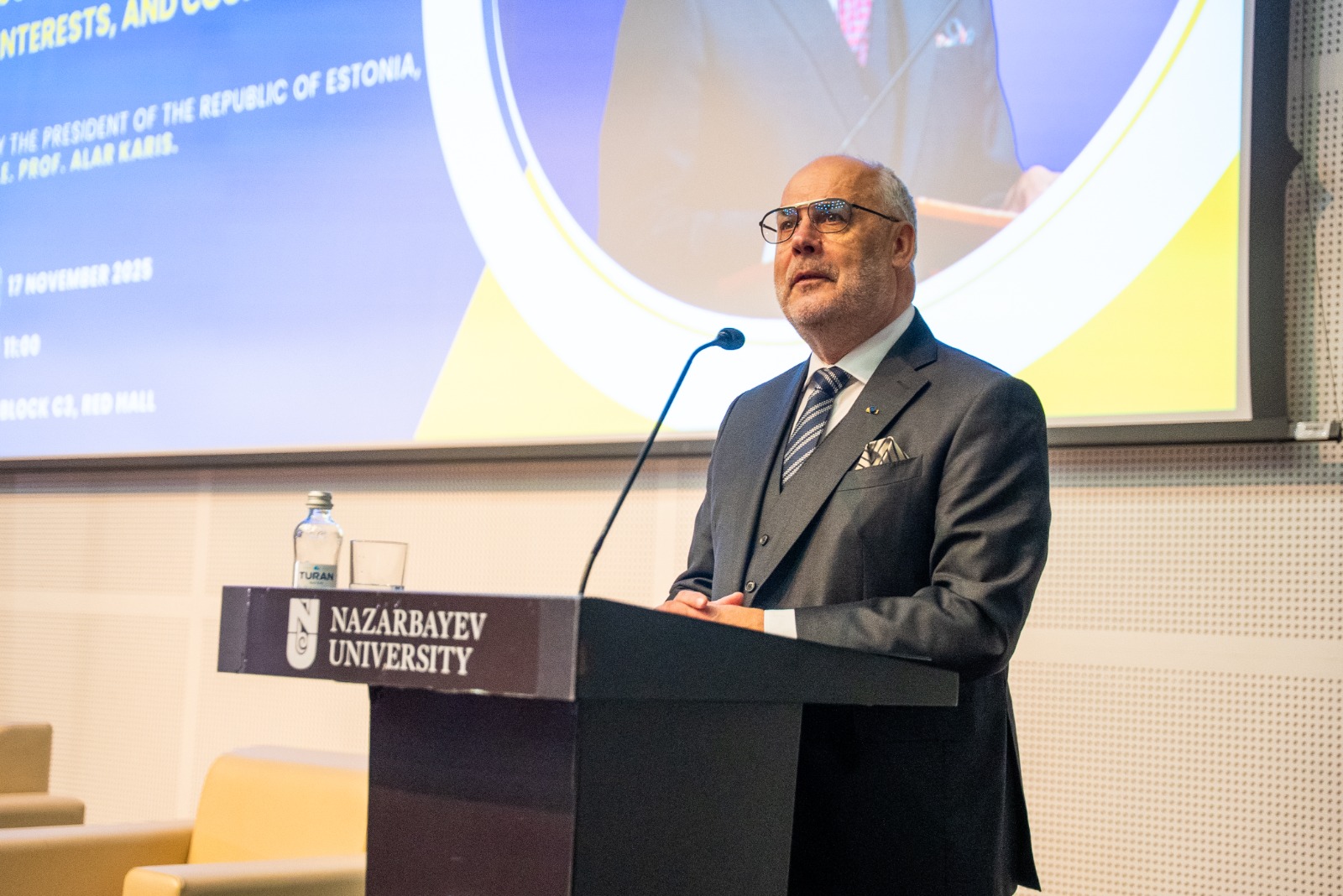
President of Estonia Alar Karis. Photo credit: NU.
The lecture, held at the Nazarbayev University, underscored the importance of knowledge, innovation, and mutual trust in shaping the future of modern states.
President Karis also spoke about the growing potential for cooperation between the two nations in education, science, and digital transformation. He highlighted the historical and cultural ties between Estonia and Kazakhstan, and underscored that trust and clear rules are fundamental to international cooperation.
“I am pleased to be in Kazakhstan and deliver my first speech here for the students. As a former rector of two Estonian universities, I understand well how essential knowledge is – and how important it is to apply it for the benefit of society. Although our countries are geographically distant, Kazakhs and Estonians share much in common. We have a rich history. We are both situated along ancient trade routes, have endured much, learned a great deal, and today continue to exchange knowledge with one another,” Karis said.
Karis noted both the opportunities and risks associated with emerging technologies and stressed the importance of digital literacy.
“We are facing a new global challenge – artificial intelligence. The best way to approach it is through education: teaching young people to be responsible users and making them aware of both the advantages and the risks. In Estonia, we are launching national programs that provide schools with safe AI platforms. I know that Kazakhstan has also made remarkable progress in digital tools and educational technologies, and I am confident there are many areas for cooperation ahead,” he said.
President Karis also highlighted that Estonia’s approach to AI is rooted in education and early digital literacy. According to him, preparing students for an AI-driven future requires practical tools and responsible use of technology.
“In Estonia, we launched AI Leagues to integrate AI into school curricula. It doesn’t give answers but helps students find them,” he said.
He also emphasized that academic partnerships remain one of the strongest drivers of long-term cooperation between countries. Educational cooperation is increasingly viewed as the foundation for broader collaboration in technology, scientific exchange, logistics, and human capital development.
With university leaders from both sides present at the event, Karis noted that expanding mobility and joint programs can significantly strengthen ties. “I believe we have many areas to collaborate. Our university rectors are here to explore opportunities – student exchange, cooperation, and joint programs. Studying abroad opens minds.”
The program of the visit to the university also included the Kazakh-Estonian Rectors’ Forum.
