
ASTANA – The first World Inclusion Congress (WIC 2025) opened in Almaty on Oct. 15, bringing together more than 1,200 experts, educators, and policymakers from 40 countries to discuss innovations, digital transformation, and the role of artificial intelligence in education.
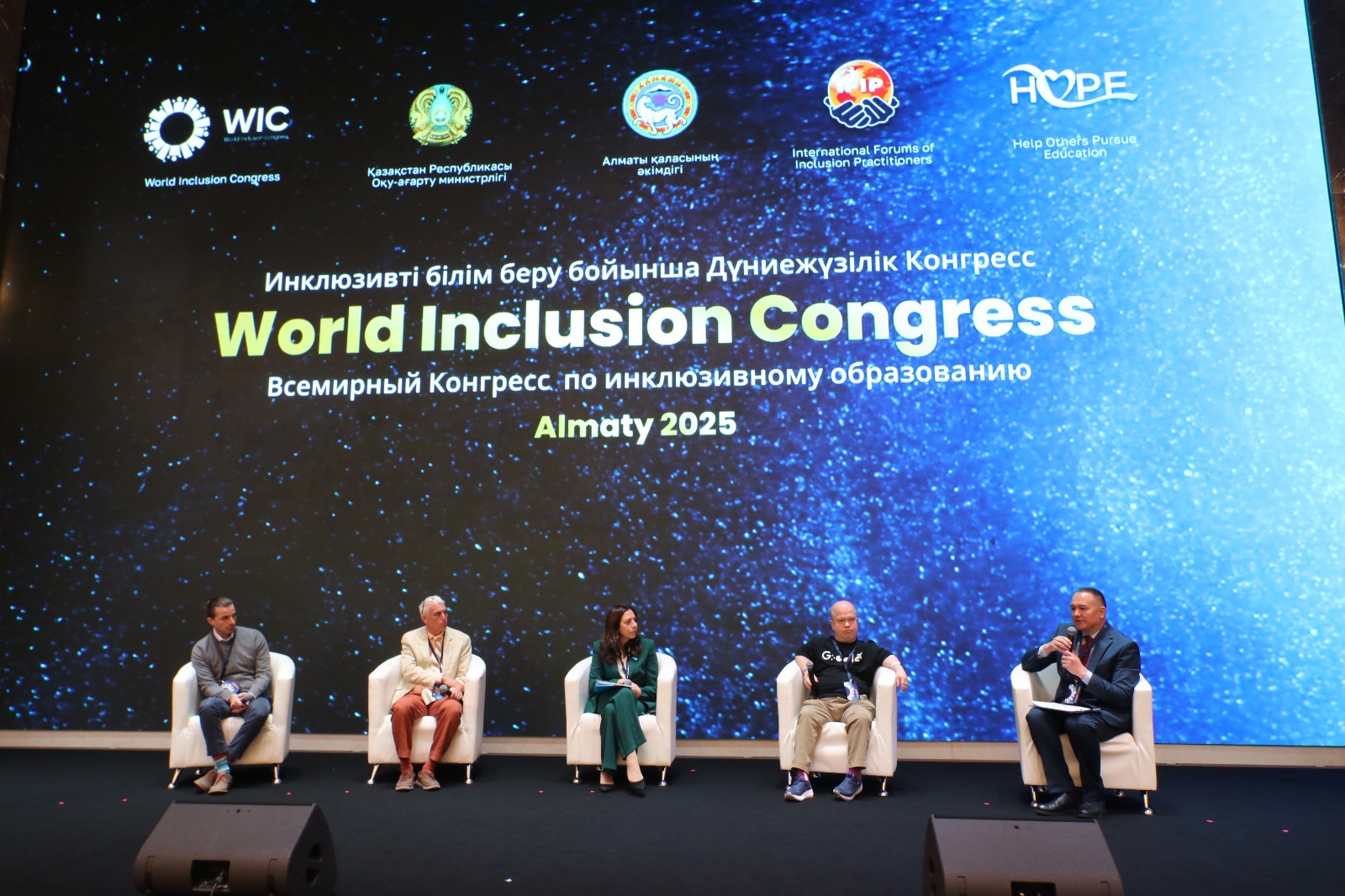
Photo credit: Ministry of Education
Organized by the Ministry of Education of Kazakhstan, the Akimat of Almaty, the HOPE Foundation (Help Others Pursue Education), and the International Forums of Inclusion Practitioners (IFIP, UK), the congress will run through Oct. 17, reported the Education Ministry’s press service.
Kazakhstan’s reforms in inclusive education
Under the leadership of President Kassym-Jomart Tokayev, Kazakhstan has made inclusive education a key priority of its social reforms. The 2021 law on inclusive education strengthened the legal framework for supporting children with special educational needs and introduced mechanisms for psychological, pedagogical, and infrastructural support across the country.
As a result, 91% of schools now have inclusive learning conditions, and 85% of children in need receive psychological and pedagogical support. Over 10,000 special educators and assistants are employed in schools, kindergartens, and colleges. The country’s support network now includes 509 specialized organizations, 110 psychological-medical-pedagogical centers, and 11 autism centers.
Kazakhstan has also digitized services for children with special educational needs through a National Educational Database, which integrates data from multiple state systems. This has reduced assessment wait times by 50% and increased efficiency and transparency.
Global experts discuss innovation and AI in education
The congress gathered leading global figures, including Daniel Sobel, founder of IFIP; Professor Umesh Sharma, vice provost (People and Culture) and Professor in Inclusive Education at the University of Nottingham Ningbo, and Takakura Tezuka, world-renowned architect and designer of Japan’s Fuji Kindergarten.
Participants from Asia, Africa, Europe, North America, and Australia are sharing best practices on developing inclusive learning environments, advancing teacher training, and leveraging AI-driven technologies to support children with diverse learning needs.
A highlight of the congress is the Innovation Expo, featuring cutting-edge educational and accessibility solutions from companies across Kazakhstan, the UK, the US, China, Poland, and Southeast Asia.
Almaty Declaration on Inclusive Education
Throughout the three-day forum, participants will discuss the draft Almaty Declaration on the Development of Inclusive Education, which aims to strengthen international cooperation and establish common principles for the use of digital and AI technologies in education.
Minister of Education Zhuldyz Suleimenova emphasized that inclusive education is central to building a fair and equitable society in Kazakhstan. Under Tokayev’s leadership, large-scale reforms are underway to ensure equal and high-quality education for every child.
“The foundation of inclusion lies in human values — respect, acceptance, and support. We call on all nations to unite in developing effective strategies, sharing experience, and enhancing mechanisms of assistance,” Suleimenova said.
The congress will conclude on Oct. 17 with the adoption of key recommendations and memorandums of cooperation among international partners.
