
ASTANA – Public councils are playing an increasingly important role in promoting transparency and accountability of state institutions and strengthening civic participation in decision-making, said experts at the 12th Civil Forum of Kazakhstan on Oct. 15 in Astana.
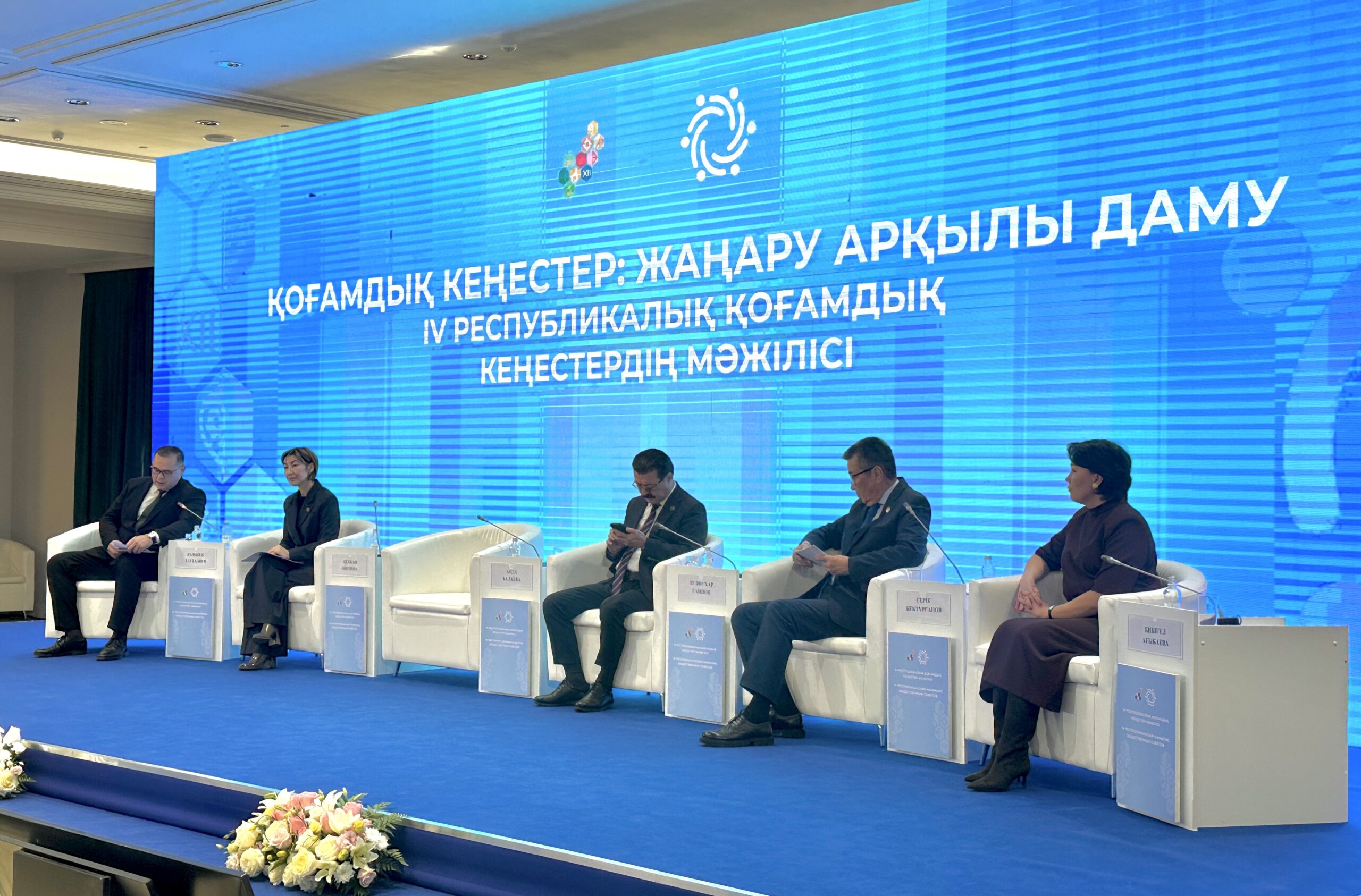
As part of the 12th Civil Forum of Kazakhstan, the 4th Republican Mazhilis of Public Councils was held. Photo credit: The Astana Times
Established by a special law in 2015, public councils are a key element of the system of interaction between the authorities and society in Kazakhstan. They are designed to provide feedback and increase accountability of state institutions.
“During this time, public councils have evolved from a consultative structure into an institutional instrument of public control that clearly embodies the principle of a state that is responsive to the voice of the people,” said Kazakh Minister of Culture and Information Aida Balayeva.
Citing official statistics, Balayeva said that there are 263 public councils operating across the country, with more than 4,000 citizens participating in their work.
“Over the past three years alone, more than 9,000 draft regulatory legal acts related to the rights, freedoms, and obligations of citizens have been reviewed. In addition, 2,100 reports from the heads of central and local state bodies have been heard, 820 public hearings have been organized, and around 2,000 citizens’ applications on social protection, land relations, and healthcare have been reviewed,” she said.
According to Balayeva, independent experts have repeatedly pointed out conflicts of interest and the dependence of public councils on state bodies, which undermined their effectiveness, but today, the situation shows steady positive progress.
“One of the key indicators is the increase in the number of civil society representatives on public councils by 20% and the minimization of the number of government officials on these councils. At the same time, 18% of public councils are composed exclusively of representatives of public organizations,” said Balayeva.
Zulfukhar Gaipov, chairman of Astana’s public council, pointed to challenges that need to be overcome for public councils to thrive.
“Currently, there are a number of problems with the systematization of public councils. First, the opportunity to participate is uneven. Working group meetings were often held offline, which did not allow citizens who were on business trips or with disabilities to fully participate in a timely manner. Second, the selection criteria differ in each region,” he said.
The participation of women and people with disabilities remains limited, highlighting the need for more inclusive representation, said Gaipov. He proposed introducing a quota system to ensure meaningful involvement and promote diversity and equity within the councils.
Bibigul Arybayeva, chairwoman of the public council under Kazakhstan’s Agency for Civil Service Affairs, emphasized the importance of serving in the public sector with genuine intention and sincerity.
“I understand that modern tools like AI and new technologies are here to stay, and we must adapt to them. But since our work is voluntary and driven by the desire to serve, I believe it should come from the heart. True service comes from those who genuinely care, not for recognition, but to help citizens follow the law guided by their own inner principles, shaped by family, society, and environment,” said Arybayeva.
