
ALMATY – When warmth and care are needed, people return to childhood memories – where a handwoven carpet guarded sleep, a wooden toy chased away dark spirits, or a grandmother’s ring reminded them of family strength and protection. These timeless objects embody more than craft – they are vessels of memory and love. On Oct. 5, Almaty celebrated these traditions in a historic moment, as the city was officially awarded the title of World Craft City.
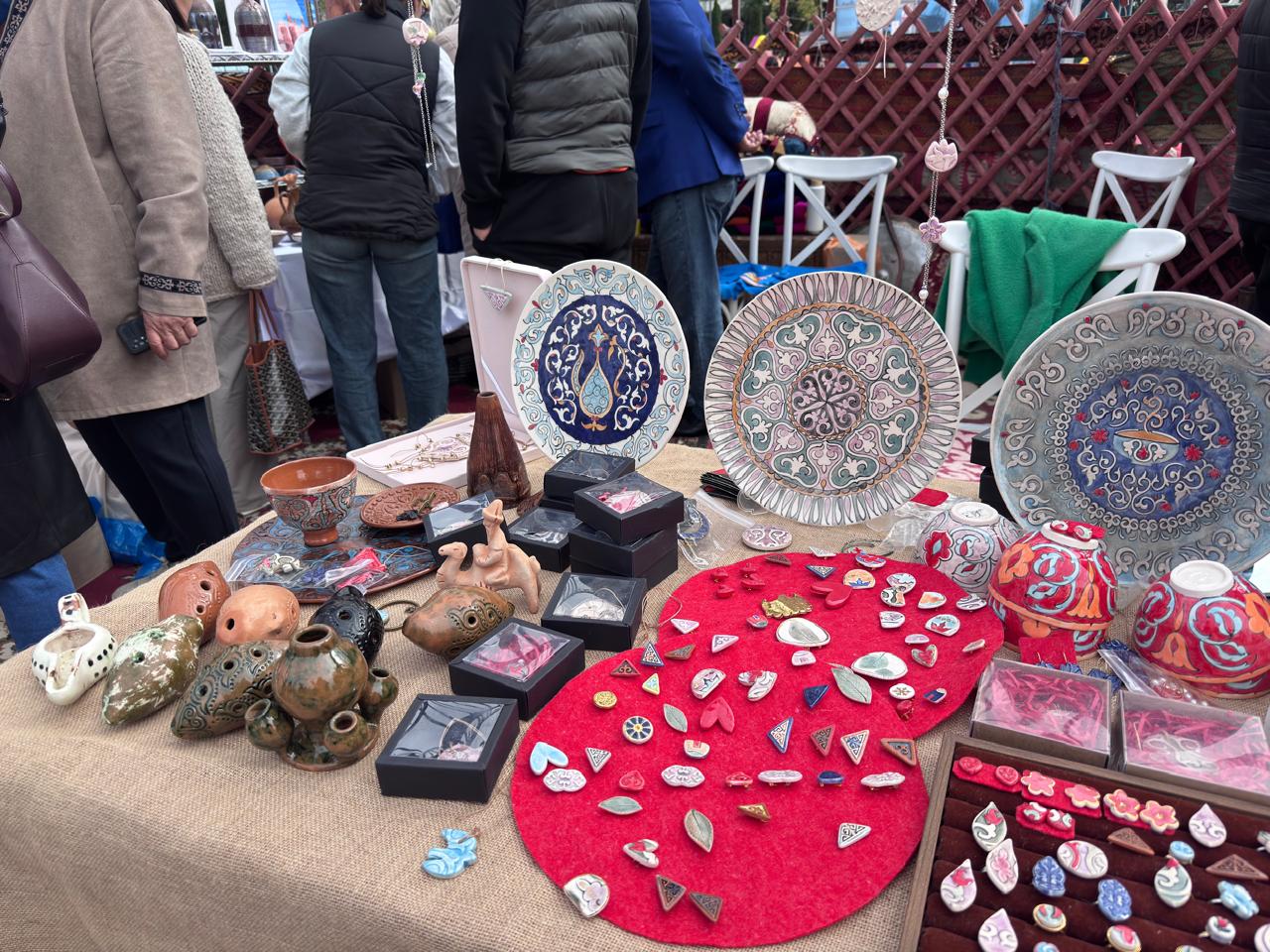
Clay products in the form of brooches and jewelry Photo credit: The Astana Times
A title awarded by the World Crafts Council recognizes the city’s efforts in preserving cultural heritage, developing artisanal traditions, and fostering the creative economy.
The announcement took place during the grand opening of the ALA CRAFT 2025 international festival, which began on Oct. 4 on Abai Square in front of the Palace of the Republic. Gathering over 100 artisans from Kazakhstan, Australia, New Zealand, and the United States, among other countries, the festival has become Central Asia’s largest cultural event dedicated to crafts.
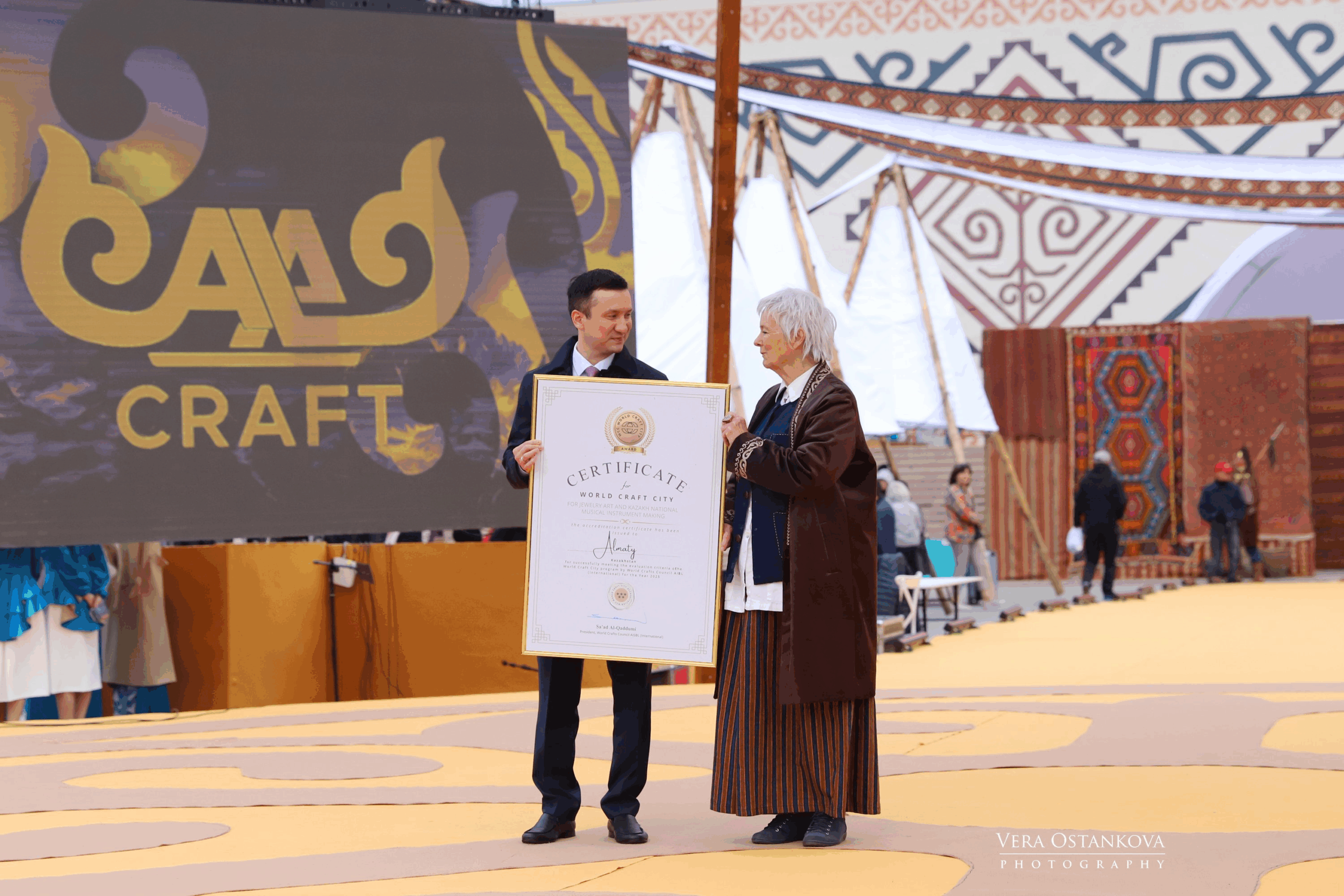
Jude van der Merwe, President of the WCC Asia-Pacific Region, awards Almaty with World Craft City status Photo credit: Vera Ostankova
The festival underscores the city’s ambition to position itself on the global cultural map. It was supported by the World Crafts Council, the Kazakh Union of Artisans, the Smithsonian Center for Folklife and Cultural Heritage in the U.S., and the Almaty Tourism Department.
“This festival shows that Almaty is a modern metropolis that carefully preserves traditions while supporting creative practices,” said Akmaral Yeshchanova, deputy head of Almaty’s tourism department.
Expanding cultural horizons
Head of Almaty’s Tourism Department Galiya Tokseitova emphasized that the World Craft City title will boost the city’s global reputation as a hub for creative industries and cultural tourism.
“This achievement opens new horizons for Almaty. It allows us to promote traditional crafts internationally, develop educational programs and residencies for artisans, and strengthen the city’s creative economy,” Tokseitova said.
Jude van der Merwe, president of the WCC for the Asia-Pacific Region, added that the recognition reflects the city’s active role in nurturing artisans and passing knowledge to future generations.
Voices of the artisans

Layla Walter’s glass vase with Almaty pears Photo credit: The Astana Times
New Zealand glass artist Layla Walter presented intricate works that combine contemporary jewelry with traditional Māori influences. Among them was a glass bowl inspired by Almaty pears.
“I first visited Kazakhstan six years ago as a guest of artisans Aizhan Bekkulova and Serik Rysbekov. I saw Serik’s garden, drew his pears, and back in New Zealand spent six years creating this glass bowl,” Walter told The Astana Times.
She also highlighted cultural links between Kazakhstan and New Zealand, particularly through wool production and felting.
Jewelry inspired by native plants
Australian contemporary jewelry artist Vicki Mason, a trained goldsmith, brought pieces inspired by indigenous Australian flora, such as eucalyptus and baronia. Her works highlight resilience in the face of climate change.
“My jewelry reflects the need to adapt gardens to drier climates and celebrates the beauty of native plants that survive despite harsh conditions. It is about raising awareness of both ecological challenges and cultural heritage,” Mason told The Astana Times.
She also noted the similarities between Kazakh and Australian flora, expressing curiosity about local craftsmanship and natural motifs.
Rings of power and heritage
Kazakh jeweler Ikramzhan Rafikov, winner of the Global Eco Artisan Awards 2022 in the U.S., showcased collections rooted in national history. Speaking with The Astana Times, he highlighted his most symbolic work, the Ring of Power, which consists of three interlocking parts that evoke both armor and resilience.
Wood-carved miniatures of national instruments Photo credit: The Astana Times
“This design symbolizes Kazakh women who were not only rulers but also warriors. Strength and elegance are united in this work,” Rafikov said in a comment for this story.
He recalled exchanges with the Smithsonian Center for Folklife and Cultural Heritage, which studied the practices of Kazakh artisans to present them globally. Rafikov also participated in the 2019 “Soul of Tengri” exhibition in Washington, D.C., alongside eight other Kazakh jewelers.
Almaty’s recognition as a World Craft City is a promise to artisans, residents, and visitors alike. Through jewelry, glass, wool, and ancient techniques revived in contemporary forms, the city celebrates its past while embracing the future.
As the festival finished, Almaty opened its doors to the world, inviting guests to witness creativity, resilience, and cultural dialogue woven into every masterpiece.
