
ALMATY — Kazakh Minister of National Economy and Deputy Prime Minister Serik Zhumangarin outlined a comprehensive strategy to accelerate economic growth and attract quality investments during a government meeting on Sept. 9, chaired by Prime Minister Olzhas Bektenov.

Photo credit: Shutterstock
The meeting focused on implementing President Kassym-Jomart Tokayev’s vision, outlined in his recent state-of-the-nation address. The government announced measures targeting launching a new investment cycle, reducing import dependency and liberalizing the economy to support entrepreneurship, reported the Prime Minister’s press service.
Driving growth through strategic investments
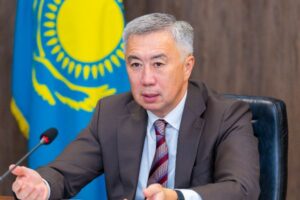
Serik Zhumangarin. Photo credit: primeminister.kz.
Zhumangarin emphasized that the government aims to double Kazakhstan’s GDP by 2029 by fostering higher economic growth rates through active state participation and incentivizing private investment.
He highlighted several priority sectors with significant potential for global competitiveness, including automotive and railway engineering, chemical industries, mineral resource development and agricultural processing.
The government has identified investment projects worth over 5 trillion tenge (approximately US$9.3 billion), with Baiterek Holding overseeing project analysis, structuring and investor engagement. In partnership with the National Bank, a $1 billion High-Tech Investment Program will also be launched, supported by the National Fund and second-tier banks, to stimulate high-tech industries.
“A new draft Banking Law will be developed to create favorable conditions for promoting fintech and liberalizing the circulation of digital assets, as well as encouraging banks to direct free liquidity into the real sector of the economy,” Zhumangarin said.
Alatau City: future hub of innovation and investment
A major focus of the meeting was the development of Alatau City, which is expected to become a center for business activity, technology, and innovation. A draft presidential decree is being prepared to grant the city a special development status, introducing a unique governance model and regulatory framework.
“The future law will outline the city’s financial model, special governance regime, the potential use of cryptocurrency and Smart City technologies, as well as urban planning and construction based on international standards,” the ministry said.
Controlling inflation and boosting local production
Zhumangarin stressed the importance of price stability and domestic market balance. The government will revise its Comprehensive Inflation Control Plan to improve supply, prevent product shortages, and expand small-scale manufacturing to meet growing consumer demand.
To support local producers, 30% of retail shelf space will be reserved for Kazakhstan-made goods. Retailers receiving state assistance will be required to allocate 50% of shelves to domestic food products and 20% to non-food goods, with clear labeling under the Made in Kazakhstan initiative to promote consumer awareness.
“Amid persistent inflationary pressures, it is especially important to ensure sustainable economic growth. The joint goal of the government and the National Bank is to bring inflation down to 5-6%,” Zhumangarin said.
Digital transformation and AI-powered reforms
As part of the broader economic liberalization strategy, Kazakhstan will create a Regulatory Intelligence Center under the Agency for Strategic Planning and Reforms. The center will leverage artificial intelligence to modernize legislation, optimize regulatory frameworks and assess policy impacts.
“To achieve this, fundamentally new methods of controlling and monitoring public services across all sectors of the economy must be established through the deep integration of digitalization and artificial intelligence technologies,” Bektenov said.
Additionally, a taxpayer lifecycle support system will be introduced, offering personalized digital services powered by AI, including automated compliance checks and smart prompts to simplify business operations.
