
ASTANA – Kazakh President Kassym-Jomart Tokayev, in his recent state-of-the-nation address, highlighted the significance of the United Nations’ 80th anniversary, calling it an indispensable platform for negotiations. At the same time, he stressed the need to reform the UN Security Council.
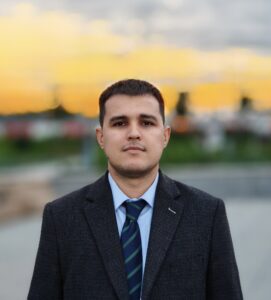
Muhammad Shamsuddinov.
Tokayev’s stance reflects Kazakhstan’s broader effort to position itself as an influential player on the global stage under the middle power concept that the country has promoted in recent years.
That ambition is not unique. India, Germany, Japan, Türkiye, Iran, Brazil, South Africa, and even smaller but wealthy states such as Qatar also seek to emphasize their global importance. Many position themselves as middle powers, while others aspire to the role of great powers.
As “influential players” in today’s system of international relations, these states challenge a global order built largely without their input. One of their main demands is reforming the UN Security Council, a body that remains a closed club of great powers shaping global processes.
Among the most active advocates are India, Germany, and Japan, which have the economic, technological, military and ideological resources to support such claims. Other states, such as Türkiye, have fewer resources but continue to press the case. Ankara has long promoted the concept “the world is bigger than five,” referring to the council’s five permanent members.
Whether reform is feasible remains in question. Is the transformation of the UN Security Council possible? Would its current permanent members agree to such changes? To understand this, we must first examine how such institutions are historically formed.
Lessons from history
The history of international politics shows that such institutions emerge after major systemic shifts. Typically, the collapse of an old order due to changes in the balance of power leads to large-scale conflict, the formation of blocs, and the rise of dominant leaders. Afterward, the victors – or more precisely, the leading powers among them – impose new rules not only on the defeated but also on the global system as a whole. One such rule is the creation of an institution with a limited number of influential states authorized to shape the international order.
An early example is the so-called “Concert of Europe,” formed after the Napoleonic Wars within the Vienna system in the early 19th century. Its founding members were Austria, Prussia, Russia, and Great Britain, with France later admitted despite its defeat because of its undeniable weight as a great power.
The UN Security Council followed the same logic, granting permanent membership to the leading powers of the anti-Hitler coalition: the United States, the Soviet Union, Great Britain, France and China.
Any reform of such institutions requires tectonic changes in the global balance of power as well as recognition of these historical patterns. Such “clubs” are not created overnight. They evolve through deep, complex processes.
Another factor is the reluctance of current permanent members to share privileges or widen the circle of states setting the global agenda.
A hypothetical future
If reform were to take place – and if consensus among current permanent members could be reached, as when France joined the Concert of Europe – what might a new Security Council look like? Which countries could become permanent members? Could Kazakhstan have a chance?
No more than five or six countries would likely be considered for permanent membership in a reformed Security Council. Candidates would be chosen based on resources, historical and cultural weight, and regional representation.
Among the strongest contenders is India, a South Asian power with nuclear weapons and vast human potential. Germany stands out in Europe with economic, technological, ideological and political influence, as well as growing military capacity. Japan matches Germany in economic and technological strength and is seen as a key Asian leader and counterbalance to China.
From Africa, South Africa is often cited because of its resource wealth, industrial base and military strength. In Latin America, Brazil is viewed as a leading candidate, with its large economy, population, natural resources and military potential. Pakistan, a nuclear-armed Muslim-majority state with significant human and military resources, is also seen as a possible contender, often in contrast to India.
Kazakhstan lacks comparable resources to compete for such a shortlist, a fact well understood in Astana. Still, raising the issue allows Kazakhstan to add weight to its image as an influential international actor.
For Tokayev and his administration, such rhetoric contributes to the country’s growing diplomatic profile, even if actual reform of the Security Council remains a distant prospect.
The author is Muhammad Shamsuddinov, a Dushanbe-based international relations expert.
Edited by Aiman Nakispekova.
Disclaimer: The views and opinions expressed in this article are those of the author and do not necessarily reflect the position of The Astana Times.
