
ASTANA – Astana Ballet debuted its 13th theatrical season on Aug. 29-30 with “Sultan Beibars” historical play, which tackles power, sacrifice, and longing for the motherland.
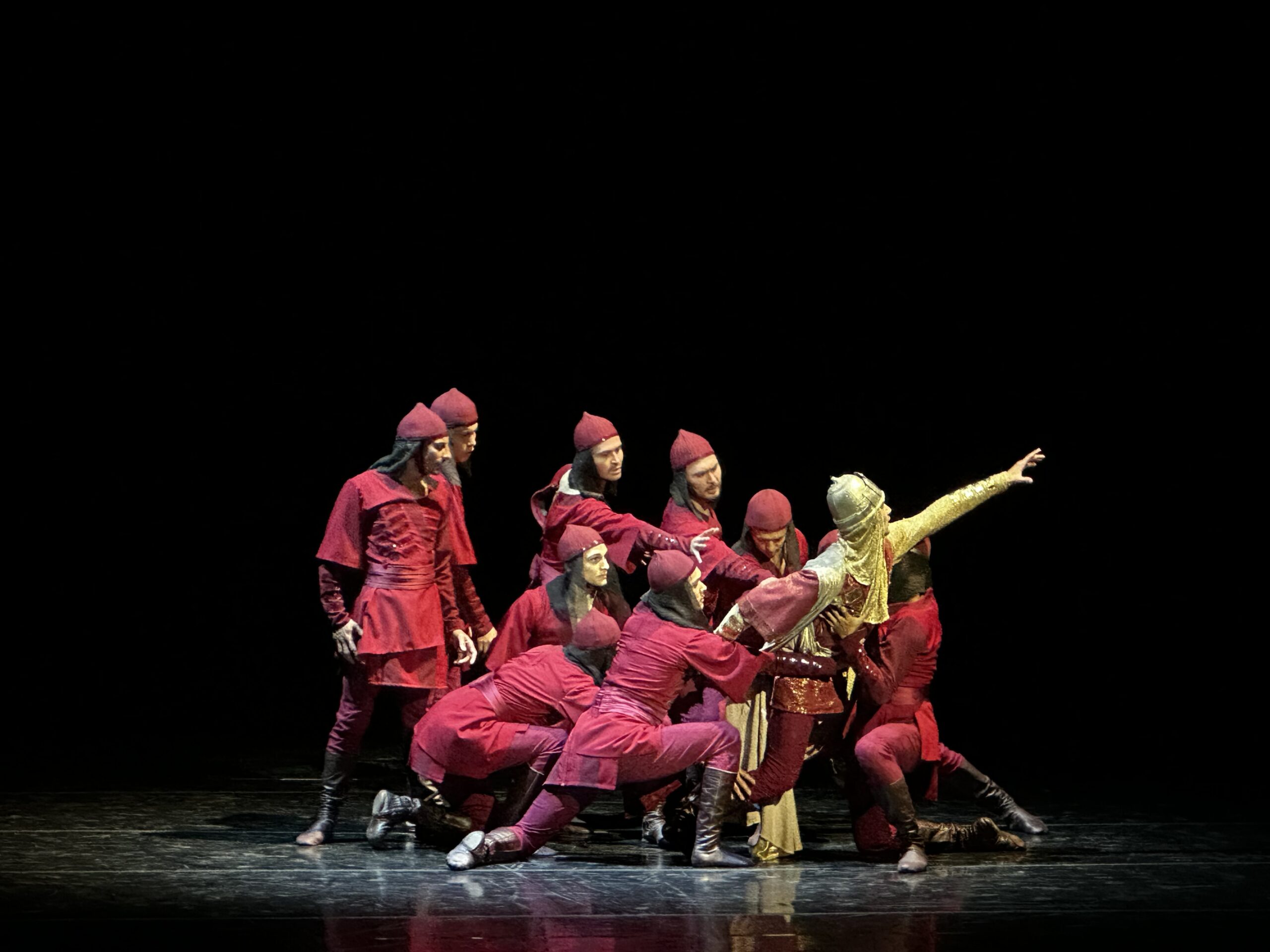
Sultan Beibars. Photo credit: The Astana Times/ Nargiz Raimbekova
The ballet, one of the theater’s most popular productions, is based on the story of Beibars, a historical character whose rise to power was fraught with personal tragedy. The production combines dynamic dancing with music by Khamit Shangaliyev and Alibek Alpiev, a libretto by poet Bakhyt Kairbekov, and visual artistry by set designer Leonid Basin, costume designer Asya Solovyova, and lighting designer Arsenia Safiullina.
Artistic director Nurlan Kanetov mentioned that beginning the season with this ballet was not just symbolic, but also strongly tied to national identity.
“We decided to begin with ‘Sultan Beibars’ since it represents our cultural history. The entire troupe, nearly 70 artists, is involved, and each new cast brings a new perspective to the choreography,” Kanetov explained.
The new season is marked by debuts. On the first evening, Sundet Sultanov recreated his role as Beibars, while Farhad Buriev made his final performance as Kutuzov before retiring. The following night, a young leading soloist Yerkanat Yermagambet played the role of Beibars for the first time, while Ildar Shakirzhanov made his debut as Kutuzov.
Kanetov also announced upcoming premieres and tours. On Oct. 17-18, the theater will present “Two Carpets,” a joint effort with Mosaic Del Arte, following their joint production titled “Blind Forgiveness.”
In September, the ballet group will tour Kostanai in the country’s north, performing one-act ballets “Carmen Suite” and “Arkan of Fate,” as well as presenting “The Heritage of the Great Steppe” show.
Astana Ballet will also represent Kazakhstan at the Cheonan World Dance Festival in South Korea later this fall, performing a production directed by Aigul Tati.
Tati will also choreograph new national dance miniatures for the autumn season, highlighting the traditions and spirit of the great steppe in a contemporary interpretation. Kanetov underlined that each season makes the theater reconsider and broaden its creative vision.
“The ballet evolves with each debut. It compels us, as choreographers and performers, to discover new meanings, gestures, and emotions. That is what distinguishes the creative process,” he said.
As an annual tradition, the year will conclude with “The Nutcracker” in December.
