
ASTANA – Ten years from the first C5 +1 format meeting, the regional cooperation and multilateralism in Central Asia are in much better shape, according to foreign policy experts speaking at the Layers of Cooperation: The Future of Central Asian Regional Integration webinar on Aug. 26.
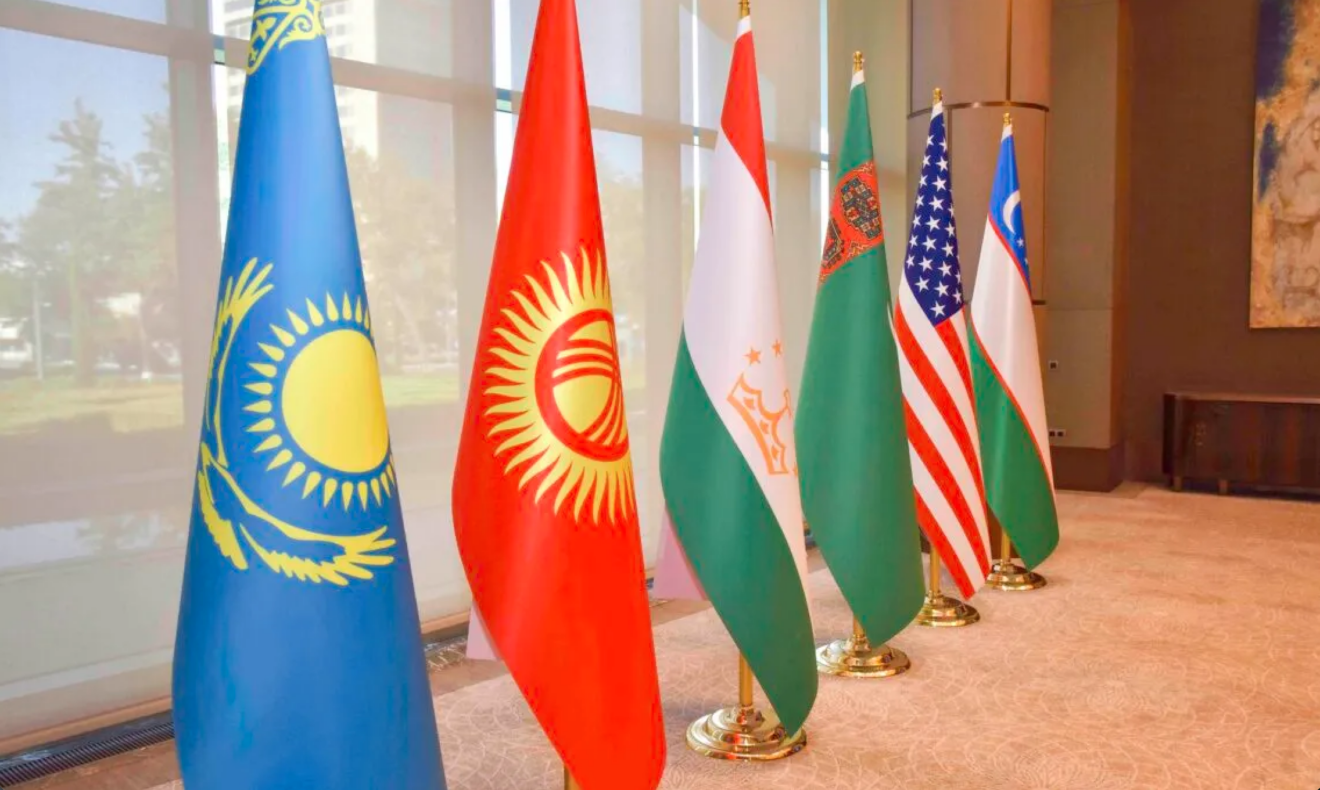
Photo credit: Turkmenportals.
Organized by the American Foreign Policy Council’s Central Asia-Caucasus Institute, the webinar discussed the evolution of Central Asian regional cooperation.
National vs. regional
Right after the dissolution of the Soviet Union, Central Asian countries were primarily focused on their national interests and defining their place in the post-Soviet world. So all calls for regional cooperation were met rather reluctantly. This created this “tension between the national and the regional,” said Svante Cornell, the director of research and publications at the American Foreign Policy Council’s Central Asia-Caucasus Institute.
“It sat a little bit uneasily with this idea that we have to create some type of cooperation that will end up putting us together in some other union. (…) You just won your freedom from one union [Soviet Union]. And I think it made sense for these countries to establish a solid foundation for who they are on a national level,” said Cornell.
Additionally, there was, and to some extent still exists, the tension between the Eurasian and the Central Asian levels of cooperation.
Cornell noted that Kazakhstan’s first president was a firm believer in intergovernmental institutions and shared problem-solving.
“We obviously know that the leadership of Kazakhstan, then President Nursultan Nazarbayev, was an avid advocate of maintaining cooperation among all the Soviet states. Therefore, he launched the idea of the Eurasian Union,” said Cornell.
Broader interlinkages with the former Soviet republics were accomplished through the Commonwealth of Independent States (CIS) and later by the Eurasian Economic Union (EAEU).
“Interestingly, it was the Kazakhs who were the driving force in the Central Asian cooperation. And it’s very often forgotten that one of the reasons it didn’t work out is because the Uzbeks, after the difficulties they had with the other countries, particularly following the terrorist attacks of 1999 and 2000, started erecting the fences towards their neighbors, because they didn’t trust that they would be able to help secure Uzbekistan territory against foreign terrorist attacks that use the neighboring countries to get to Uzbekistan,” said Cornell.
Dynamics of relations between Kazakhstan and Uzbekistan
In discussing the roles of Kazakhstan and Uzbekistan in the region, Cornell emphasized their comparative size in terms of economy, population, and territory.
“They’ve also been the ones that have, over the longer period of time, branded themselves internationally, built international standing relations with major great powers, active roles in international organizations, and so on,” he said.
In the later years of first Uzbek President Islam Karimov’s term, and later with Shavkat Mirziyoyev coming to power, Uzbekistan began opening up to cooperation with its Central Asian neighbors, and Kazakhstan in particular.
“So when these two countries have not been in agreement, it’s been very difficult to achieve some form of regional-level Central Asian cooperation. When they have been on the same page, I think, things have progressed very quickly, and that’s where we’ve been for the past several years,” said Cornell.
“I think we also have to be very aware that, although these countries are much larger and more powerful than their smaller neighbors, they have been very cautious to ensure that the smaller countries of Central Asia are listened to, are viewed as equals, and that the larger two countries are not just trying to impose their will in terms of how the Central Asian cooperation should look,” said Cornell.
This is evident from the efforts made to engage Turkmenistan as an active participant.
Economic and political catalysts of regional cooperation
Rapid regional integration has been fostered amid the emergence of a number of potentially existential threats, from the Russian invasion of Ukraine to the rapid decline in the oil price and the devaluations of currencies.
“The economic development and the regional cooperation became tied to each other, because you couldn’t do one without the other. If you didn’t reform your own systems, there was no way of increasing regional trade. And if you didn’t increase regional trade, your economies wouldn’t be able to grow. And also throw in the geopolitical uncertainty to that, and that formed the impetus for this type of development,” said Cornell.
According to him, the C5+1 format also served as a catalyst for stronger regional coordination, even in the absence of outside involvement. To put it into extreme terms, “without C5+, you don’t have C5.”
“The other part is, I think, they [state leaders] view this as related to Central Asia’s international position. So for Central Asia to be a functioning cooperative entity, you have an internal and an external aspect of that. The internal aspect is, yes, they have to focus on how they structure their cooperation in the region. But they also have to be accepted by outsiders as an entity. And that’s what these C5+ mechanisms do,” he said.
How major powers view the C5+1 format
Countries as powerful as China or Russia are shifting their attitude in favor of multilateral cooperation.
“They prefer dealing with these [Central Asian] countries individually rather than as a group, but because everybody else is dealing with them as a group, now the Chinese and the Russians increasingly have been roped into that format too,” said Cornell.
According to George Krol, adjunct professor at the U.S. Naval War College and retired U.S. Foreign Service officer, who has served as an ambassador to Uzbekistan and Kazakhstan, support for multilateralism and united Central Asia is likely to rise in the U.S., too.
“I think it is true that for the United States, just like for other large powers, it’s very comfortable to deal with countries in a bilateral way, and you have an advantage when you’re dealing with them in a bilateral way,” said Krol.
“In the longer term, I think it’s not in our interest, as the United States, to see a disintegrated Central Asia. Having the Central Asians work together and develop solidarity with each other means that sometimes, just like they’re going to say no to the Chinese or the Russians, they might say no to us as well. But in the long term, I think it’s in their interest, and it’s also in our interest to have more stable, more organized Central Asia,” he said.
Krol was also very upbeat about the Central Asian countries’ diplomatic approach both with neighbouring powers and among themselves, hailing how “when the elephants are fighting, they manage to not be trampled by all of them.”
“They have a very nuanced policy of not offending their neighbors, but seeking what their interests would be,” he said.
“This even goes within Central Asia itself, because if you put yourself in Turkmenistan or Kyrgyzstan or Tajikistan, you’re dealing with a big neighbor. (…) They have their own feelings and sense of not wanting to be dominated and domineered by the big countries in their own region. So they play a very careful game of how their relationships are with those two big neighbors,” said Krol.
